

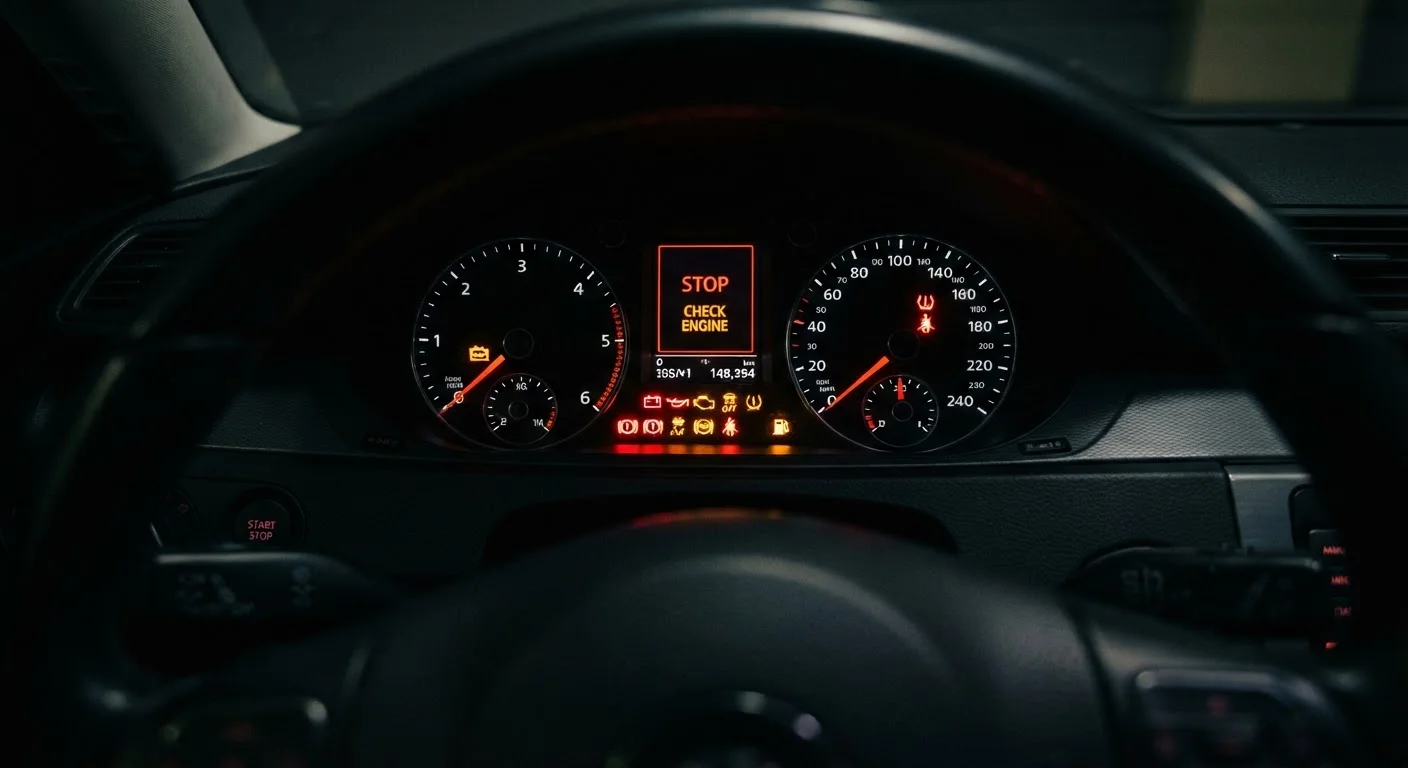
| Warning light colors | Red (urgent), Amber (caution), Green/Blue (informational) |
| System monitored | Onboard Diagnostic (OBD) system — standard on US vehicles since 1996 (US EPA OBD-II mandate) |
| Most critical lights | Oil pressure, coolant temperature, brake system |
| First reference to check | Your vehicle's owner's manual |
| When to stop immediately | Any red warning light, especially oil pressure or brake system |
| Diagnostic tool | OBD-II scanner reads stored fault codes |
Why Warning Lights Exist — and Why They Matter
Modern vehicles are equipped with onboard diagnostic systems (OBD) that monitor dozens of sensors simultaneously. When a reading falls outside normal parameters, the system triggers a warning light on your instrument cluster. These lights aren't optional alerts — they represent real conditions that, if ignored, can escalate into expensive repairs or unsafe driving situations.
Many drivers see a light appear, note that the car still seems to drive fine, and decide to wait. That instinct is sometimes harmless — but not always. Understanding what each symbol signals, and how urgently it demands your attention, is one of the most practical skills any car owner can develop. For a deeper look at interpreting specific symbols, see what your dashboard warning lights are actually telling you.
| Warning light colors | Red (urgent), Amber (caution), Green/Blue (informational) |
| System monitored | Onboard Diagnostic (OBD) system — standard on US vehicles since 1996 (US EPA OBD-II mandate) |
| Most critical lights | Oil pressure, coolant temperature, brake system |
| First reference to check | Your vehicle's owner's manual |
| When to stop immediately | Any red warning light, especially oil pressure or brake system |
| Diagnostic tool | OBD-II scanner reads stored fault codes |
The Color Code System
Most modern vehicles follow a broadly consistent color hierarchy for warning lights:
- Red — Immediate action required. Stop safely as soon as possible. Red lights typically indicate a condition that poses an active risk to your safety or the vehicle's mechanical integrity.
- Amber/Yellow — Caution required. The car can usually continue driving, but the issue should be investigated promptly — typically within one to two days, not weeks.
- Green or Blue — Informational only. A system is active (e.g., high beams, cruise control). No action needed.
This color system isn't universal — some manufacturers use different conventions — so consulting your vehicle's owner's manual remains the definitive reference for your specific make and model.
OBD-II
On-Board Diagnostics, second generation — a standardized system required on all US passenger vehicles since 1996 that monitors engine, transmission, and emissions systems and stores fault codes when problems are detected.
Fault code (DTC)
A Diagnostic Trouble Code stored by the OBD system when a sensor reading falls outside acceptable parameters. Codes are read with a compatible scanner and help technicians identify the source of a warning light.
TPMS
Tyre Pressure Monitoring System — a sensor-based system that alerts the driver when one or more tyres fall significantly below the recommended inflation pressure.
ABS
Anti-lock Braking System — a safety feature that prevents wheel lockup during hard braking, helping the driver maintain steering control. An ABS warning light indicates a fault in this system.
Instrument cluster
The panel behind the steering wheel that displays speed, fuel level, warning lights, and other vehicle information.
The Most Common Warning Lights Explained
The symbols below represent the lights drivers encounter most frequently. Treat this as a quick-reference guide, not a substitute for professional diagnosis.
- Check Engine (Engine Management Light)
- Amber: Signals a fault detected by the engine management system — from a loose fuel cap to a misfiring cylinder. A flashing check engine light typically indicates a more serious issue, such as a catalytic converter problem. Have it scanned with a diagnostic reader promptly.
- Oil Pressure Warning
- Red: One of the most critical lights. Low oil pressure can cause rapid engine damage. Stop driving safely as soon as possible and check the oil level. If the level is correct but the light stays on, do not restart the engine — seek professional assistance.
- Battery / Charging System
- Red: Indicates the battery isn't being charged properly. The alternator, battery, or wiring may be at fault. The car may have limited driving time remaining before it loses power entirely.
- Tyre Pressure Monitoring System (TPMS)
- Amber: One or more tyres are significantly underinflated. Check pressures at the earliest opportunity — underinflated tyres affect handling, fuel efficiency, and tyre lifespan. See pre-journey safety checks for tyre inspection tips.
- Coolant Temperature Warning
- Red: Engine is overheating. Pull over safely, turn off the engine, and do not open the coolant reservoir cap while the engine is hot. Running an overheated engine causes severe damage. Topping up coolant correctly is covered in checking and topping up your car's fluids.
- Brake System Warning
- Red: Can indicate low brake fluid, a fault in the braking system, or that the parking brake is engaged. If the parking brake is off and the light remains, treat this as urgent — braking performance may be compromised.
- ABS Warning
- Amber: The anti-lock braking system has detected a fault. Normal braking usually still functions, but ABS protection in emergency stops may be reduced. Have it inspected soon.
For a fuller breakdown of these and additional symbols, your car's warning lights, decoded is a useful companion reference.
What to Do When a Light Appears
Follow these steps whenever an unfamiliar or unexpected light illuminates:
- Stay calm and note the color. Red demands immediate attention; amber warrants prompt but not necessarily immediate action.
- Check your owner's manual. Every vehicle includes a warning light guide in its manual — this is always your most accurate source for your specific model.
- Assess driving conditions. If the car handles normally and the light is amber, it's generally safe to drive to a nearby service point. If the light is red, or the car feels different in any way, pull over safely.
- Get a diagnostic scan. Many repair shops and some auto parts retailers can read OBD fault codes. This gives a technician a starting point for diagnosis — though a code alone doesn't always identify the root cause.
Uncertain whether to handle something yourself or visit a professional? DIY car maintenance vs. going to a garage outlines when each approach makes sense.