

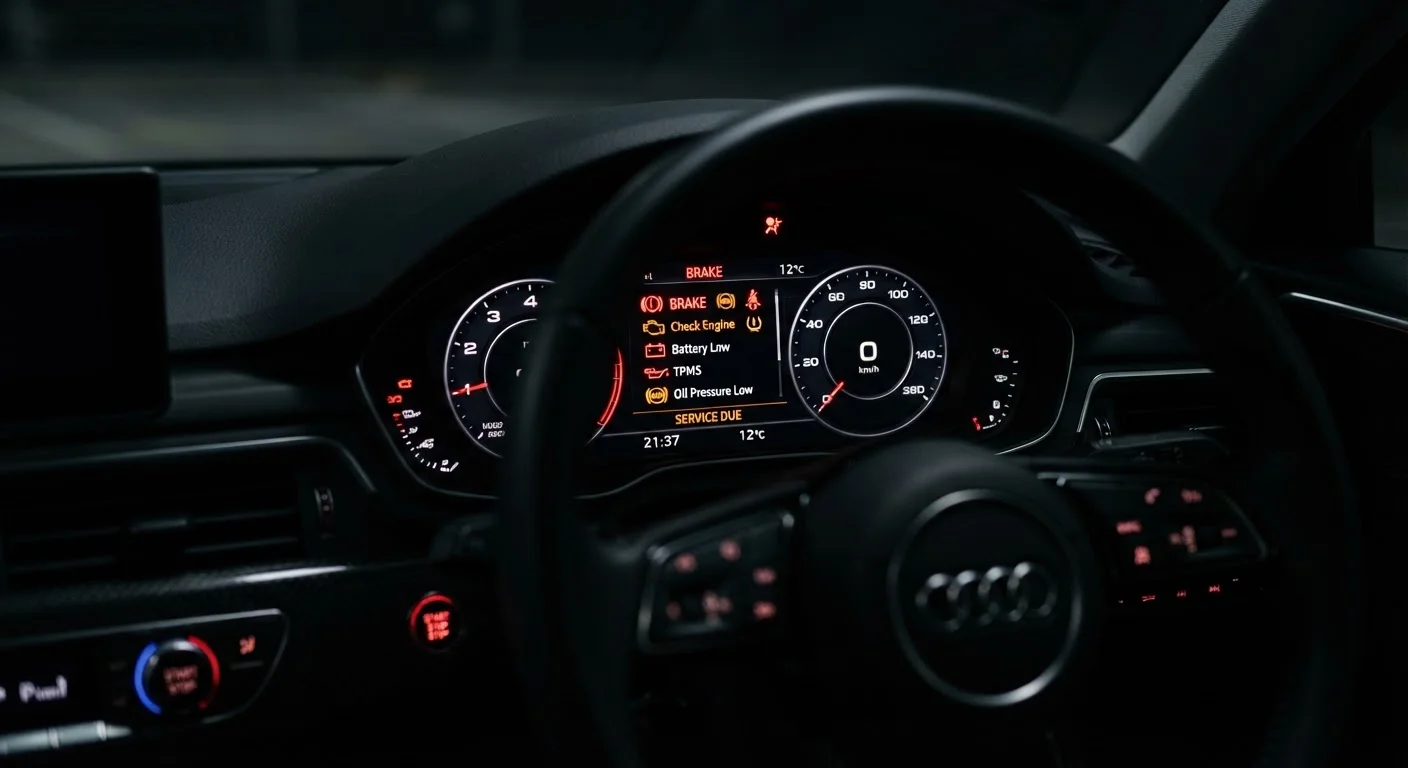
| Colors used for dashboard warnings | Red, amber/yellow, blue, green |
| Red light response | Stop driving as soon as it is safe to do so |
| TPMS trigger threshold (US standard) | 25% below recommended tire pressure (NHTSA TPMS regulation) |
| Check Engine Light causes | Hundreds of possible fault codes |
| Most common CEL trigger | Loose or faulty gas cap |
| Oil pressure warning action | Stop engine immediately; do not continue driving |
How the Color Code Works
Before decoding individual symbols, understand the universal color system that governs what every light is trying to communicate:
- Red — Immediate attention required. Stop the vehicle safely as soon as possible. Continuing to drive risks serious mechanical damage or a safety hazard.
- Amber or Yellow — Caution. Something needs investigation or service soon, but driving short distances is generally not immediately dangerous.
- Blue or Green — Informational. These confirm a system is active (high beams, turn signals, cruise control) and typically require no action.
This hierarchy matters most when a light you don't recognize appears. Red always means act now; amber means schedule attention. For a broader look at how these systems interact with modern driver aids, see our article on driver assistance technologies.
| Colors used for dashboard warnings | Red, amber/yellow, blue, green |
| Red light response | Stop driving as soon as it is safe to do so |
| TPMS trigger threshold (US standard) | 25% below recommended tire pressure (NHTSA TPMS regulation) |
| Check Engine Light causes | Hundreds of possible fault codes |
| Most common CEL trigger | Loose or faulty gas cap |
| Oil pressure warning action | Stop engine immediately; do not continue driving |
The Most Critical Warning Lights
These indicators demand the most urgent response from drivers:
Oil Pressure Warning (Red Oil Can Symbol)
This is one of the most serious lights on any dashboard. Low oil pressure means the engine's moving parts are not being adequately lubricated. Pull over safely and switch off the engine immediately. Check the oil level once the engine has cooled. Running the engine with critically low oil pressure can cause irreversible damage within minutes. Do not restart until the cause is identified — consult a qualified mechanic.
Engine Temperature Warning (Red Thermometer in Liquid)
Indicates the engine is overheating. Pull over, turn off the engine, and allow it to cool completely before opening the hood. Never open a hot radiator cap. Our guide to checking and topping up your car's fluids covers coolant levels in detail.
Battery / Charging System Warning (Red Battery Symbol)
Signals the electrical charging system is not functioning correctly. The alternator may not be charging the battery. Minimize electrical load (turn off A/C, heated seats) and drive directly to a workshop — the car may stop running if the battery drains fully.
Brake System Warning (Red Exclamation Mark in Circle)
Check whether the parking brake is engaged first. If it isn't, this light can indicate low brake fluid or a brake system fault. Have it inspected immediately — brakes are a primary safety system.
Your Owner's Manual Is the Definitive Source
Warning light symbols and their meanings can vary between makes, model years, and trim levels. Your vehicle's owner's manual contains the authoritative guide to every indicator on your specific dashboard. If you don't have a physical copy, most manufacturers make digital versions available through their official websites.
Amber Lights: Act Soon, Not Immediately
These indicators signal a fault that warrants attention within days rather than seconds:
Check Engine Light (Amber Engine Outline)
The most misunderstood light on most dashboards. It signals the onboard diagnostics system has detected a fault in the engine or emissions systems. Causes range from a loose gas cap to a misfiring cylinder — hundreds of stored fault codes are possible. A mechanic can read these codes with an OBD-II scanner. If the light is flashing, treat it as urgent and reduce speed; a flashing CEL typically indicates an active misfire that can damage the catalytic converter.
Tire Pressure Monitoring System — TPMS (Amber Horseshoe with Exclamation)
Federally mandated on US vehicles since 2008, TPMS activates when one or more tires drop approximately 25% below the manufacturer's recommended inflation pressure. Check all four tire pressures at a gas station gauge and inflate to the specification shown on the driver's door jamb sticker — not the number on the tire sidewall.
Traction Control / Stability Control Warning
A flashing version indicates the system is actively working to maintain grip — normal in slippery conditions. A static amber light means the system has been manually disabled or has a fault. Re-engage it unless driving conditions specifically require it off.
For a complete reference covering additional symbols, see reading your car's warning lights without guessing. New to vehicle ownership? Our overview of everything first-time car owners need to know covers maintenance schedules and more.