
Driver Assistance Technologies: What They Do, What They Don't, and Where Confusion Sets In

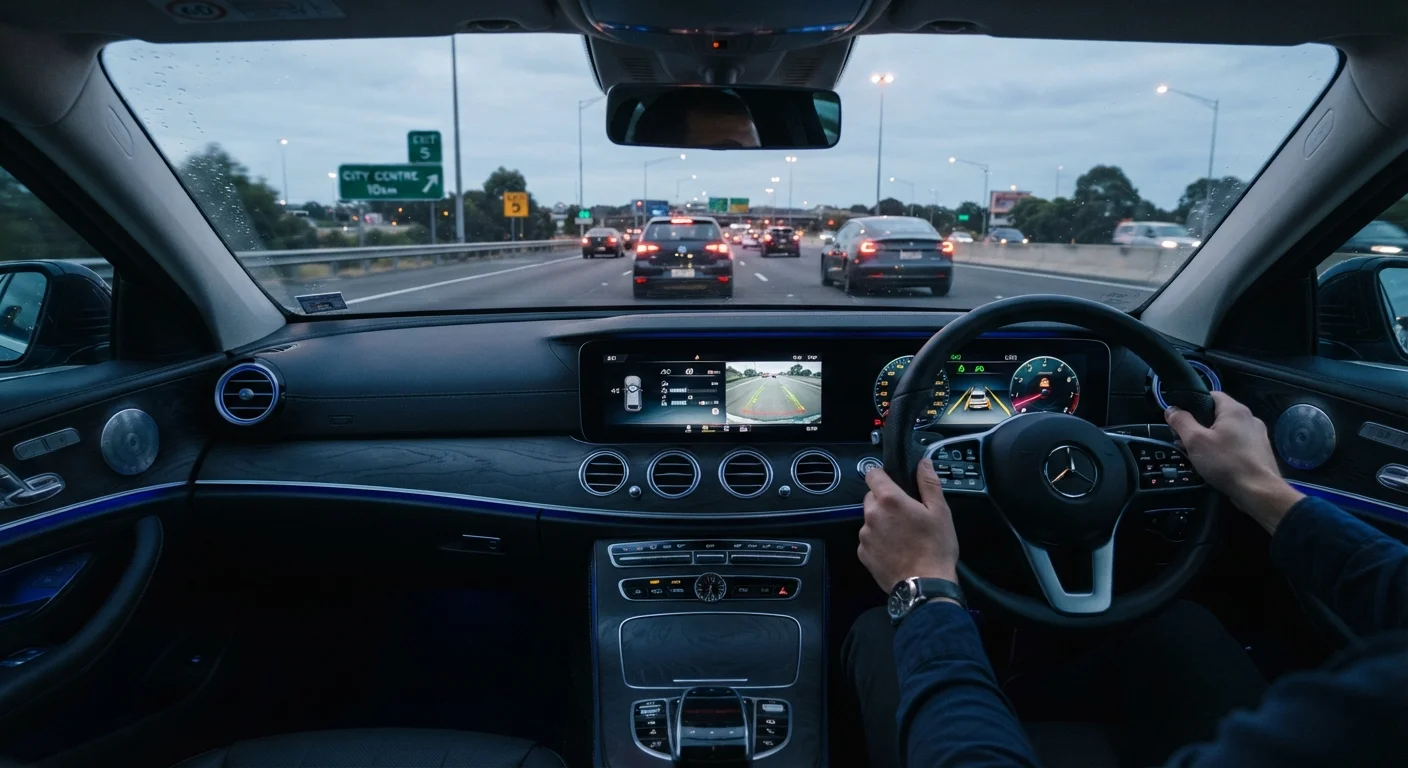
Key Takeaways
What Driver Assistance Technologies Actually Are
Driver assistance technologies — often grouped under the term ADAS — are electronic systems built into modern vehicles to help drivers detect hazards, maintain control, and reduce collision risk. They range from relatively simple alerts to active systems that can intervene in steering or braking.
Critically, these systems are classified as driver assistance, not autonomous driving. Every major automotive safety body, including the National Highway Traffic Safety Administration (NHTSA), uses a standardized scale — SAE Levels 0 through 5 — to define automation. Most vehicles sold today operate at Level 1 or Level 2, meaning the driver must remain attentive and in control at all times. No consumer vehicle currently on US roads operates at full self-driving capability (Level 5).
Understanding that distinction is the foundation for using these systems safely. For a broader look at the habits that erode driver skill over time, see our article on habits that quietly make you a worse driver.
Automatic Emergency Braking (AEB): Promising, But Not Foolproof
Automatic Emergency Braking (AEB) uses sensors — typically radar, cameras, or a combination — to detect an impending collision and apply the brakes if the driver hasn't responded in time. Studies from the Insurance Institute for Highway Safety (IIHS) indicate that AEB systems can meaningfully reduce rear-end crashes, which is significant given how common that collision type is.
However, AEB has documented limitations that drivers should understand before relying on it:
- Weather sensitivity: Heavy rain, snow, fog, and dirt on sensors can reduce detection accuracy or disable the system entirely.
- Speed thresholds: Many systems are calibrated for a specific speed range and may not activate in very low-speed parking-lot scenarios or at highway speeds where closing distances are extreme.
- Crossing traffic: Most forward-facing AEB systems struggle to detect vehicles entering from the side at intersections.
- Pedestrians and cyclists: Pedestrian AEB exists but performs less reliably at night or in poor light conditions.
AEB Is a Backup, Not a Primary Strategy
Automatic Emergency Braking is designed to reduce collision severity when a driver fails to react in time — it is not a substitute for maintaining safe following distances and staying alert. Weather, sensor contamination, and speed can all reduce AEB effectiveness. Never adjust your driving behavior on the assumption that AEB will intervene.
AEB is a backup measure, not a primary safety strategy. Maintaining a safe following distance and staying alert remains the driver's responsibility.
Lane-Keep Assist and Lane Departure Warning: Know the Difference
These two systems are frequently confused, yet they work very differently:
- Lane Departure Warning (LDW)
- Alerts the driver — via a beep, vibration, or visual signal — when the vehicle drifts over a lane marking without a turn signal active. It does not intervene; it only warns.
- Lane-Keep Assist (LKA)
- Goes one step further by applying gentle steering corrections or braking to nudge the vehicle back within the lane. Some systems only act if the driver fails to respond to an initial warning.
Neither system works reliably when lane markings are faded, obscured by snow or rain, or absent on rural roads. Both can be confused by construction zones with multiple painted lines. Drivers on highways and motorways should understand these boundaries well before depending on LKA — our motorway driving guide covers the lane discipline fundamentals that still apply regardless of what technology is fitted.
When driving in construction zones or on rural roads with faded markings, manually disable lane-keep assist rather than let it fight you with incorrect steering inputs.
LKA relies on clear lane marking visibility; in ambiguous road conditions, the system can apply unexpected corrections that distract or alarm the driver.
Set your adaptive cruise control following gap to the longest available setting as a default — you can always close it manually if traffic requires.
Longer following gaps give both the system and the driver more time to react, especially on highways where closing speeds can be high and stopping distances are extended.
Adaptive Cruise Control: Convenience vs. Control
Adaptive Cruise Control (ACC) extends traditional cruise control by using forward sensors to monitor the distance to the vehicle ahead and automatically adjust speed to maintain a set gap. Some advanced versions can slow the vehicle to a complete stop in traffic and resume automatically.
Drivers often underestimate how much active engagement ACC still demands:
- ACC does not steer. The driver must control lateral position entirely.
- It may not detect stationary objects — such as a stopped vehicle or debris — as reliably as it tracks moving vehicles.
- The system cannot anticipate road curves, merge conflicts, or sudden cut-ins from adjacent lanes with the same situational awareness a human driver has.
- On wet or icy roads, automatic speed adjustments may not account for the extended stopping distances required.
Pairing ACC with lane-centering assist creates a more complete experience, but this still constitutes Level 2 automation — hands on the wheel, eyes on the road are still required by both technology design and law.
Where Confusion — and Risk — Sets In
Research and real-world incident data point to a consistent pattern: when drivers misunderstand what a system can and cannot do, over-reliance follows. This is sometimes called automation complacency — the tendency to disengage mentally because a system appears to be handling the task.
~50%
Rear-end crash reduction attributed to AEB
IIHS research has found forward collision warning with auto brake can significantly reduce rear-end crash rates compared to vehicles without the technology.
Level 2
Maximum automation in most consumer vehicles
Under the SAE automation scale, the majority of current consumer vehicles top out at Level 2, requiring continuous driver supervision.
40+
Different ADAS feature names in use across automakers
Industry analyses have found that similar driver assistance functions are marketed under dozens of distinct brand names, contributing to widespread consumer confusion.
Confusion also arises because ADAS feature names are not standardized across manufacturers. One automaker's "ProPILOT" is another's "Autopilot" is another's "Co-Pilot360" — yet these names describe systems with meaningfully different capabilities and operating envelopes. The only authoritative source for understanding what your specific vehicle's systems can and cannot do is your owner's manual.
This kind of misplaced confidence intersects with broader driving mindset issues. Defensive driving principles — anticipating hazards, scanning ahead, maintaining situational awareness — remain essential regardless of how many assistance systems a vehicle has.
Keeping the Driver in the Driver's Seat
Using driver assistance technologies well is a skill in itself. A few grounded practices help drivers stay genuinely in control:
- Read the manual section on ADAS before relying on any system. Understand the operating conditions under which each feature activates — and disengages.
- Check your sensors regularly. Cameras and radar units can be blocked by dirt, ice, or even certain aftermarket accessories. A system that appears active may not be functioning correctly. Our warning lights guide explains how ADAS fault alerts typically appear on your dashboard.
- Test systems deliberately in safe conditions — such as an empty parking lot — before encountering them unexpectedly at highway speeds.
- Stay physically ready to intervene. Hands should rest on the wheel, not in your lap. Eyes should scan the road, not the infotainment screen.
Driver assistance technology represents genuine progress in road safety, but it works best as a layer of support behind an engaged, skilled driver — not as a substitute for one. Keeping your vehicle in good mechanical condition matters too; see our routine maintenance checklist for the servicing tasks that underpin safe vehicle operation.