

Key Takeaways
Why Blank-Slate Research Is a Skill Worth Developing
Landing on a destination you know almost nothing about can feel either thrilling or overwhelming — often both at once. The good news: the research process itself is learnable, and having a reliable framework makes it far less daunting. Whether you've stumbled onto an unfamiliar country through a flight deal, a friend's recommendation, or pure curiosity, building your knowledge from scratch is genuinely manageable when you know where to start.
The goal isn't to become an expert before you leave. It's to reach a level of contextual understanding that lets you make sound decisions — about timing, budget assumptions, behavior, and safety — without being caught flat-footed. As part of a well-planned trip, destination research is the foundation everything else rests on.
Start with your government's official travel advisory
Before reading a single blog post or booking anything, check your government's official travel advisory page for the destination. In the US, that means the State Department's travel.state.gov. These advisories cover entry requirements, safety conditions, health alerts, and local legal considerations — none of which Instagram will tell you.
Advisories are tiered by risk level and updated regularly. Even a Level 1 (normal precautions) destination may have specific regional warnings worth knowing. Always verify visa, vaccination, and entry requirements directly with official sources — these change, and travel articles frequently go out of date. For deeper safety habits once you're on the ground, see our guide to practical safety habits abroad.
Official government advisories catch safety and legal realities that no travel blog will reliably cover.
Map the geography before you map the highlights
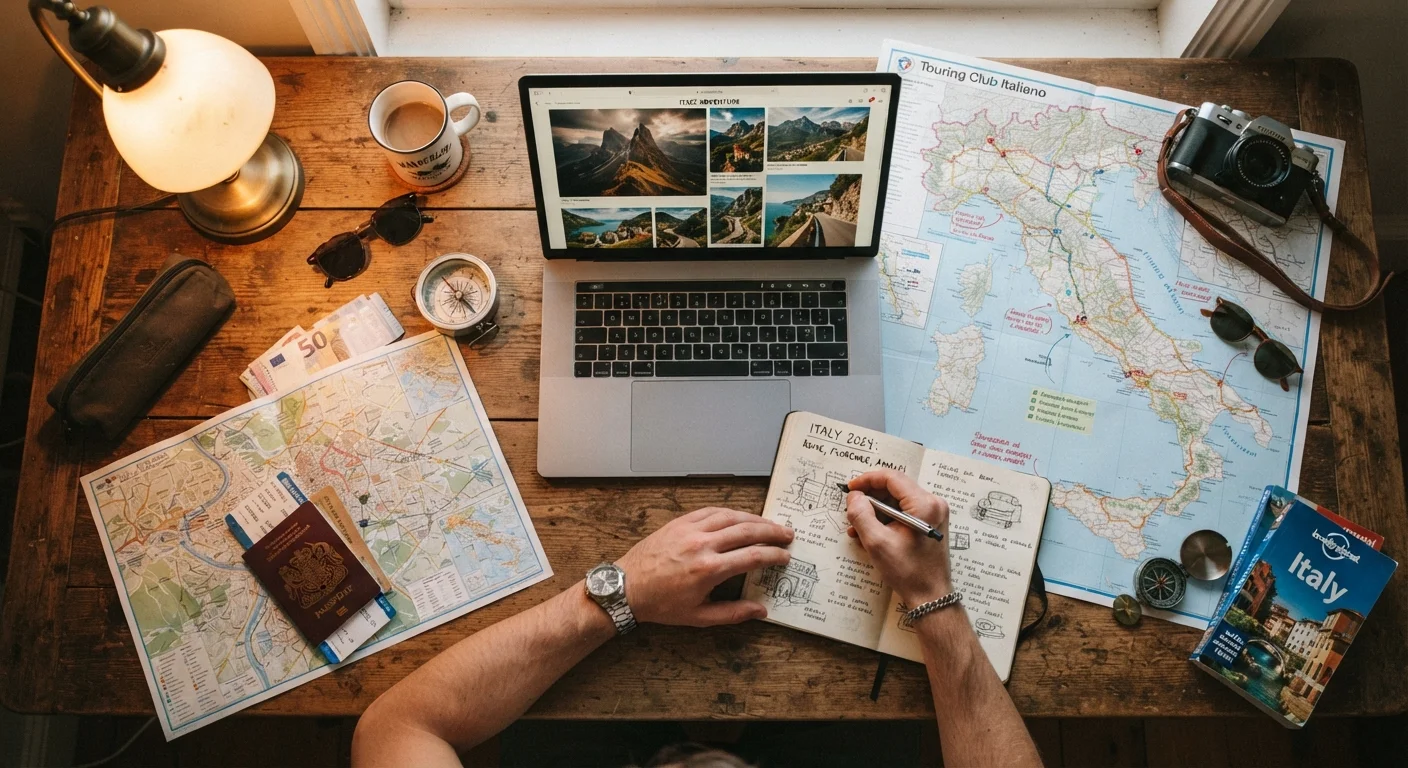
Understanding where things actually are — relative to each other and to major entry points — saves an enormous amount of planning headache later. Spend time with a physical or digital map before you look at any "top things to do" list. How large is the country? Are key regions separated by mountains, rivers, or poor road infrastructure? Where do international flights actually land?
Geography shapes logistics more than most travelers realize. A destination that looks compact on a thumbnail map can involve eight-hour bus rides between highlights. Knowing the physical layout early helps you cluster your itinerary realistically and avoid the common mistake of underestimating internal travel time.
Mapping geography before highlights prevents the classic mistake of wildly underestimating travel time between places.
Dig into traveler forums for unfiltered ground truth
Polished travel content — guidebooks, tourism board sites, influencer posts — is curated to inspire. Traveler forums are where you find the messy, practical, honest stuff. Communities on platforms like Reddit (look for destination-specific subreddits), TripAdvisor forums, and Lonely Planet's Thorn Tree are full of recent firsthand accounts from people who just returned.
Search for questions like "What surprised you most about [destination]?" or "What do first-timers get wrong?" You'll surface logistical nuances, common scams to avoid, and cultural expectations that professional content routinely glosses over. Prioritize posts from the past 12–18 months to account for changing conditions. Cross-referencing these accounts with common planning myths can also prevent you from acting on outdated conventional wisdom.
Traveler forums surface the honest, unfiltered experience that polished destination content is designed to omit.
Research cultural norms and etiquette deliberately
Every destination has behavioral expectations — around dress, greetings, tipping, photography, religious sites, and social interactions — that aren't intuitive to outside visitors. Getting these wrong doesn't just cause awkward moments; it can cause genuine offense or, in some places, legal complications.
Look for destination-specific etiquette guides from culturally grounded sources, not just generic "travel tips" listicles. Focus on: dress codes in public and religious spaces, acceptable behavior around local customs and ceremonies, rules around photography of people or government buildings, and tipping norms. Understanding these before you arrive lets you engage with a destination respectfully and confidently — which consistently leads to better experiences.
Understanding local etiquette before arrival prevents accidental offense and consistently leads to warmer local interactions.
Understand seasonality beyond just weather
Most travelers think about seasons in terms of temperature and rainfall — and that matters. But deeper seasonal research includes: local public holidays (which can close attractions or spike prices), school vacation periods, harvest or festival seasons that change access or atmosphere, and peak-vs-shoulder-vs-low patterns that affect crowd levels at popular sites.
A destination that's technically "good weather" during a major local holiday week may also be inaccessible, fully booked, or exceptionally crowded. Conversely, low season can offer meaningful trade-offs — quieter sites, more authentic interaction — alongside its challenges. Check both tourism-focused seasonality guides and the destination's own public holiday calendar to get a full picture. This context also directly supports more thoughtful decisions about avoiding peak overtourism pressure.
Seasonality research means far more than weather — local holidays and crowd cycles can make or break a trip.
Build a realistic budget baseline using multiple data points
Cost of travel varies dramatically not just between countries, but within them — by region, by season, and by the type of traveler experience you're targeting. Building an accurate budget baseline early prevents painful recalculations later.
Useful sources include: destination subreddits with pinned budget posts, recent travel blogs with itemized daily cost breakdowns, and currency information from your bank or a reliable financial source. Factor in entry fees for attractions, transportation between cities, tipping culture, and any costs specific to that destination (tourist taxes, national park fees, mandatory guided tours for certain sites). Build in a contingency buffer — unexpected costs are a feature of travel, not an exception. Never rely on a single source for cost estimates, and note that prices shift with exchange rates and inflation.
A realistic budget baseline drawn from multiple recent sources prevents the most stressful travel surprises.
Putting It All Together Before You Book
Solid destination research doesn't require weeks of effort — it requires the right sequence. Start wide (official sources, geography, climate), then go deep (forums, cultural context, logistics), then verify your assumptions against recent firsthand accounts. Each layer corrects for the blind spots of the last.
Layer your sources, don't just stack them
The most effective destination research doesn't come from reading more of the same thing — it comes from deliberately combining different source types. Pair an official government advisory with a traveler forum thread and a locally produced guide to the same destination. Each source type has blind spots; the overlap between them is where accurate, actionable knowledge actually lives.
Once your research is done, the natural next step is turning that knowledge into a workable plan. Our itinerary-building framework for first-timers walks you through exactly how to do that. And if certain destinations feel overwhelming because of crowds or overtourism concerns, it's worth reading up on how overtourism affects popular spots before committing to a destination entirely.
The more honestly you research, the more confidently you travel — and the better your experience tends to be once you're actually on the ground.