

Key Takeaways
Summary
18 items · 10–20 minutes
Why a Pre-Journey Check Matters
Most vehicle breakdowns and a significant proportion of road incidents involve factors that a driver could have identified before departure — low tyre pressure, a faulty brake light, or low coolant that tips over into overheating on a long highway stretch. A pre-journey check is not about paranoia; it is about converting a handful of minutes in the driveway into a measurably safer and less interrupted trip.
This checklist is designed for any journey where conditions, distance, or unfamiliarity raise the stakes — a long road trip, an early-morning commute in poor weather, or driving a vehicle you haven't used in a while. It complements the broader seasonal upkeep covered in our seasonal car maintenance guide, which addresses longer-interval checks tied to temperature changes.
For a wider pre-trip perspective that goes beyond the vehicle itself, our road trip planning guide covers the logistical and safety considerations that first-time long-haul drivers frequently overlook.
Don't Drive on a Warning Light
A dashboard warning light that is new, flashing, or accompanied by unusual sounds or smells should not be dismissed before a journey. Some warnings — particularly for oil pressure, brake system faults, or engine temperature — indicate conditions that can lead to vehicle damage or loss of control. If you are unsure what a warning symbol means, see our guide to dashboard warning lights or consult a qualified mechanic before setting off.
What to Check and How to Use This List
The 18 items below are grouped into four logical categories — Tyres, Lights and Visibility, Fluids and Engine, and Interior and Load. Work through them in order: start outside the vehicle with the tyres and lights, then pop the hood for fluids, and finish with the interior and any cargo. This sequence minimises back-and-forth and ensures the engine is cold (or adequately settled) when you check oil.
Tyre Condition Is Your First Priority
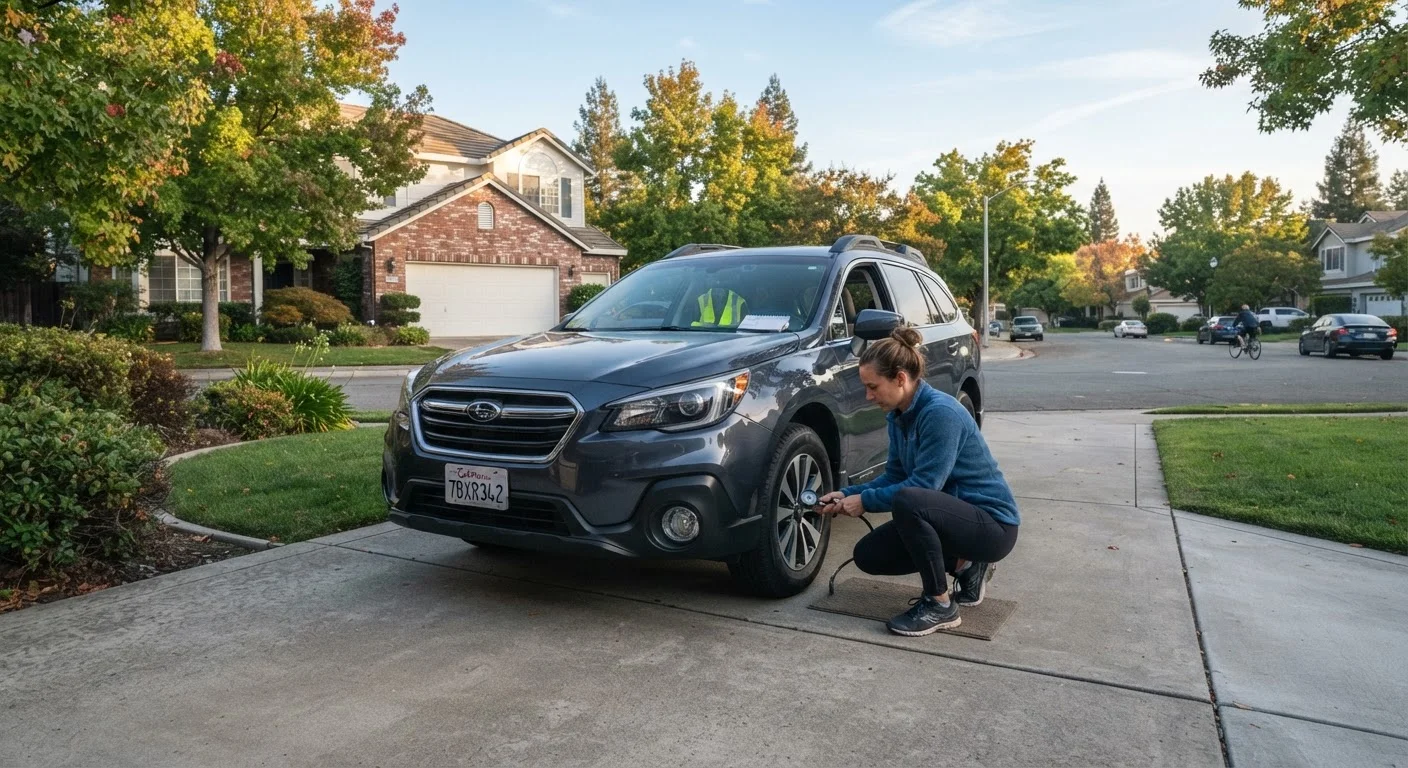
Tyres are the only contact point between your vehicle and the road, making them the single most safety-critical item on this checklist. Under-inflated tyres impair braking and handling; worn tread dramatically increases stopping distances on wet roads. Never depart on tyres you suspect are damaged, significantly under-inflated, or below legal tread depth — these are conditions that warrant immediate attention from a tire professional.
Tyres
Lights & Visibility
Fluids & Engine
Interior, Safety Systems & Load
Items marked must are non-negotiable safety or legal requirements. Should items are strongly recommended, particularly for longer or unfamiliar journeys. Nice to have items add resilience and convenience but are lower urgency for a routine local trip.
For the tools you'll need on hand, see the resources listed below. Keeping a tyre pressure gauge in the glovebox and a maintained emergency kit in the trunk means you are always ready to run this check efficiently.
Tyre pressure gauge
Used to accurately measure tyre inflation against the manufacturer's specification.
Tyre tread depth gauge
Provides a precise measurement of remaining tread depth to verify legal and safe minimums.
Microfibre cloth
Useful for cleaning mirrors, windows, and lights to maximise visibility before departure.
Roadside emergency kit
Keeps essential safety supplies on hand — including reflective triangles, a flashlight, and jumper cables — if a breakdown occurs.
Drivers who want to stay on top of longer-interval tasks — oil changes, brake inspections, tyre rotations — can use our routine maintenance checklist alongside this pre-departure review.