

Key Takeaways
Summary
22 items · 15–30 minutes
Why a Weekly Audit Makes Sense
Most hair problems don't appear overnight. Dryness, excessive shedding, dullness, and scalp irritation typically build slowly — and a routine that worked three months ago may no longer suit your hair's current needs. A brief weekly audit gives you a structured moment to observe what's actually happening rather than just maintaining habit on autopilot.
This checklist works across hair textures and types — whether your hair is fine and straight, coily and densely packed, chemically treated, or somewhere in between. The goal isn't perfection; it's pattern recognition. Over time, you'll start to notice which conditions correlate with better or worse hair days, and you can refine your routine accordingly.
If you're starting from a less structured place, our guide to building a hair care routine from scratch is a useful companion to this checklist. And for a deeper look at how lifestyle factors feed into hair health, see everything that affects hair health, from diet to environment.
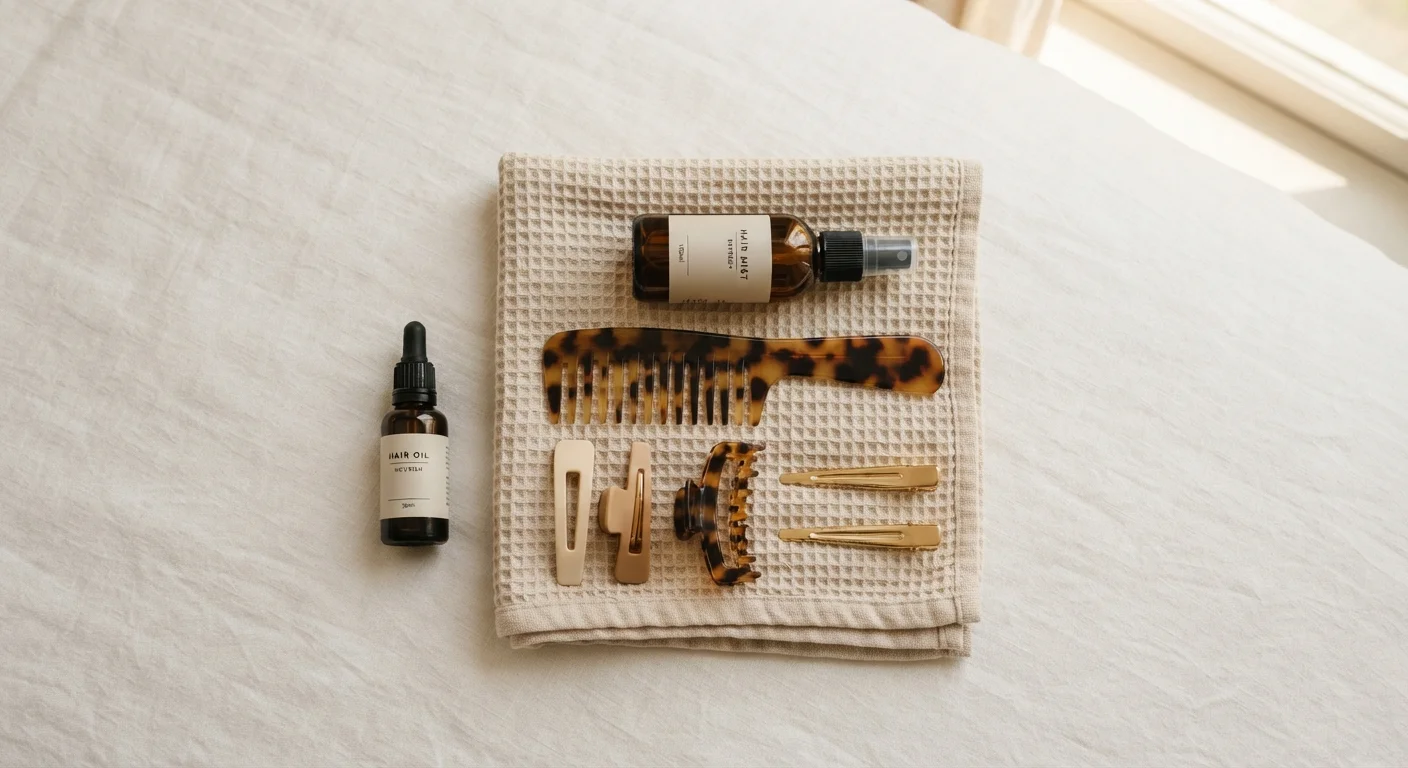
Wide-tooth comb
Assesses detangling difficulty and snag points during the audit, especially on wet or textured hair.
Handheld mirror or magnifying mirror
Enables a closer look at scalp condition, flaking, and hair density from multiple angles.
Good lighting source
Natural light or a bright lamp helps you accurately assess scalp color, buildup, and hair texture.
Notebook or notes app
Logging weekly observations helps you identify trends over time rather than relying on memory alone.
Spray bottle with water
Lightly dampening hair makes it easier to assess elasticity and check for dryness accurately.
How to Use This Checklist
Set aside 15–30 minutes once a week — ideally on or just after wash day, when your hair is clean and its true condition is easiest to assess. Work through each group in order. For items marked must, treat these as non-negotiables; they cover the signals most likely to indicate something needs adjusting. Items marked should are strongly recommended for anyone aiming to maintain or improve hair health. Nice-to-have items are enhancements worth incorporating when time allows.
You don't need to action every finding immediately. The value is in logging what you observe — mentally or in a simple note — so you can spot trends across weeks.
Significant Hair Loss Warrants Professional Advice
Losing 50–100 strands per day is considered within the normal range for most people, but sudden increases, patchiness, or scalp changes that persist for more than a few weeks can sometimes signal an underlying health issue. This checklist is not a diagnostic tool. If you're concerned about the amount of hair you're losing, consult a dermatologist or your primary care provider rather than attempting to self-treat.
Scalp care deserves particular focus during this audit. Your scalp is skin, and its condition has a direct upstream effect on the hair that grows from it. For a detailed breakdown of the connection, see why scalp health is the foundation of healthy hair.
Scalp Assessment
Moisture and Condition
Breakage and Shedding Check
Routine and Product Review
Physical Damage Checks
Reading the Signals: What Common Findings Mean
Audit findings are only useful if you know what to do with them. Here's a practical guide to interpreting the most common observations:
- Excessive dryness after washing: May indicate your cleanser is stripping too much, your conditioner isn't providing enough moisture retention, or both. Consider whether a sulphate-free formula might suit your hair type better.
- Product buildup on the scalp: Often a sign of under-cleansing or over-application of leave-ins and stylers. A clarifying wash (used periodically, not weekly) can reset the scalp without over-stripping.
- Significant breakage vs. shedding: Shedding — strands with a visible white bulb at the root — is part of the normal hair growth cycle. Breakage means the strand snapped mid-shaft, usually a sign of dryness, manipulation stress, or structural weakness. If you're seeing a lot of short, snapped pieces, that's worth addressing before it compounds.
- Increased tangling: Often signals a drop in moisture or a need for more slip during detangling. Check whether you're detangling on wet, conditioned hair and using an appropriate tool for your texture.
For those wearing protective styles, this audit is especially important. Protecting natural hair during protective styles requires active monitoring — what's hidden can still be deteriorating. Similarly, if you use heat regularly, review your drying method: air drying vs. blow drying is worth understanding in context of your specific hair type.
This article is for general informational purposes only. If you notice sudden, significant, or unexplained hair loss, consult a qualified healthcare professional — hair loss can sometimes reflect underlying health conditions that warrant medical evaluation.