

Key Takeaways
Option A
Vertical Storage
The height-maximizing, floor-space-preserving approach.
Best for: Renters and homeowners with limited square footage who want to keep pathways clear while storing more.
Option B
Horizontal Storage
The accessible, low-profile approach that anchors a room.
Best for: Households prioritizing ease of reach, visual grounding, or accommodating young children and mobility needs.
If you live in a studio or one-bedroom apartment with minimal floor space
Vertical Storage
Tall shelving and wall-mounted organizers reclaim square footage without requiring a renovation, keeping walkways clear and the room feeling open.
If accessibility is a priority — for young children, older adults, or mobility limitations
Horizontal Storage
Low, wide storage keeps everyday items within easy reach without bending, stretching, or using step stools.
If you want a visually grounded, cohesive room layout
Horizontal Storage
Low-profile storage pieces like benches and credenzas anchor furniture groupings and avoid the top-heavy feel tall units can create.
If you rent and can't make permanent wall changes
Vertical Storage
Freestanding bookcases and ladder shelves deliver height-based storage gains without drilling, patching, or landlord approval.
If your household has a mix of needs and room to plan
Vertical Storage
A deliberate vertical-first strategy with select horizontal anchors typically yields the best balance of capacity and usability in most small spaces.
Understanding the Core Difference
Storage strategy comes down to one fundamental trade-off: floor area versus wall height. Vertical storage works upward — think tall bookshelves, wall-mounted pegboards, stacked cabinet towers, or over-door organizers. Horizontal storage spreads outward along the floor — ottomans, low dressers, under-bed drawers, and wide media consoles all fall into this category.
In a small space, every square foot of floor plan is premium real estate. Vertical storage protects that real estate by shifting the storage footprint off the ground. Horizontal storage trades some of that floor area for convenience and visual stability. Neither approach is inherently superior — your ceiling height, household habits, and the specific room's layout determine which deserves priority.
For a broader look at organization philosophy, see our comparison of minimalist and everything-has-a-home approaches — understanding your overall organizing style makes choosing a storage direction much easier.
| Criterion | Vertical Storage | Horizontal Storage |
|---|---|---|
| Floor space used | Minimal | Moderate to significant |
| Storage capacity | High (uses wall height) | Moderate (limited by width) |
| Ease of access | Varies — upper zones harder to reach | Generally easy for all ages |
| Visual effect | Draws eye upward; can feel airy | Grounds the room; suits low ceilings |
| Renter-friendly options | Yes — freestanding shelves | Yes — most units are freestanding |
| Best room types | Living rooms, offices, kitchens | Bedrooms, entryways, shared spaces |
| Child/mobility accessibility | Limited above shoulder height | Strong — items stay within reach |
Where Vertical Storage Excels
Rooms with high or standard ceilings (8 feet or above) offer significant untapped storage capacity in the upper two to three feet that most people simply ignore. A tall bookcase that reaches toward the ceiling can hold three to four times the items of a waist-height unit occupying the same floor footprint.
Vertical storage is especially effective in:
- Kitchens — Open shelving above counters keeps cookware visible and counters clear.
- Entryways — Tall coat racks and narrow column shelves handle bags, keys, and outerwear without eating into a tight hallway.
- Home offices — Floor-to-ceiling shelving consolidates books, binders, and supplies along one wall, freeing the rest of the room for movement.
One practical note: items stored above eye level are harder to reach and easy to forget. Reserve upper zones for seasonal or infrequently used belongings, and keep everyday essentials at arm's reach. For renters concerned about drilling into walls, freestanding options deliver the same height gains without modifications — our guide to small-space organization without renovation covers more renter-friendly ideas.
~37 sq ft
Average floor area saved by going vertical
Interior design professionals commonly estimate that replacing low shelving with floor-to-ceiling units can reclaim the equivalent of a small room corner in usable floor space.
8–10 ft
Ceiling height where vertical storage pays off most
Standard US home ceiling heights of 8 to 10 feet offer enough overhead clearance to make tall shelving significantly more efficient than low-profile alternatives.
Where Horizontal Storage Holds Its Ground
Horizontal storage has genuine strengths that vertical solutions can't replicate. Low, wide pieces keep a room feeling visually grounded — a long credenza or storage bench draws the eye along the wall rather than upward, which can make low-ceilinged rooms feel less cramped rather than more so.
Horizontal storage also wins on accessibility. Under-bed drawers, wide dressers, and storage ottomans put items within easy reach for children, older adults, or anyone with limited mobility. In shared homes where household members have different physical needs, accessible horizontal storage often reduces daily friction more than a well-stocked top shelf ever could. For more on navigating differing needs, see organizing a shared home.
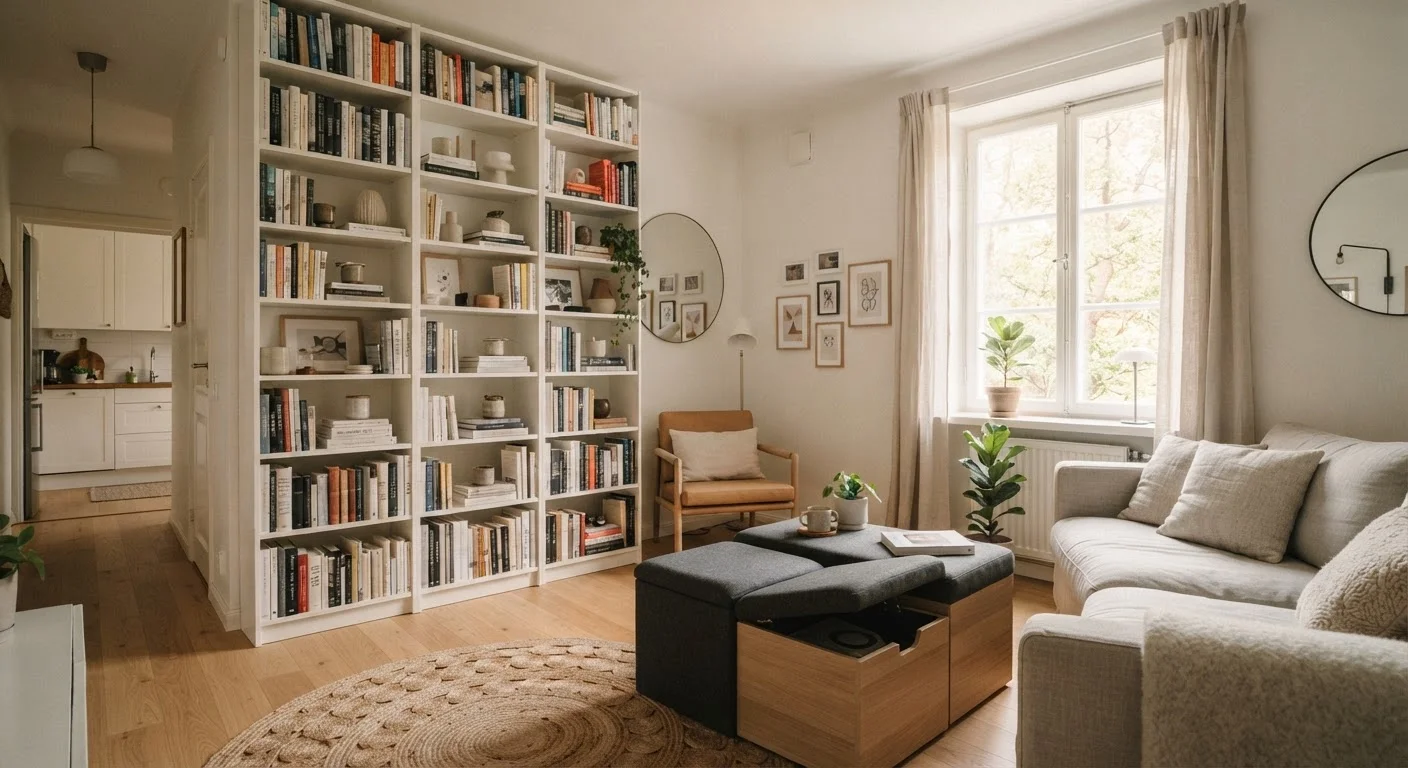
Hidden horizontal storage — like ottomans with interior compartments or beds with built-in drawers — is particularly valuable because it performs double duty, serving as furniture and storage simultaneously without making the room feel cluttered.
Building a Strategy That Uses Both
The most effective small-space storage systems aren't purely vertical or purely horizontal — they're intentional combinations. A practical framework: use vertical storage for volume and capacity, and horizontal storage for accessibility and visual balance.
Try this room-by-room approach:
- Map your wall space — Identify walls that can accommodate tall shelving or mounted organizers without blocking natural light or doorways.
- Audit what you access daily — Items you reach for every day belong at waist-to-shoulder height, regardless of whether the unit is vertical or horizontal.
- Use horizontal surfaces for dual-purpose furniture — A storage bench at the foot of a bed or a storage ottoman in the living room adds seating and concealed capacity without expanding your room's footprint noticeably.
- Test before committing — Arrange freestanding pieces first to see how traffic flow and sight lines feel before anchoring anything permanently.
Be cautious about over-organizing with containers and labels alone — beautiful bins don't fix a flawed system. Our piece on why labeled bins still lead to chaos explains where well-intentioned setups break down. And if you rotate seasonal items, seasonal storage strategies can help you decide whether that approach actually gains you space over time.
Safety First With Tall Storage Units
Freestanding bookcases and tall shelving units can tip over if not properly secured, posing a serious risk — particularly in homes with children. Anti-tip straps or wall anchors are widely available and strongly recommended for any tall freestanding unit. If you're anchoring shelves directly into walls, make sure fasteners go into wall studs or use appropriate wall anchors rated for the load. When in doubt, consult a hardware professional.