

Why Your Home Talks to You
Every house communicates through physical changes — a crack appearing above a door frame, a brownish ring forming on a ceiling, a persistent creak underfoot. Most homeowners notice these signs but aren't sure whether they require immediate action or can safely wait. This guide gives you a working reference for interpreting the most common signals, so you can make informed decisions rather than guessing.
If you're new to homeownership, our first-time homeowner overview covers the broader maintenance picture alongside these warning signs.
Cracks: What Shape and Location Tell You
Not all cracks are equal. The key variables are location, direction, width, and whether the crack is growing.
- Hairline cracks in drywall or plaster — Very common, usually caused by normal seasonal expansion and contraction. Monitor over 2–3 months; if stable, low concern.
- Stair-step cracks in brick or block — Follow mortar joints diagonally. Can indicate differential foundation settlement. Widen or multiply over time? Have a structural engineer assess.
- Horizontal cracks in a basement or foundation wall — Often indicate lateral soil pressure. Treat as urgent; consult a licensed structural engineer before doing anything else.
- Diagonal cracks from door or window corners — Typically signal uneven settlement. A single stable crack may be cosmetic; recurring or widening cracks need professional evaluation.
- Wide gaps (more than 1/4 inch) — Any crack this wide, regardless of location, warrants professional assessment.
For the full picture on when DIY is appropriate versus when you need a licensed tradesperson, see our guide on safe vs. risky DIY repairs.
Stains: Reading Color and Pattern
Stains are your home's way of showing you where water or moisture has been — or still is.
- Yellow or brown ceiling rings — Classic sign of a water leak above. Check the roof, plumbing above the ceiling, or an upstairs bathroom. A dry ring may mean a past leak that was resolved; a soft, sagging ceiling suggests active moisture. Roof leaks escalate quickly, so rule out roofing first.
- White crusty deposits on masonry or concrete (efflorescence) — Salt deposits left behind as moisture moves through the material. Signals water infiltration. Address the moisture source, not just the stain.
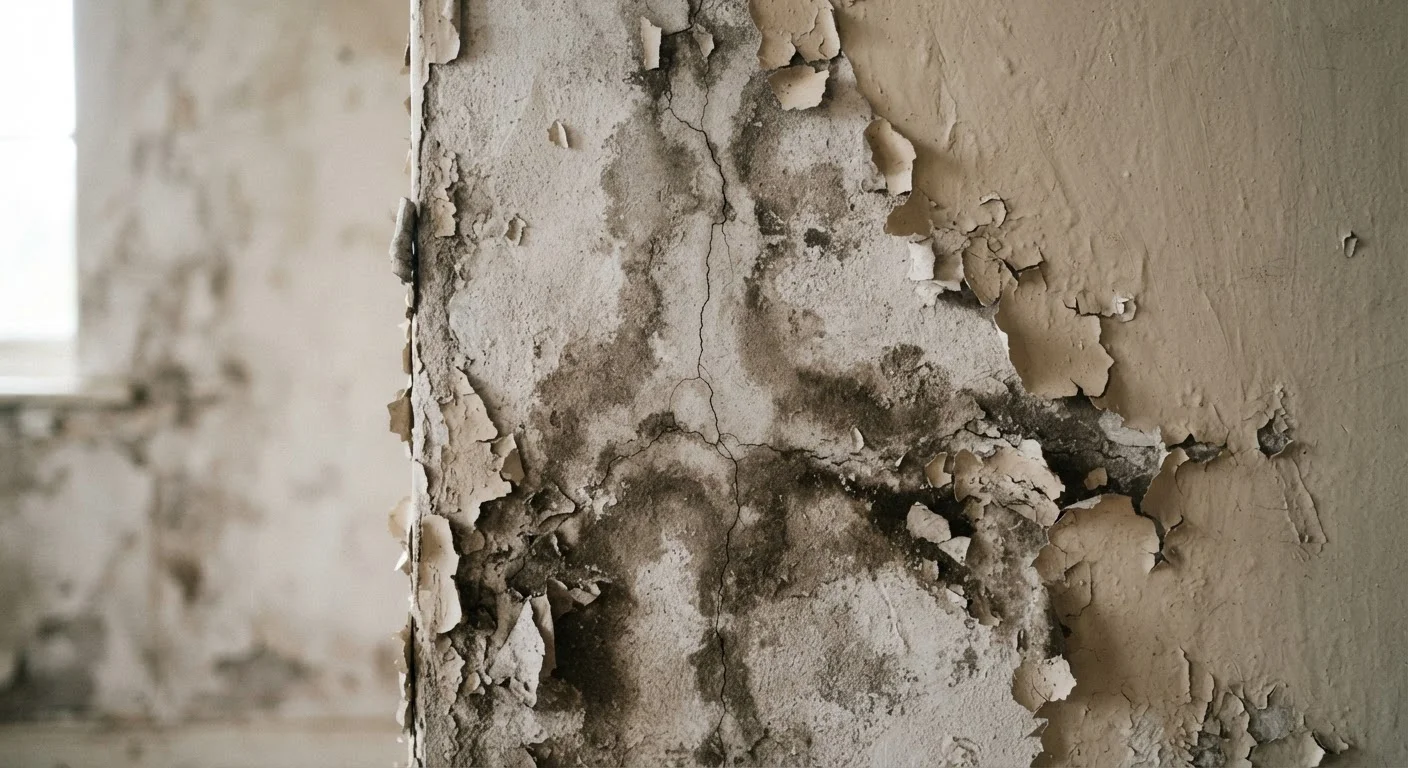
- Dark or fuzzy patches on walls, especially near baseboards or in corners — Likely mold or mildew. Surface cleaning is only a short-term fix if the moisture source isn't resolved. See our explainer on damp and mould for diagnosis guidance.
- Rust streaks on exterior walls below metal fixtures — Oxidizing metal components (anchors, flashing, railings). Inspect the metal source for corrosion and reseal or replace as needed.
- Greasy or grayish film on interior walls near HVAC vents — Can indicate dirty filters, duct leakage, or poor combustion in a gas appliance. Have your HVAC system serviced.
Sounds: What to Listen For and Where
Unexplained sounds are easy to dismiss, but some carry useful diagnostic information.
- Creaking floors — Usually loose subfloor panels or joists rubbing against fasteners. Common in older homes and often manageable. Widespread creaking across a floor system can occasionally point to moisture damage in the subfloor — worth checking if accompanied by soft spots.
- Banging or knocking in pipes (water hammer) — Occurs when water flow is suddenly stopped, causing a pressure shockwave. A plumber can install a water hammer arrestor. Persistent banging without an obvious cause may indicate a loose pipe or failing pressure-reducing valve.
- Clicking or popping from walls or ceilings — Often thermal expansion in framing or ductwork. If rhythmic and tied to temperature changes, generally normal. Persistent or loud popping warrants a closer look at structural framing or HVAC connections.
- Hissing near a gas appliance or meter — Stop, ventilate, leave the building, and call your gas utility immediately. Do not investigate yourself.
- Scratching or rustling in walls or attic — Likely a pest. Contact a licensed pest control professional for identification and removal.
A room-by-room walkthrough is an effective way to document these observations systematically.