

Key Takeaways
Saves money on routine, low-risk maintenance tasks
Simple repairs like caulking, weatherstripping, and minor plumbing swaps can be completed for the cost of materials alone, keeping routine upkeep affordable.
Builds practical knowledge of your home's systems
Hands-on experience with basic repairs helps you identify developing problems earlier and communicate more effectively with tradespeople when you do need them.
Repairs can be scheduled on your own timeline
DIY work doesn't depend on contractor availability, which matters for small, urgent fixes like a leaking toilet or a broken door latch.
Cosmetic upgrades offer high satisfaction with low complexity
Painting rooms, updating hardware, and patching walls are accessible to most homeowners and can meaningfully improve a home's appearance and feel.
Encourages proactive rather than reactive maintenance
Homeowners who engage with small repairs regularly tend to catch larger issues earlier, reducing the likelihood of expensive emergency repairs.
High-risk errors can create lasting safety hazards
Mistakes in electrical, gas, or structural work can introduce fire risk, gas leaks, or compromised load-bearing capacity — consequences that may not be immediately visible.
Unpermitted work can affect insurance and resale
Work that legally requires a permit but is done without one can complicate home sales, void homeowner's insurance claims, or require costly remediation to bring up to code.
Overconfidence leads to scope creep and compounding mistakes
What begins as a simple fix can expand unexpectedly; without the skills to adapt, a homeowner may worsen the original problem or create secondary damage.
Tool and material costs can erode projected savings
Specialized tools required for certain jobs may cost more than the labor savings justify, particularly for one-off repairs unlikely to recur.
Physical injury risk is real, especially at height or with power tools
Falls from ladders and injuries from power tools are among the most common DIY-related emergency room visits; tasks involving roofs or ceilings carry genuine personal risk.
Incorrect repairs may void manufacturer warranties
DIY work on appliances, HVAC systems, or water heaters can void existing warranties if the manufacturer requires authorized service for covered components.
Our Verdict
DIY home repairs offer real savings and a sense of accomplishment when applied to the right tasks. The key is honest self-assessment: matching your skill level, tools, and knowledge to jobs that genuinely carry manageable risk. For anything touching electrical panels, gas lines, load-bearing structure, or work requiring permits, hiring a licensed tradesperson is the safer and often legally required path.
Homeowners who want to reduce maintenance costs and build practical skills while knowing exactly where to draw the line and call a professional.
What Makes a Repair 'DIY-Appropriate'?
Not every home repair is created equal. The question isn't whether you're handy — it's whether the task is forgiving of mistakes and limited in its potential consequences. A patch job on drywall that goes sideways is an inconvenience; a wiring error that goes undetected can cause a fire.
A useful framework for assessing any repair starts with three questions: What's the worst realistic outcome if I get this wrong? Does this work require a permit or licensed contractor in my municipality? Do I have the tools and knowledge to do this safely and correctly? If any answer gives you pause, that's a signal worth heeding.
For a broader grounding in your home's systems before diving into repairs, see our first-time homeowner's overview.
Saves money on routine, low-risk maintenance tasks
Simple repairs like caulking, weatherstripping, and minor plumbing swaps can be completed for the cost of materials alone, keeping routine upkeep affordable.
Builds practical knowledge of your home's systems
Hands-on experience with basic repairs helps you identify developing problems earlier and communicate more effectively with tradespeople when you do need them.
Repairs can be scheduled on your own timeline
DIY work doesn't depend on contractor availability, which matters for small, urgent fixes like a leaking toilet or a broken door latch.
Cosmetic upgrades offer high satisfaction with low complexity
Painting rooms, updating hardware, and patching walls are accessible to most homeowners and can meaningfully improve a home's appearance and feel.
Encourages proactive rather than reactive maintenance
Homeowners who engage with small repairs regularly tend to catch larger issues earlier, reducing the likelihood of expensive emergency repairs.
Tasks That Suit a Confident DIYer
A wide range of repairs fall comfortably within reach for homeowners willing to research carefully and work methodically. These are generally tasks that are reversible, cosmetic, or low-stakes if done imperfectly.
- Interior painting and caulking — Low hazard, forgiving of minor errors, and easily redone.
- Replacing faucet aerators, showerheads, or toilet flappers — Simple plumbing swaps that don't involve cutting into supply lines.
- Patching small drywall holes — Kits are widely available, and the skill curve is gentle.
- Installing weatherstripping or door sweeps — Straightforward, energy-saving, and requires only basic tools.
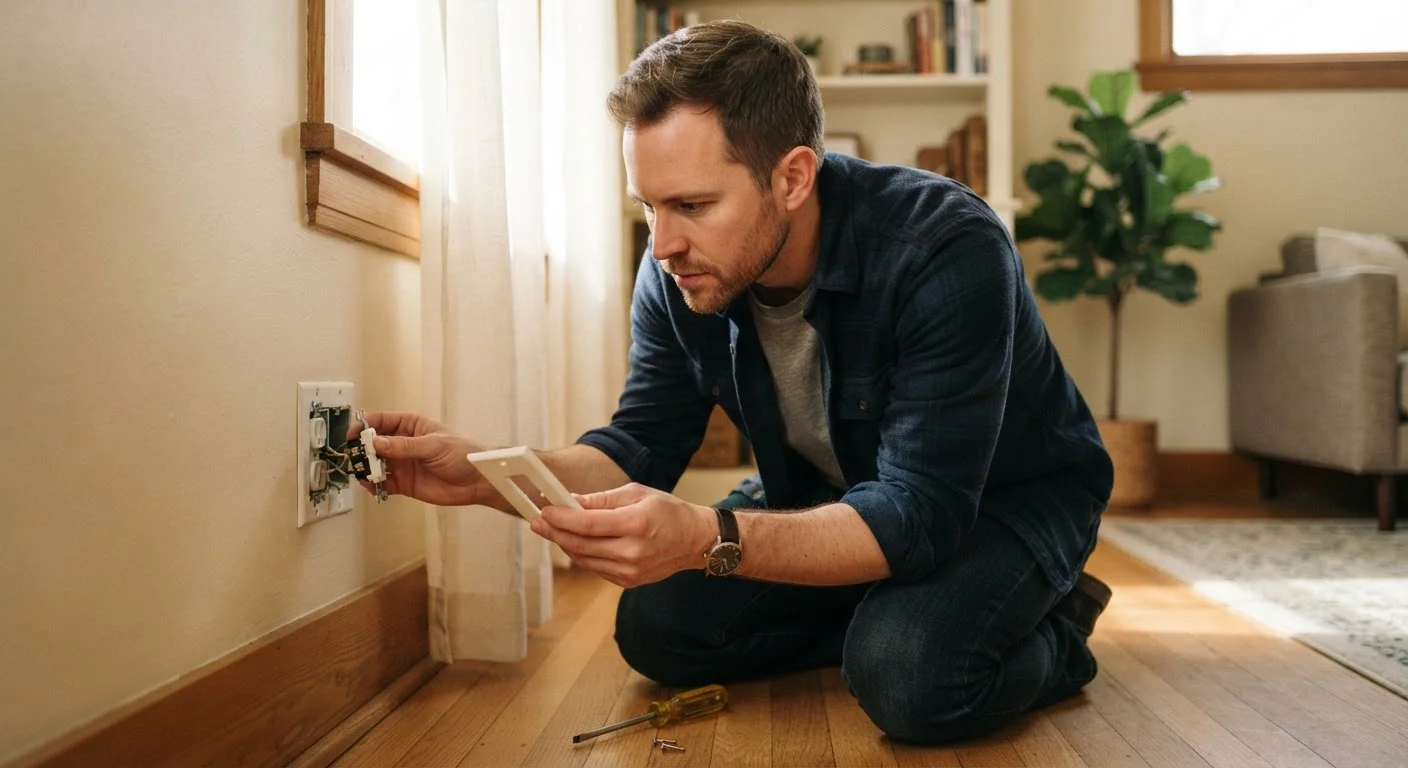
- Replacing light switches and outlets — Acceptable for a careful amateur, provided power is fully disconnected at the breaker and the work is on standard 15- or 20-amp circuits. Always verify with a non-contact voltage tester before touching any wiring.
Staying on top of these lower-stakes tasks is part of what a solid home maintenance routine looks like in practice.
Where the Risk Rises Sharply
Some categories of work carry consequences that extend far beyond a bad finish or a callback to redo the job. Errors can create structural instability, carbon monoxide exposure, electrical fires, water intrusion, or failed inspections that affect your home's insurability and resale value.
High-risk errors can create lasting safety hazards
Mistakes in electrical, gas, or structural work can introduce fire risk, gas leaks, or compromised load-bearing capacity — consequences that may not be immediately visible.
Unpermitted work can affect insurance and resale
Work that legally requires a permit but is done without one can complicate home sales, void homeowner's insurance claims, or require costly remediation to bring up to code.
Overconfidence leads to scope creep and compounding mistakes
What begins as a simple fix can expand unexpectedly; without the skills to adapt, a homeowner may worsen the original problem or create secondary damage.
Tool and material costs can erode projected savings
Specialized tools required for certain jobs may cost more than the labor savings justify, particularly for one-off repairs unlikely to recur.
Physical injury risk is real, especially at height or with power tools
Falls from ladders and injuries from power tools are among the most common DIY-related emergency room visits; tasks involving roofs or ceilings carry genuine personal risk.
Incorrect repairs may void manufacturer warranties
DIY work on appliances, HVAC systems, or water heaters can void existing warranties if the manufacturer requires authorized service for covered components.
Permits Protect You, Not Just the Inspector
Many homeowners view building permits as bureaucratic overhead, but they serve a practical purpose: a permitted job is inspected by a qualified official, giving you documented proof the work meets safety standards. This documentation matters when you sell your home, file an insurance claim, or need warranty service. Before any significant repair or renovation, check with your local building department — permit requirements vary widely by municipality and project type.
Work that typically falls into the high-risk category includes:
- Panel upgrades, new circuits, or service entry work — Requires a licensed electrician and permit in virtually every U.S. jurisdiction.
- Gas line repairs or appliance connections — Even a minor leak is a serious hazard; always use a licensed plumber or gas fitter.
- Load-bearing wall removal or modification — Miscalculating structural loads can compromise your home's integrity. A structural engineer or licensed contractor is essential.
- Roof replacement or significant repairs — Working at height carries real fall risk, and improper flashing leads to expensive water damage.
- Main drain line or sewer work — Cutting into drain-waste-vent systems incorrectly can cause persistent leaks or code violations.
For a system-by-system breakdown of what each area of your home involves, our comprehensive home maintenance guide covers roofing, plumbing, electrical, and more in detail.
~33%
DIY repairs that end up requiring a professional fix
Industry estimates suggest roughly one in three DIY repair attempts results in a follow-up call to a tradesperson, often at higher cost due to the added complexity of undoing the initial work.
$1,000+
Average cost to remediate unpermitted electrical work
According to general contractor industry data, bringing unpermitted electrical or structural work up to code often costs significantly more than the original permitted installation would have.
Making the Call: A Practical Decision Process
Before starting any repair, run through a quick checklist. First, look up whether the work requires a permit in your area — many counties publish this information online, and your local building department can confirm. Unpermitted work on regulated systems can create problems during future sales or insurance claims.
Second, honestly assess your experience. Watching a tutorial and having done something once are very different baselines. If a task is new to you and involves safety systems, start by hiring a professional and observing — that experience builds real competence over time.
Third, consider the cost of mistakes. For a repair where an error costs you $50 in materials to redo, the risk calculus differs substantially from one where a mistake requires a licensed contractor to remediate at several times the original cost.
This same logic applies across vehicle ownership, too — our piece on DIY car maintenance vs. going to a garage walks through a similar risk-based framework.
A hybrid approach works well for most homeowners: handle the low-risk, high-frequency tasks yourself, and invest in licensed professionals for the work that genuinely warrants it. That division protects your home, your safety, and your budget over the long term.