

Key Takeaways
Damp, Mould, and Condensation
These three terms describe related but distinct moisture problems in homes. Condensation forms when warm, humid air meets a cold surface. Damp refers to unwanted moisture entering or building up in a structure — often through walls, floors, or roofs. Mould is a living fungus that grows where moisture lingers on surfaces and can be triggered by any of these conditions.
In building science, 'damp' is typically categorized as rising damp (groundwater drawn upward through masonry), penetrating damp (rainwater entering through defects), or condensation-related moisture — each requiring a different remediation approach.
Three Problems, One Wall
Homeowners often use 'damp' and 'mould' interchangeably, but the two words describe different things — and treating the wrong one wastes both time and money. Before reaching for a spray bottle or calling in a contractor, it helps to understand exactly what you're looking at.
There are three main moisture-related problems you're likely to encounter: condensation, rising damp, and penetrating damp. Each has a distinct cause, a distinct pattern on your walls, and a distinct remedy. Mould, meanwhile, is a consequence — a living organism that colonises wherever moisture gives it the foothold it needs.
See our guide to reading your home's warning signs for a broader look at physical signals that something may need attention.
Condensation: The Everyday Culprit
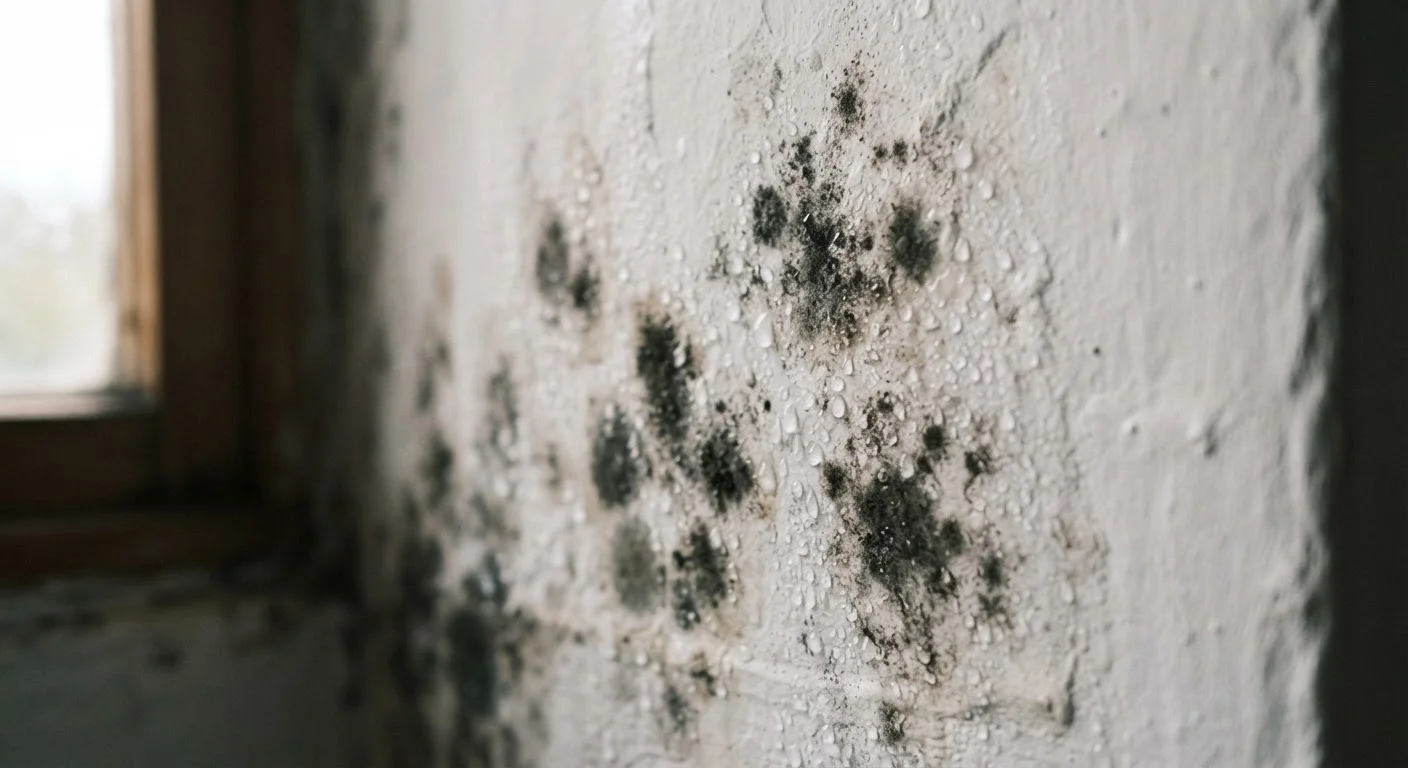
Condensation is by far the most common cause of household mould in the US. It forms when warm, moisture-laden air — produced by cooking, showering, breathing, and drying laundry indoors — contacts a cold surface like a window, an exterior wall, or the inside of a poorly insulated cavity. The air can no longer hold all its moisture, and water droplets form on that surface.
You'll typically see condensation-related mould in corners of rooms, on north-facing or exterior walls, around window frames, and in poorly ventilated spaces like bathrooms and behind furniture pushed against outside walls. The pattern is usually patchy and appears at any height on the wall — unlike rising damp, which stays low.
Simple Habits That Reduce Condensation
Open windows or run extractor fans when cooking and showering, and keep them running for 15–20 minutes afterward. Avoid drying laundry on radiators where possible — it releases significant moisture into the air. Maintaining a low, consistent background heat in cold weather is more effective at preventing condensation than large temperature swings.
The good news: condensation is largely preventable. Practical steps include running extractor fans during and after cooking or showering, keeping a background level of heating consistent during cold weather rather than letting rooms go cold for long periods, and leaving a small gap between large furniture and exterior walls to allow air circulation.
Improving insulation — particularly around cold bridges like window reveals and uninsulated external walls — reduces the temperature differential that causes condensation to form in the first place.
Rising Damp: Less Common Than You Think
Rising damp occurs when groundwater is drawn upward through the porous material of a masonry wall by a process called capillary action. In a properly built modern home, a damp-proof course (DPC) — a horizontal barrier of impermeable material built into the base of the wall — prevents this. Rising damp appears when that barrier fails, is absent in older properties, or is 'bridged' by soil or paving built up against the exterior wall.
The tell-tale signs are a horizontal tide mark typically no higher than about 1 meter (roughly 3 feet) from floor level, white powdery deposits called efflorescence (mineral salts left behind as water evaporates), and deteriorating plaster or skirting boards at the base of the wall.
Rising Damp Is Often Misdiagnosed
Many building professionals note that true rising damp is considerably less common than it is diagnosed. Before committing to expensive damp-proofing treatments, seek an independent assessment from a chartered surveyor rather than relying solely on a contractor who also sells remediation services. A proper moisture meter survey can help distinguish between the different damp types.
Critically, rising damp is often over-diagnosed. Some studies and building professionals suggest that a significant proportion of cases labelled as rising damp are actually condensation or penetrating damp. If a contractor immediately recommends an expensive chemical injection DPC without a thorough moisture survey, it's worth seeking a second opinion from an independent surveyor.
Penetrating Damp: A Structural Signal
Penetrating damp is moisture that enters a building horizontally through walls, roofs, or floors — typically because of a physical defect in the building envelope. Common culprits include cracked or eroded render (the external coating on masonry walls), failed mortar pointing between bricks, blocked or leaking gutters, damaged flashing around chimneys or roof joints, and poorly sealed window or door frames.
Unlike condensation, penetrating damp tends to follow rain events — you'll notice it getting worse during or after heavy rainfall. The damp patch will often correspond in location to where the defect is on the outside: a leaking gutter directly above, for example, or a cracked section of render on the exterior face.
The fix is always structural. Sealing or repainting interior surfaces will mask the problem temporarily, but the moisture will continue to enter until the external defect is repaired. For guidance on protecting external walls once repairs are made, see our article on external wall treatments.
For any penetrating damp that involves suspected structural damage, crumbling masonry, or roof components, engage a licensed contractor. Work of this nature often requires permits or inspections — verify local requirements before beginning repairs.
Dealing with Mould Safely
Mould can appear as black, grey, green, or even orange patches. Regardless of colour, the approach is the same: address the moisture source first, then treat the mould itself. Cleaning mould without fixing the underlying humidity or water ingress problem means it will return — often within weeks.
For small, surface-level mould patches (typically less than about 10 square feet), homeowners can often clean affected areas themselves using a mould-killing solution, wearing gloves and a mask to avoid inhaling spores. After treatment and drying, applying a moisture-resistant primer before repainting helps inhibit regrowth.
For larger infestations, mould on porous materials like drywall or insulation, or recurring mould despite remediation attempts, professional assessment is strongly recommended. This is particularly important for households with young children, elderly residents, or anyone with respiratory conditions or a compromised immune system. A room-by-room home audit can also help you identify other low-level environmental stressors you may have overlooked.
~1 in 5
US homes with reported indoor moisture or mould problems
The EPA estimates that indoor mould and moisture problems are widespread across American housing stock, affecting homes of all ages and types.
Up to 70%
Of household moisture from everyday activities
Cooking, bathing, laundry, and respiration can collectively introduce several pints of water vapor into the home each day, according to general building science guidance.
~1 meter
Maximum height of true rising damp on a wall
Building science consensus holds that capillary action in masonry rarely lifts groundwater higher than approximately one meter above floor level.
This article is for general informational purposes only and does not constitute professional building, structural, or health advice. Always consult a qualified surveyor, licensed contractor, or healthcare professional for concerns specific to your home or health.