

Key Takeaways
Roof Leak Escalation
Roof leak escalation describes the process by which a minor, easy-to-miss breach in a roof's surface progressively causes deeper and wider damage to the layers beneath it. Water that enters through even a pinhole-sized gap follows the path of least resistance — spreading across structural framing, insulation, and ceiling materials before becoming visible indoors. What begins as a superficial roofing issue routinely becomes a multi-system repair involving rot, mold, and compromised structural integrity.
Building scientists refer to this compounding process as 'moisture infiltration cascading' — each saturated material lowers the resistance of the next, accelerating deterioration exponentially rather than linearly.
How a Tiny Breach Becomes a Big Problem
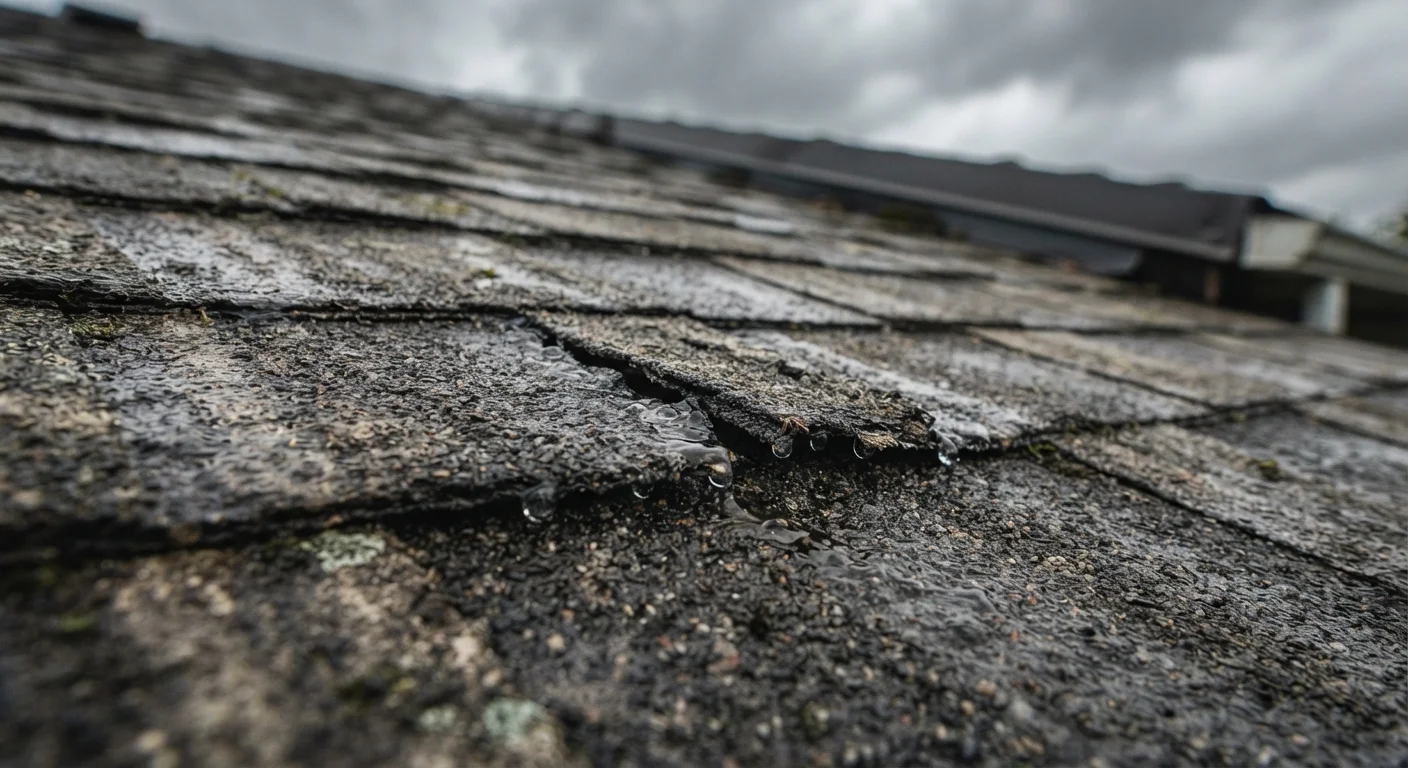
Water is patient and finds every opportunity. A missing shingle tab, a cracked pipe boot seal, or a small gap in flashing around a chimney may look trivial from the ground, but each one creates a direct pathway for rain and snowmelt to enter your home's layered construction. Once inside, water does not simply drip straight down — it migrates laterally across roof sheathing, soaks into insulation batts, and travels along rafters before it ever appears as a stain on your ceiling.
This migration is why the visible damage indoors rarely sits directly below the actual entry point. Homeowners who assume the problem is localized often address only the symptom, leaving the source untouched. Meanwhile, saturated wood framing weakens progressively, and insulation compressed by moisture loses its ability to regulate your home's temperature. The U.S. Environmental Protection Agency notes that mold can begin colonizing wet building materials in as little as 24 to 48 hours — meaning a single rainy weekend can set biological damage in motion before you notice anything at all.
Understanding this cascade is the first step toward interrupting it early. As our overview of overlooked maintenance tasks that drain home value shows, the smallest neglected systems routinely produce the largest repair bills.
40%
Of building-related problems linked to water intrusion
The Building Science Corporation has broadly cited water as a factor in a large share of building failures, underscoring how pervasive moisture-related damage is across residential structures.
24–48 hrs
Time for mold to begin growing on wet materials
According to the U.S. Environmental Protection Agency, mold growth can begin on damp building materials within one to two days of sustained moisture exposure.
3–5x
Cost multiplier from delayed vs. early leak repair
Home maintenance professionals generally estimate that water damage repairs escalate several times in cost once structural materials and mold remediation become involved, compared to surface-level fixes.
The Hidden Layers Water Damages First
Most homeowners think of their roof as shingles. In reality, a residential roof is a stack of interdependent systems, and water compromises them from the inside out before the shingles themselves show obvious wear.
- Roof sheathing (decking): The plywood or oriented strand board panels fastened to your rafters. When saturated, sheathing swells, delamminates, and softens — eventually losing its ability to support shingles or foot traffic.
- Insulation: Fiberglass batts and blown cellulose both lose nearly all thermal resistance when wet. Saturated insulation can also act as a long-term moisture reservoir, keeping surrounding wood damp for weeks after rain stops.
- Rafters and joists: Structural framing that wet-rots slowly and silently. By the time framing shows visible darkening or soft spots, the repair has moved from a roofing job into a structural one.
- Interior finishes: Drywall, plaster, and paint are the last line — and their staining or bubbling typically signals that the layers above are already significantly compromised.
The same principle applies to your home's perimeter. Blocked gutters compound roof leak damage by forcing pooled water back under eaves and into fascia boards, accelerating exactly this hidden deterioration.
Warning Signs Worth Taking Seriously
Catching a leak in its early stages is the difference between a targeted surface repair and a structural renovation. Train yourself to notice these indicators during routine home walkthroughs:
- Attic dark spots or streaks on sheathing or rafters — inspect your attic with a flashlight after heavy rain.
- Granule accumulation in gutters or at downspout exits — granule loss accelerates shingle aging and signals surface vulnerability.
- Daylight visible in the attic — any pinhole of light through the roof deck is a confirmed breach.
- Curling, buckling, or missing shingles visible from the ground with binoculars.
- Rust staining or separated flashing around chimneys, skylights, or vent pipes.
- Musty odor in upper rooms without an obvious source — often the first sensory clue of hidden mold growth.
Our companion guide on reading your home's physical warning signs covers a broader range of signals that deserve professional assessment.
Inspect Your Attic After Every Major Storm
You do not need to go on the roof to catch most early leaks. Grab a flashlight and check your attic within 24 hours of any significant rainstorm or after a freeze-thaw cycle. Look for dark streaks on sheathing, damp insulation, and any daylight visible through the deck. Catching moisture at this stage — before it reaches interior ceilings — gives you the most repair options at the lowest cost.
When to Call a Licensed Roofer — and Why It Matters
Roof work carries real fall hazards, and many repairs involve materials and techniques where errors create new leak points rather than eliminating existing ones. Improperly installed flashing is one of the most common causes of premature re-leaking after a homeowner repair attempt. As a general rule: if the repair involves replacing multiple shingles, reflashing a chimney or skylight, addressing sheathing damage, or working on any pitch steep enough that footing is uncertain, engage a licensed roofing contractor.
Before any work begins, verify the contractor holds a current state license and carries both general liability and workers' compensation insurance. Request a written estimate that itemizes the scope — surface repair, flashing work, and any decking replacement should be listed separately so you understand exactly what is being addressed.
The financial case for acting early is straightforward. A minor flashing repair or a small shingle patch addressed promptly is a fraction of the cost of replacing saturated sheathing, remediating mold, and repainting water-stained ceilings. The pattern of deferred maintenance compounding into major expense is well documented — our piece on the lifetime cost of neglecting routine maintenance illustrates exactly how small delays translate into large costs across home and vehicle systems alike.
Roof inspections are also commonly available from roofing contractors as a standalone service, giving you an informed professional assessment without committing to repair work upfront. Scheduling one in spring and fall aligns with the natural stress cycles your roof experiences — freeze-thaw cycles in winter and UV and heat exposure in summer.