

Key Takeaways
Why Gutters Fail Quietly — Until They Don't
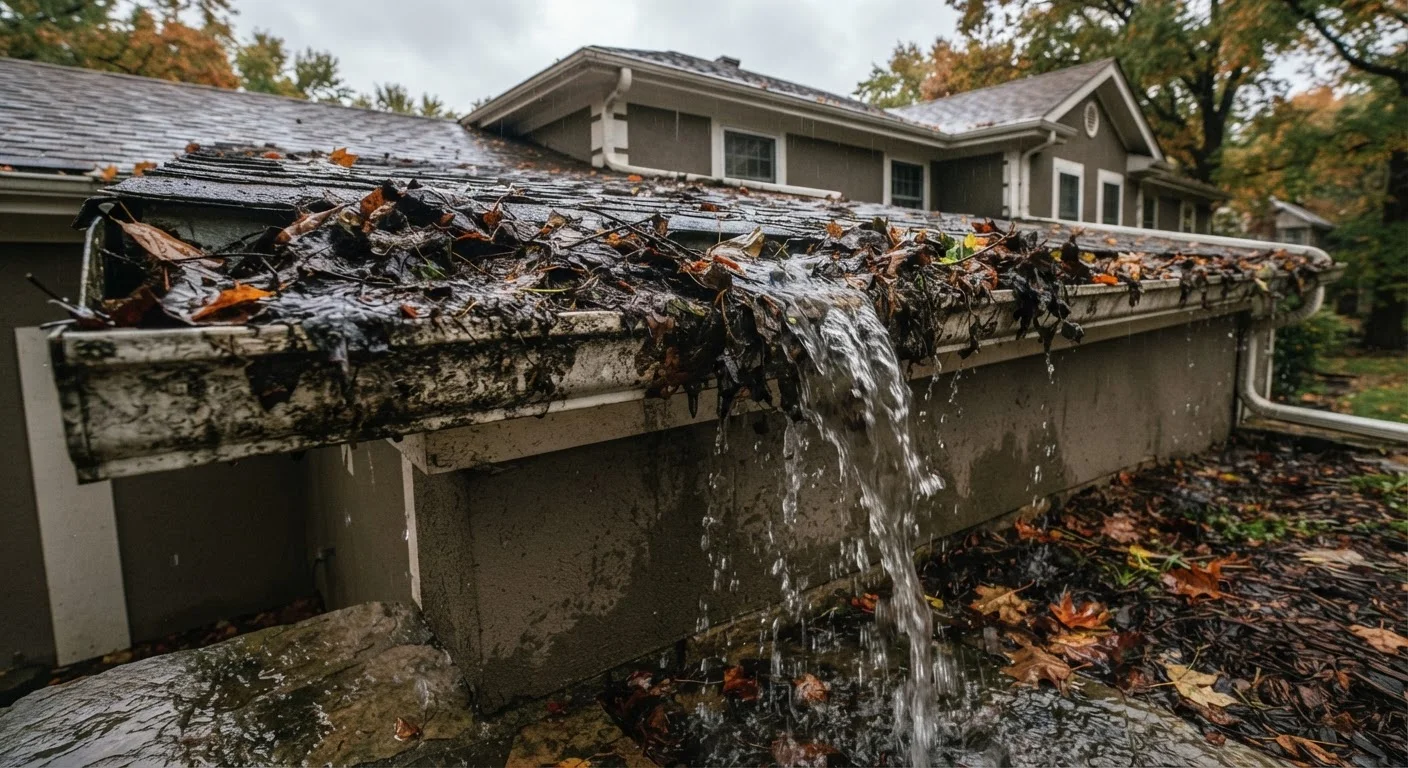
Gutters sit at eye level on most homes, yet most homeowners rarely look closely at them. That invisibility is exactly why neglected gutters account for some of the most avoidable — and expensive — home repair bills. Water that can't move through a clear channel doesn't disappear; it finds the next available path, and that path almost always leads somewhere you don't want it.
A gutter system's job is straightforward: collect rainwater from the roof and route it away from the structure via downspouts. When leaves, seed pods, shingle grit, and compacted debris block that path, the consequences spread far beyond a soggy garden bed. Understanding what goes wrong — and why — is the first step toward a simple maintenance routine that prevents it. For a broader look at how skipped tasks snowball into major costs, see our guide to overlooked maintenance tasks that quietly drain home value.
Cleaning gutters only once a year, typically in autumn.
Why it happens: Autumn leaf fall is the most visible trigger, so homeowners assume one annual cleaning is sufficient.
Flushing debris toward the downspout without checking whether it exits freely.
Why it happens: Homeowners focus on the trough itself and assume water draining in means it's draining out.
Ignoring where downspout water actually discharges.
Why it happens: Once the gutter is clear, many homeowners consider the task complete without checking where the water ends up.
Skipping gutter checks after heavy storms or high-wind events.
Why it happens: Storms feel like one-off events rather than maintenance triggers, so they're rarely followed by an inspection.
Assuming gutter guards eliminate the need for cleaning.
Why it happens: Gutter guard marketing often implies a maintenance-free system, leading homeowners to stop inspecting altogether.
The Real Damage a Blocked Gutter Causes
Water overflowing from clogged gutters follows gravity and saturates the soil directly alongside your foundation. Over time, that repeated saturation can cause soil erosion, hydrostatic pressure against basement or crawl space walls, and in freeze-prone climates, frost heave — where repeatedly frozen and thawed soil shifts foundation footings. These are not minor cosmetic issues; foundation repairs frequently run into five figures.
$10,000+
Typical starting cost for foundation repair
Foundation repair estimates from home inspection and structural engineering sources commonly begin in the five-figure range for significant water-related damage.
2x/year
Recommended minimum gutter cleaning frequency
Most home maintenance guidance recommends at minimum a spring and autumn cleaning, with additional passes for heavily treed properties.
Above the roofline, standing water in blocked gutters softens the fascia board — the horizontal board gutters attach to — and the soffit beneath it. Once wood rot sets in, it spreads to roof decking and rafters. A rotted fascia section that might cost a few hundred dollars to replace early can require full rafter repair if left unaddressed. For related escalation patterns, Why Small Roof Leaks Rarely Stay Small covers how water intrusion compounds once it reaches the structure.
Interior damage is equally common. Water backing up under shingles at the eave — particularly behind ice dams in winter — can seep through roof decking and appear as ceiling stains or wall dampness one or two rooms away from where you'd expect it. By the time you notice a stain, moisture may have been present for weeks.
Don't Ignore Sagging or Separated Gutters
A gutter section that has pulled away from the fascia or sags noticeably in the middle is no longer draining toward the downspout — meaning every rain event deposits water directly against your home. Rehanging a loose gutter is a straightforward repair, but if the fascia behind it has softened, the board will need to be replaced before re-securing the gutter. Inspect fasteners and slope alignment during each cleaning.
Building a Gutter Maintenance Routine That Sticks
Most homes benefit from gutter cleaning twice a year: once in late spring after tree flowering and seed release, and once in late autumn after the bulk of leaves have fallen. Homes under heavy tree cover — particularly oak or pine — may need a third pass in midsummer. A quick visual inspection after any major storm is a good supplemental habit.
When cleaning, clear the trough of debris by hand or with a gutter scoop, then flush the entire run with a garden hose toward the downspout. Watch the downspout outlet: water should exit freely. If it trickles or backs up, the downspout is blocked and needs to be cleared from below with a hose or plumber's snake. Check that downspout extenders direct water at least three to four feet away from the foundation, and verify that the surrounding grade slopes away from the house rather than toward it.
Gutter cleaning is a task many homeowners handle themselves using a stable ladder and basic tools. However, for multi-story homes, steeply pitched roofs, or any situation where ladder safety is uncertain, hiring a qualified professional is the safer and often more thorough choice. This is one maintenance task where the risk of a fall outweighs the cost of professional help. For context on how routine upkeep prevents compounding costs across every home system, our seasonal maintenance guide covers every system from roof to foundation.