

Key Takeaways
Sun Protection Factor (SPF)
SPF, or Sun Protection Factor, is a measure of how well a sunscreen shields skin from UVB rays — the type of ultraviolet radiation primarily responsible for sunburn and contributing to skin cancer risk. A higher SPF number means greater filtering of UVB rays. Sunscreens also carry broad-spectrum labeling to indicate protection against UVA rays, which penetrate deeper and accelerate skin aging.
SPF is a ratio calculated under standardized lab conditions; real-world protection depends heavily on application thickness (2 mg/cm² is the test standard) and reapplication frequency.
The One Product Every Dermatologist Agrees On
Walk into any dermatology office and you'll find genuine debate about retinoids vs. peptides, vitamin C serums, double cleansing, and a dozen other topics. But ask about sunscreen and the conversation goes quiet — because there's nothing to argue about. Daily SPF use is the closest thing dermatology has to a universal consensus, backed by decades of research linking UV exposure to skin cancer, accelerated aging, and compromised skin health.
That unanimity matters. In a category full of overhyped ingredients and conflicting advice, sunscreen stands apart as a step with clear, well-established science behind it. If you're building a skincare routine from scratch, this is the one non-negotiable.
What UV Radiation Actually Does to Skin
The sun emits multiple types of ultraviolet radiation, but two reach the earth's surface in meaningful amounts: UVA and UVB.
- UVB rays are shorter wavelength and primarily affect the skin's surface layer. They're the main cause of sunburn and play a significant role in skin cancer development.
- UVA rays are longer wavelength, penetrate deeper into the dermis, and are responsible for photoaging — the breakdown of collagen and elastin that leads to wrinkles, uneven tone, and loss of firmness. UVA levels remain relatively constant year-round and pass through glass.
The damage from both types is cumulative. It builds up through incidental exposure — your morning commute, sitting near a window, a walk at lunch — not just deliberate sun time. This is why the habit needs to be daily, not situational.
~97%
UVB rays filtered by SPF 30
SPF 30 blocks approximately 97% of UVB radiation under standardized testing conditions, according to the U.S. Food and Drug Administration's sunscreen guidelines.
80%
UV exposure on cloudy days
The Skin Cancer Foundation notes that up to 80% of the sun's UV rays can pass through clouds, making overcast days a significant source of cumulative exposure.
1 in 5
Americans who will develop skin cancer
The American Academy of Dermatology estimates that 1 in 5 Americans will develop skin cancer in their lifetime, with UV exposure identified as a primary preventable risk factor.
UV exposure also directly undermines the skin barrier — the protective outer layer that keeps moisture in and irritants out. If you've read about how the skin barrier works and why it matters, you'll recognize that UV is among its most persistent threats.
How Sunscreen Works — and Why Formulation Matters
Sunscreens fall into two broad categories based on their active ingredients:
- Mineral (physical) sunscreens
- Contain zinc oxide, titanium dioxide, or both. These ingredients sit on the skin's surface and deflect or scatter UV rays before they penetrate. They're often recommended for sensitive or reactive skin and are generally well-tolerated.
- Chemical sunscreens
- Use organic compounds (such as avobenzone, octinoxate, or oxybenzone) that absorb UV energy and convert it to heat, which then dissipates. These tend to feel lighter and blend more invisibly, making them popular for daily wear under makeup.
Neither category is inherently superior — both are effective when formulated properly and applied in adequate amounts. What matters most is choosing a broad-spectrum formula rated SPF 30 or higher, which means it addresses both UVA and UVB exposure.
“Sunscreen is the closest thing we have to a fountain of youth. It protects against skin cancer and photoaging — the two biggest UV-related concerns — and virtually every other skincare product works better when the skin isn't being continuously damaged by the sun.”
— Henry W. Lim, Former President, American Academy of Dermatology; Senior Vice President for Academic Affairs, Henry Ford Health System
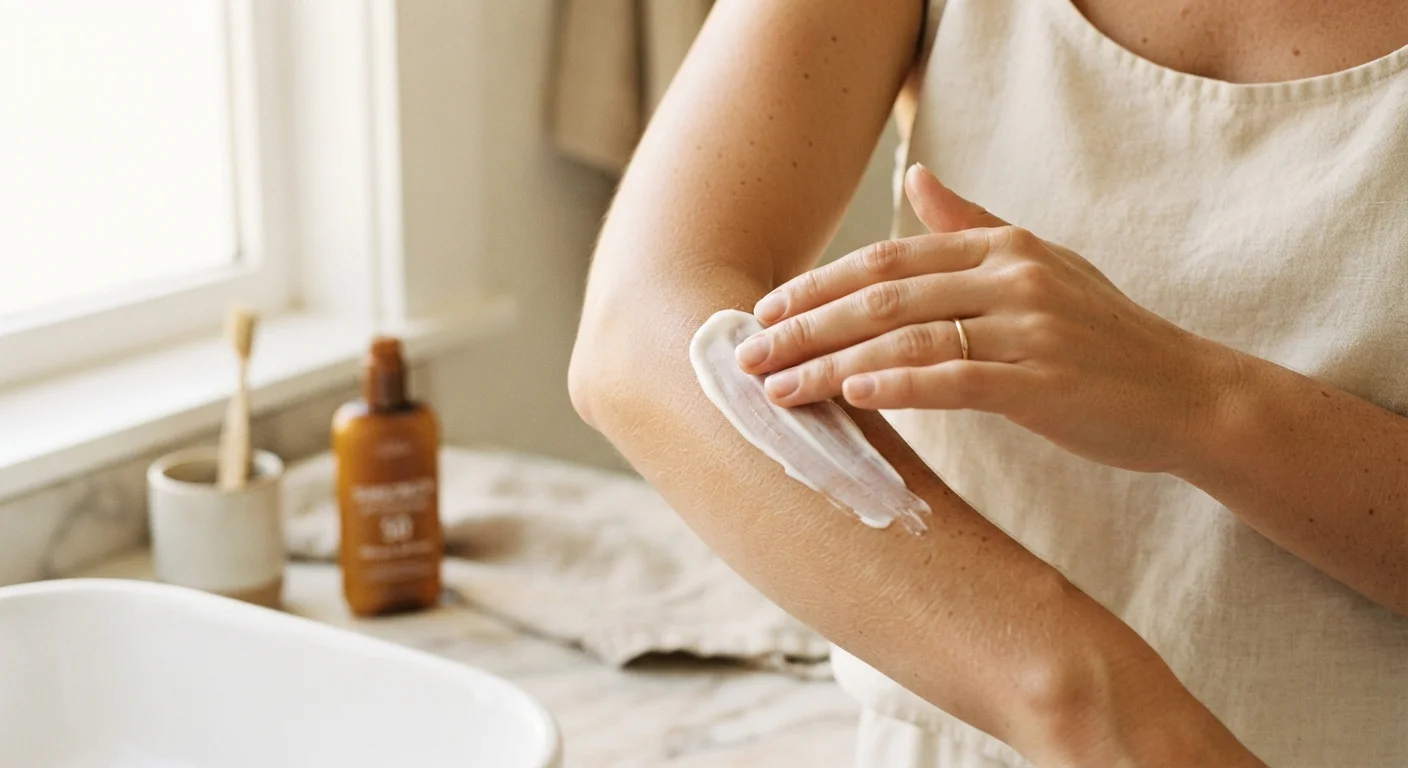
Application quantity is also critical. Most people apply roughly half the amount needed to achieve the labeled SPF. Dermatologists typically recommend about a nickel-sized amount for the face alone, or approximately one ounce (a shot glass worth) for the full body.
Who Needs Sunscreen — and Common Misconceptions
The short answer: everyone, every day. A few persistent misconceptions still lead people to skip SPF unnecessarily.
"I have darker skin, so I don't need it."
Melanin does provide some natural UV filtering, but it doesn't offer complete protection against DNA damage or skin cancer. People with darker skin tones are also more prone to hyperpigmentation from UV exposure — and skin cancers in these populations are often diagnosed at later, harder-to-treat stages. SPF is not a skin-tone-specific concern.
"It's winter / cloudy / I'm staying inside."
UVA radiation, which causes the most cumulative aging damage, doesn't vary dramatically with seasons and isn't blocked by overcast skies or standard window glass. Treating sunscreen as a weather-dependent choice leaves you exposed most of the time.
"Sunscreen breaks me out."
Some formulas don't suit every skin type, but the solution is finding a compatible texture, not abandoning SPF. This is similar to the broader issue of over-complicating a routine — sometimes a skincare routine causes more problems than it solves when you're using products that don't suit your skin. Testing a lightweight, non-comedogenic formula is the sensible first step.
Finding a Sunscreen That Works for You
If past sunscreens have felt greasy, left a white cast, or caused breakouts, the formula — not the SPF itself — was the problem. Lightweight fluid formulas, tinted mineral SPFs, and gel-based options are widely available and suit a range of skin types and tones. It may take trying two or three formulas before finding one that disappears comfortably into your skin, but the search is worth it.
Fitting Sunscreen Into Your Routine
Sunscreen is applied as the final step in your morning skincare routine — after moisturizer and before makeup. This placement matters because sunscreen needs to form an uninterrupted film on the skin's surface to work as intended. Layering other products on top of it can disrupt that film.
For correct routine sequencing, the principle is: apply products from thinnest to thickest consistency, with sunscreen as the last skincare step before any color cosmetics. You can find more detail on layering skincare products correctly if you want to understand the full logic behind product order.
Reapplication is relevant if you're spending extended time outdoors — the standard guideline is every two hours of UV exposure, or after swimming or sweating. For a typical indoor day with brief outdoor moments, your morning application generally holds.
This article is for informational purposes only and does not constitute medical advice. Consult a board-certified dermatologist for personalized skincare recommendations, especially if you have a history of skin cancer or a medical skin condition.