

Key Takeaways
Skin Barrier
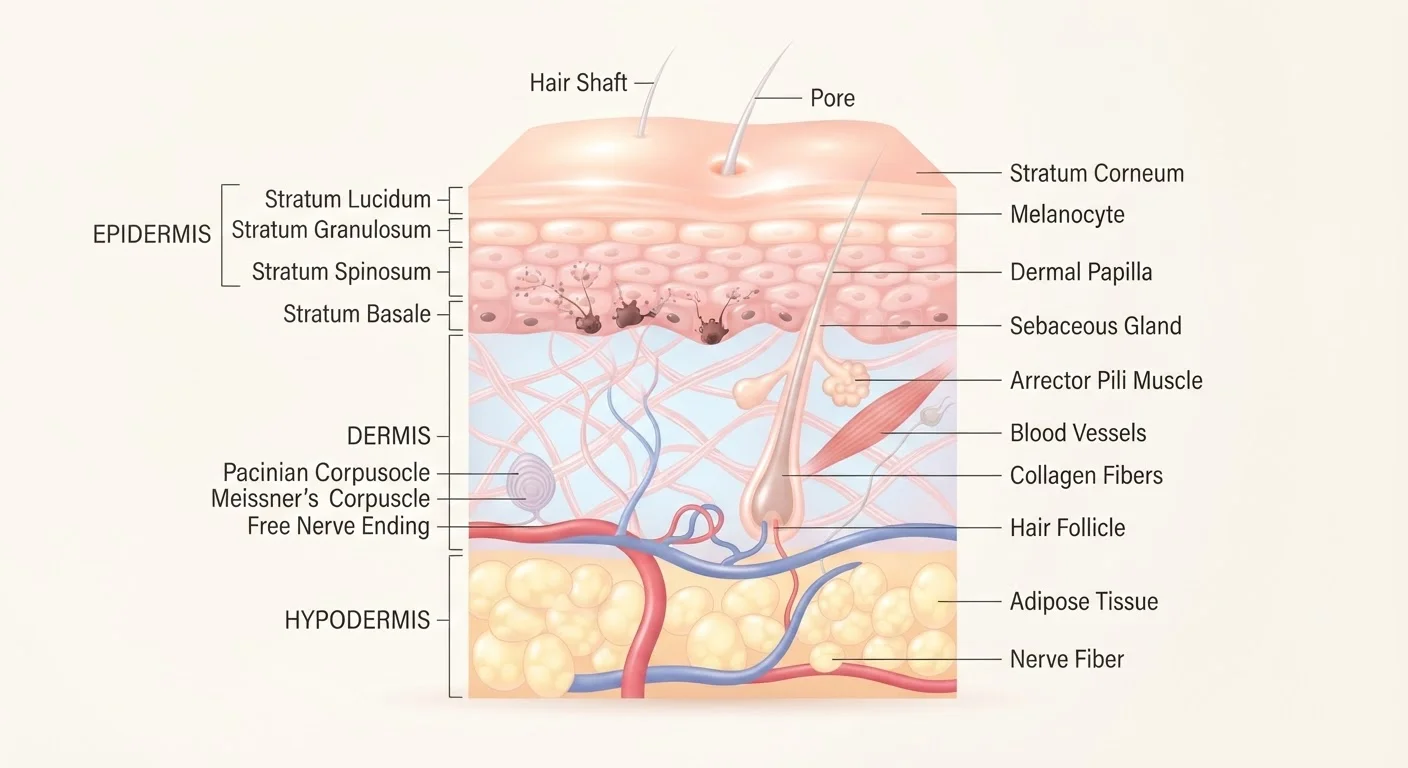
The skin barrier — formally called the stratum corneum — is the outermost layer of skin. It acts like a protective shield, keeping moisture in and harmful substances like bacteria, pollutants, and irritants out. When it's working well, skin looks and feels balanced, hydrated, and resilient.
The stratum corneum is composed of flattened, dead skin cells (corneocytes) held together by lipids — ceramides, fatty acids, and cholesterol — in a structure often described as 'bricks and mortar.' This lipid matrix is central to barrier integrity.
What the Skin Barrier Actually Does
Think of the skin barrier as a brick wall. The 'bricks' are tough, flattened skin cells called corneocytes, and the 'mortar' holding them together is a precisely balanced mixture of lipids — mainly ceramides, cholesterol, and free fatty acids. This structure performs two vital and opposing jobs at once: sealing moisture inside the body and keeping harmful substances out.
Without a functional barrier, the skin loses water rapidly — a process called transepidermal water loss (TEWL). Elevated TEWL is directly associated with dryness, tightness, and that uncomfortable post-cleanse feeling of skin 'pulling.' Simultaneously, gaps in the barrier allow allergens, pollution particles, and microorganisms to penetrate more deeply, triggering inflammation and sensitivity.
This dual function explains why so many common skin complaints — from reactive redness to recurring breakouts — often trace back to barrier health rather than any single ingredient or product failure.
What Damages the Skin Barrier
Barrier disruption is more common than most people realize, and everyday habits are frequently the culprit.
~50%
Share of stratum corneum lipids that are ceramides
Ceramides make up approximately half of the lipid content in the outermost skin layer, underscoring their central role in barrier integrity.
30–40%
Water content of a healthy stratum corneum
Research in dermatological literature consistently associates adequate stratum corneum hydration levels with smoother texture and reduced sensitivity.
- Over-cleansing or using harsh cleansers: Surfactants that strip natural oils — often found in foaming or alcohol-heavy cleansers — degrade the lipid mortar between skin cells.
- Overuse of active ingredients: Exfoliating acids (AHAs, BHAs) and retinoids are valuable tools, but using them too frequently or in too-high concentrations breaks down the barrier faster than it can repair itself.
- UV exposure: Ultraviolet radiation degrades the skin's structural proteins and lipids over time. Daily broad-spectrum SPF is one of the most consistent evidence-backed interventions for long-term barrier protection — see why dermatologists universally recommend sunscreen for the full picture.
- Environmental stressors: Low humidity, cold air, and air conditioning all accelerate TEWL by drawing moisture out of the upper skin layers.
- Overcomplicated routines: Layering many actives without adequate recovery time is a frequently overlooked barrier stressor. When a skincare routine causes more problems than it solves explores this pattern in detail.
How to Protect and Rebuild Your Skin Barrier
Supporting the barrier doesn't require an elaborate or expensive routine. The most effective strategies are consistently the simplest ones.
The 'Less Is More' Barrier Rule
When the barrier is visibly stressed — redness, flaking, stinging — temporarily stripping the routine down to a gentle cleanser, a ceramide moisturizer, and SPF is often more effective than adding new products to troubleshoot. Introducing new actives on already-sensitized skin can escalate irritation rather than resolve it.
Choose a gentle, pH-balanced cleanser. Skin's natural pH sits between 4.5 and 5.5 — mildly acidic. Cleansers with a significantly higher pH disrupt the acidic environment that helps beneficial skin microbiota thrive and keeps the barrier intact.
Prioritize ceramide-containing moisturizers. Ceramides are the dominant lipid in the stratum corneum. Topical ceramides help replenish what's lost through cleansing, aging, and environmental exposure. Humectants like hyaluronic acid and glycerin pull water into the skin, while occlusives like petrolatum seal it in — look for products that combine all three functions.
Scale back actives when barrier signs appear. Stinging, sudden breakouts in skin that's normally clear, or intolerance to familiar products are signals to simplify. Pausing exfoliants for one to two weeks while focusing on a basic cleanse-and-moisturize approach often allows significant recovery.
For those building or reassessing their routine from the ground up, building a skincare routine from scratch offers a clear-headed framework for determining which steps genuinely earn their place.
Understanding what each product in your routine actually does also helps prevent over-layering. Moisturizer, serum, and toner each serve distinct roles — and not every step is necessary for every skin type.
This article is for informational purposes only and is not a substitute for professional medical or dermatological advice. If you have concerns about your skin health, consult a qualified healthcare provider.