

Key Takeaways
Skincare Layering
Skincare layering refers to applying multiple products in a deliberate sequence so each one can perform its intended function without interference. A moisturiser, serum, and toner each interact with the skin differently — at different depths and through different mechanisms. Using them correctly means understanding what each one actually does, not just following trend-driven routines.
Product formulation determines absorption depth: low-molecular-weight actives in serums can penetrate deeper into the epidermis, while occlusive moisturisers primarily work at the surface to reduce transepidermal water loss (TEWL).
Why Each Layer Has a Job
Walk into any beauty aisle and the sheer variety of skincare products can feel overwhelming. Yet most of them fall into a small number of functional categories. Understanding what each category is engineered to do — rather than what marketing language suggests — cuts through the confusion and helps you build a routine that actually works for your skin.
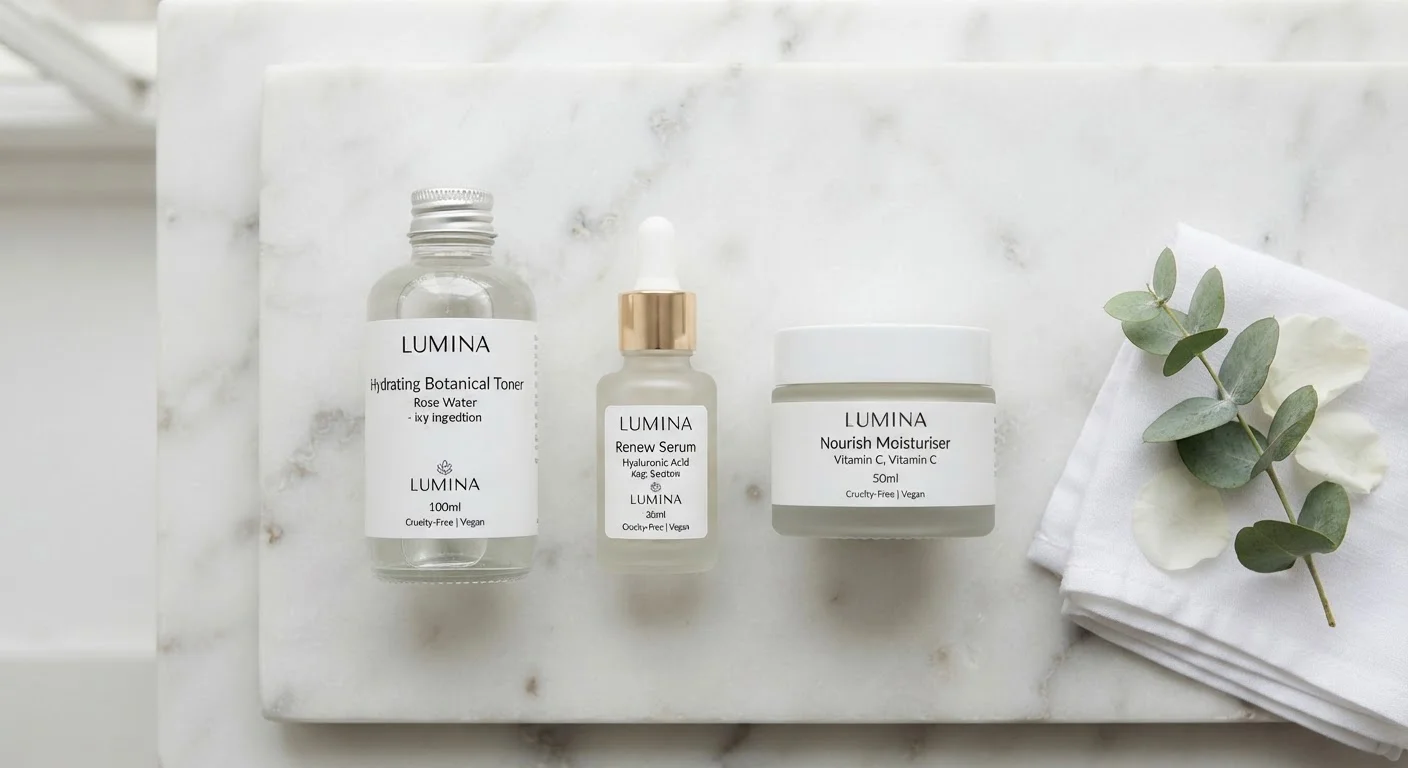
The three products most commonly layered in a routine are toner, serum, and moisturiser. Each interacts with the skin through a different mechanism and at a different stage of absorption. Using all three isn't mandatory, but knowing their roles lets you make an informed choice about what your skin genuinely needs. For a broader framework, see our guide on building a skincare routine from scratch.
Toner: More Than Just a Middleman
Toners were originally formulated to remove residual cleanser and restore the skin's pH after washing. Modern toners have evolved considerably, and today the category spans a wide range of formulations with different goals.
A basic hydrating toner adds a thin layer of water-binding ingredients — like glycerin or hyaluronic acid — immediately after cleansing, giving slightly dehydrated skin a head start before heavier products follow. Exfoliating toners, by contrast, contain chemical exfoliants such as AHAs (alpha-hydroxy acids) or BHAs (beta-hydroxy acids) that help remove dead skin cells and improve surface texture over time. These are a form of active treatment, not just prep.
When a Toner Is Worth Adding
If your skin feels balanced after cleansing and your serum is already delivering active ingredients, a toner may simply add an extra step without meaningful benefit. Consider a toner most useful when you want to target surface texture with an exfoliating formula, or when your skin regularly feels dehydrated after washing and before moisturiser.
Not everyone needs a toner. If your cleanser is gentle and your skin feels comfortable after washing, a toner is optional. Where toners add clear value is when you want a lightweight delivery vehicle for specific actives — or when your skin regularly feels tight and stripped after cleansing.
Learn more about the actives toners may contain in our plain-language guide to skincare active ingredients.
Serum: Where Targeted Treatment Happens
Serums are the workhorses of a targeted skincare routine. They're formulated with higher concentrations of active ingredients than most other product types, and their typically low-molecular-weight structures allow them to deliver those ingredients closer to where skin cell activity occurs in the epidermis.
What a serum targets depends entirely on its formulation. Common goals include:
- Brightening: Vitamin C serums aim to reduce the appearance of uneven pigmentation and dullness.
- Hydration: Hyaluronic acid serums draw water into the skin to plump and smooth.
- Anti-aging: Retinoid-based serums support cell turnover and can reduce the appearance of fine lines over time.
- Barrier support: Niacinamide serums help reduce redness and support overall skin resilience.
Because serums are concentrated, they tend to be the most consequential product in your routine — and the most important to match carefully to your skin's actual needs. See our article on skincare for different skin types for guidance on choosing suitable formulas.
Not All Serums Are Safe to Combine
Some active ingredient pairings can cause irritation or reduce each other's effectiveness. Retinoids and AHAs, for example, are often better used on alternate evenings rather than together. If you're new to actives, introducing one serum at a time — and monitoring how your skin responds — is a safer and more informative approach than stacking several at once.
Moisturiser: Locking It All In
A moisturiser's primary function is to support the skin's natural barrier — the outermost layer that prevents water from escaping and keeps environmental irritants out. It does this through three main mechanisms: humectants (which attract water to the skin), emollients (which smooth and soften by filling gaps between skin cells), and occlusives (which form a physical barrier on the surface to slow water loss).
Most moisturisers combine all three in varying proportions depending on their intended finish and target skin type. A gel moisturiser might lean heavily humectant and suit oily skin well. A thick cream for dry skin typically includes more occlusive and emollient ingredients.
Applied last in a routine, the moisturiser effectively seals the layers below — including any active ingredients from your serum — and helps maintain the skin barrier's integrity. For most people, it's the one step in a routine that consistently earns its place.
Once you understand what each product does, the next step is learning how to layer them correctly. Our guide on layering skincare products correctly explains the principles behind product order and how to apply them to your own routine.
This article is for general informational purposes only and is not a substitute for advice from a qualified dermatologist or healthcare professional. If you have specific skin concerns or conditions, consult a professional before making significant changes to your skincare routine.