

Key Takeaways
Why Product Order Actually Matters
Skincare layering isn't just a ritual — it has a functional basis rooted in how the skin absorbs different types of molecules. The skin's outermost layer, the stratum corneum, acts as a selective barrier. Applying a thick, occlusive product before a lightweight serum can physically block that serum from penetrating, rendering its active ingredients far less effective.
The guiding principle is straightforward: apply products from thinnest to thickest consistency, and from water-based to oil-based. This order ensures each product can interact with the skin surface before a denser formula seals things in. Getting this sequence right means you get more out of every product you're already using — without buying anything new.
If you're planning to introduce a new product into your existing routine, it's worth reviewing your current lineup first. Our routine audit checklist walks through application order as part of a broader self-assessment.
The Standard Layering Sequence
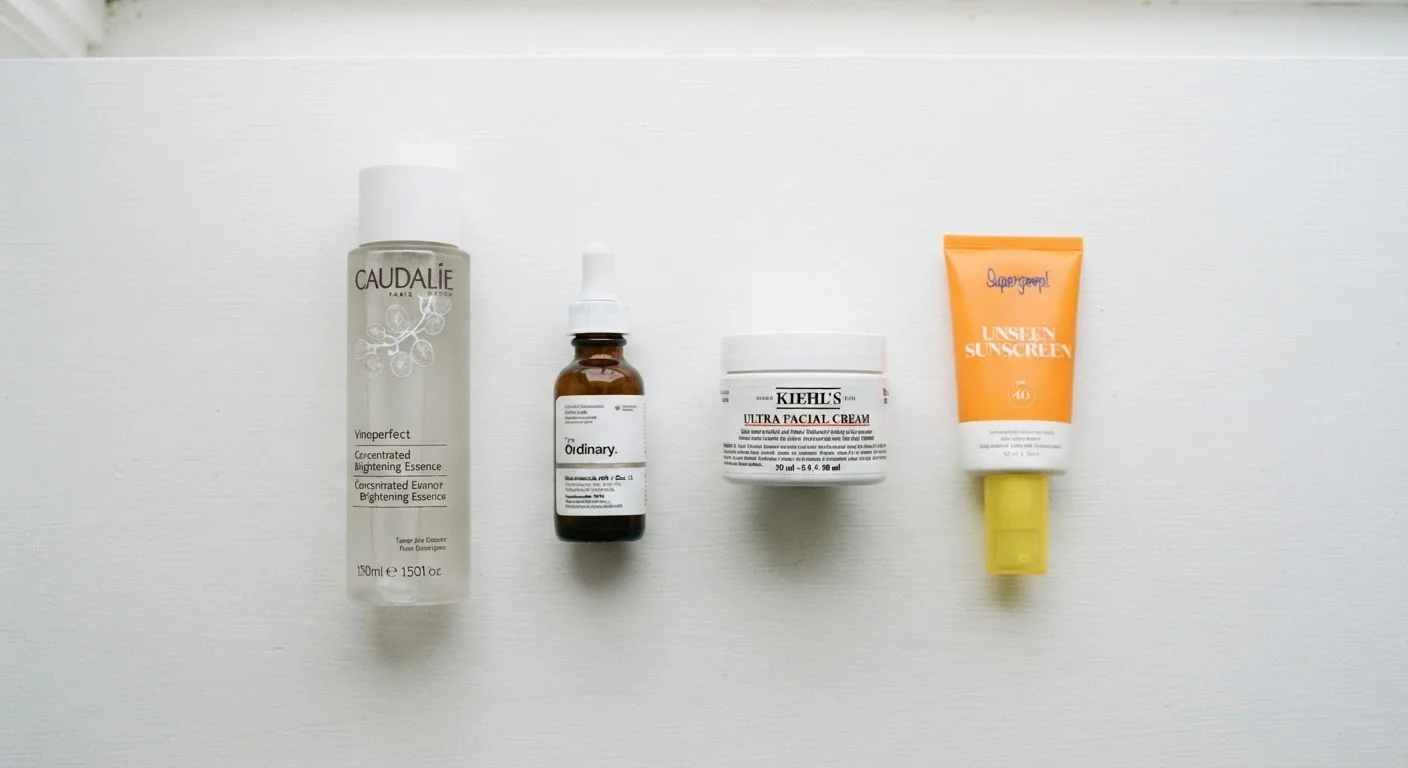
While individual routines vary, the following sequence reflects broadly accepted dermatological guidance for both morning and evening routines:
- Cleanser — Always start on a clean face. Residue from earlier products or the day can interfere with absorption.
- Toner or essence — These lightweight, water-based steps help balance skin pH and prime it for actives. Apply while skin is slightly damp.
- Targeted treatments and serums — This is where concentrated actives (such as vitamin C, niacinamide, or hyaluronic acid) go. Thinner serums before thicker ones.
- Eye cream — If used, apply before heavier moisturizers since it's typically a lighter emulsion designed for a delicate area.
- Moisturizer — Seals in the layers beneath and supports the skin barrier.
- Face oil (if used) — Oils are occlusive and belong after moisturizer in most cases, not before.
- Sunscreen (AM only) — Always the final step in a morning routine. Learn more about why sunscreen belongs in every daily routine.
Active Ingredients and the Layering Challenge
Serums and treatments containing active ingredients require extra thought. Some pairings can reduce each other's efficacy or trigger irritation when applied simultaneously. For example, layering a low-pH acid exfoliant directly under a peptide serum can destabilize the peptides. Similarly, certain retinoid formulas and vitamin C serums are better used in separate routines — one in the morning, one at night — rather than stacked.
This doesn't mean you need to overhaul your routine. It means being intentional about which products share application time. Our companion guide on ingredients that don't work well together covers the most common pairings worth separating.
pH Matters More Than You Might Expect
Some active ingredients — particularly vitamin C (ascorbic acid) and AHA/BHA exfoliants — require a low-pH environment to function optimally. Applying a higher-pH product immediately before can raise the skin's surface pH and reduce their effectiveness. If you use pH-sensitive actives, apply them first after toning and allow them to absorb fully before layering anything else.
When adding any new product to your routine, a patch test is a sensible precaution before full-face application, especially when introducing potent actives.
This article is for general informational and educational purposes only and does not constitute medical or dermatological advice. Consult a qualified skincare professional or dermatologist for concerns specific to your skin.