

Beauty & Grooming

Before You Add a New Product: A Routine Audit Checklist

Share
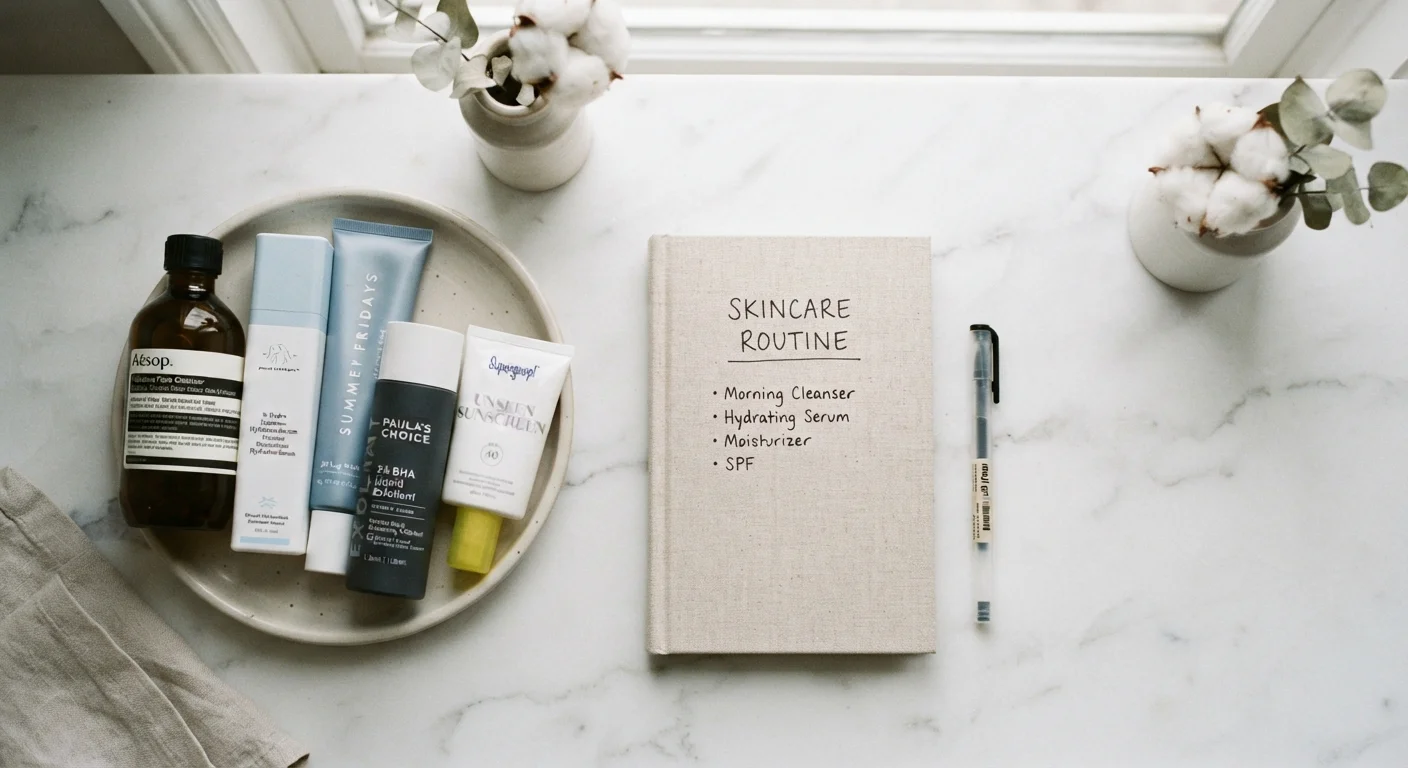
Flat lay of skincare products next to a notepad and pen on a white surface

Key Takeaways

Adding a new product without auditing your routine first can cause irritation or ingredient conflicts.
Application order, product frequency, and ingredient interactions all affect how well your routine works.
Skin signals like dryness, breakouts, or sensitivity often point to a routine problem, not a missing product.
A simple audit helps you identify what is working, what is not, and whether a new product is actually needed.
15–30 min

Summary

18 items · 15–30 minutes

Why Auditing First Makes Sense

The impulse to try something new is completely understandable — beauty shelves are full of products promising real results. But layering a new serum, exfoliant, or moisturizer onto a routine that hasn't been properly evaluated is one of the most common ways skin problems develop. Breakouts, dryness, and sudden sensitivity often aren't caused by a new product alone — they're the result of what that product encounters in your existing lineup.

Before reaching for anything new, spending 15 to 30 minutes auditing your current routine gives you a clear picture of what's working, what's redundant, and whether you actually need anything at all. Think of it as a reset, not a restriction. Our guide to layering skincare products correctly explains how product order affects absorption — a critical detail to have in mind before any addition.

This checklist walks you through every key area: inventory, ingredient compatibility, frequency, application order, and the skin signals that tell you your routine needs adjusting. Work through it methodically, and you'll approach any new product with far more confidence.

Required

Full product lineup (physical)

Lay out every product you currently use so you can audit the complete routine at once.

Required

Notepad or notes app

Record observations, ingredient flags, skin signals, and gaps identified during the audit.

Optional

Ingredient checker (general reference)

Cross-reference ingredient compatibility and identify potentially conflicting actives.

Required

Product use-by reference

Confirm expiration dates — most products list a period-after-opening symbol (e.g. 12M) on the packaging.

How to Use This Checklist

Gather all your current skincare products before you begin — don't rely on memory. Lay them out in the order you actually use them, AM and PM separately. Read ingredient labels as you go; the first five ingredients on any list typically make up the bulk of the formula.

Mark each item as must, should, or nice to have as you assess it. If you're unsure whether a product is doing anything, that uncertainty is itself useful information. Work through the groups below in sequence — preparation first, then ingredients and interactions, then application and frequency, then skin signal review.

More Products Don't Always Mean Better Results

A common mistake is assuming a skin concern requires a new product when it's actually being caused by something already in the routine. Over-layering actives — particularly retinoids, AHAs, and vitamin C — can compromise your skin barrier and worsen the very issues you're trying to address. Audit before you add, and consider removing before stacking.

Preparation

Lay out every product you currently use — AM and PM — so you can see your full routine at once. Must
Check expiration dates on all products and set aside any that are past their use-by or have changed in smell, color, or texture. Must
Write down what each product is supposed to do (hydrate, exfoliate, protect, treat) so you can spot redundancies. Should

Ingredient Review

Read the first five ingredients on each product label — these represent the majority of the formula's composition. Must
Flag any active ingredients that appear in multiple products (for example, retinoids, AHAs, BHAs, or vitamin C), as using duplicates increases irritation risk. Must
Check for known incompatible pairings, such as retinoids with strong AHAs or vitamin C with niacinamide at high concentrations, and note where conflicts exist. Should
Identify any ingredient you've previously reacted to and confirm none of your current products still contain it. Must

Application Order & Frequency

Confirm your current application order runs from thinnest to thickest consistency — cleanser, toner or essence, serums, moisturizer, then SPF in the morning. Must
Check that you're applying SPF as the final step every morning, not layering anything on top of it. Must
Review how often you're using exfoliants (chemical or physical) and confirm it's no more than your skin type comfortably tolerates — generally two to three times per week for most people. Should
Assess whether any products are being used more or less frequently than their instructions recommend, and note the discrepancy. Should
Allow adequate absorption time between steps (typically 30–60 seconds) — note if you're rushing through layers and compressing this window. Nice to have

Skin Signal Assessment

Note any changes in your skin over the past four to six weeks — increased dryness, oiliness, breakouts, or redness — and cross-reference with any product changes you made. Must
If you're experiencing tightness, flaking, or stinging, assess whether you may be over-exfoliating or using too many active ingredients simultaneously. Must
If your skin feels consistently congested or greasy, evaluate whether your moisturizer or any oil-based products may be too heavy for your skin type. Should
Consider whether seasonal changes (temperature, humidity) might be affecting how your current products perform, and whether adjustments are needed before adding anything new. Should

Final Gap Analysis

List any specific, unmet skin concern that your current routine does not address — this is the only justified reason to introduce a new product. Must
Confirm the new product you're considering does not duplicate an active ingredient already present in your routine. Must
Decide whether to remove or rotate out an existing product before adding the new one, rather than simply adding to the stack. Should

Once you've completed the audit, you'll have a cleaner sense of whether a gap genuinely exists in your routine. If it does, patch testing any new product before full-face application is the recommended next step. For a broader daily grooming perspective, see our daily grooming essentials checklist.

This article is for general informational purposes only. It does not constitute medical or dermatological advice. If you are experiencing persistent skin concerns, consult a qualified dermatologist or healthcare professional.

Beauty & Grooming Editorial Team is the collective byline for our editorial team and contributor network. Articles published under this byline or an editorial pen name are researched, written, and reviewed according to our editorial standards for clarity, consistency, and independence before publication.

View all articles by Beauty & Grooming Editorial Team →
Disclaimer: The content on this site is for informational purposes only and is not a substitute for professional advice. Always consult a qualified professional for guidance specific to your situation.