

Key Takeaways
Summary
22 items · 15–30 minutes
Why Daily Grooming Has Gaps Worth Closing
Most people have a morning routine — shower, brush teeth, maybe moisturize. But a closer look often reveals consistent blind spots: the scalp that goes unexamined, the lips chapped because balm is skipped, the nails that get attention only before a special occasion. These aren't vanity issues. They're maintenance gaps that compound quietly over time.
This checklist isn't about adding complexity. It's about auditing what you're already doing and filling in the steps that genuinely matter. If you're newer to building a structured routine, the beginner's grooming guide offers a solid starting framework before diving into this more detailed review.
Use the checklist below as a head-to-toe audit. Items marked must are non-negotiable basics; should items are strongly recommended for most people; nice_to_have steps offer meaningful benefits but can flex with your schedule.
Face and Mouth
Scalp, Hair, and Ears
Hands, Nails, and Body
Hygiene Foundations
Tools That Make This Routine Easier
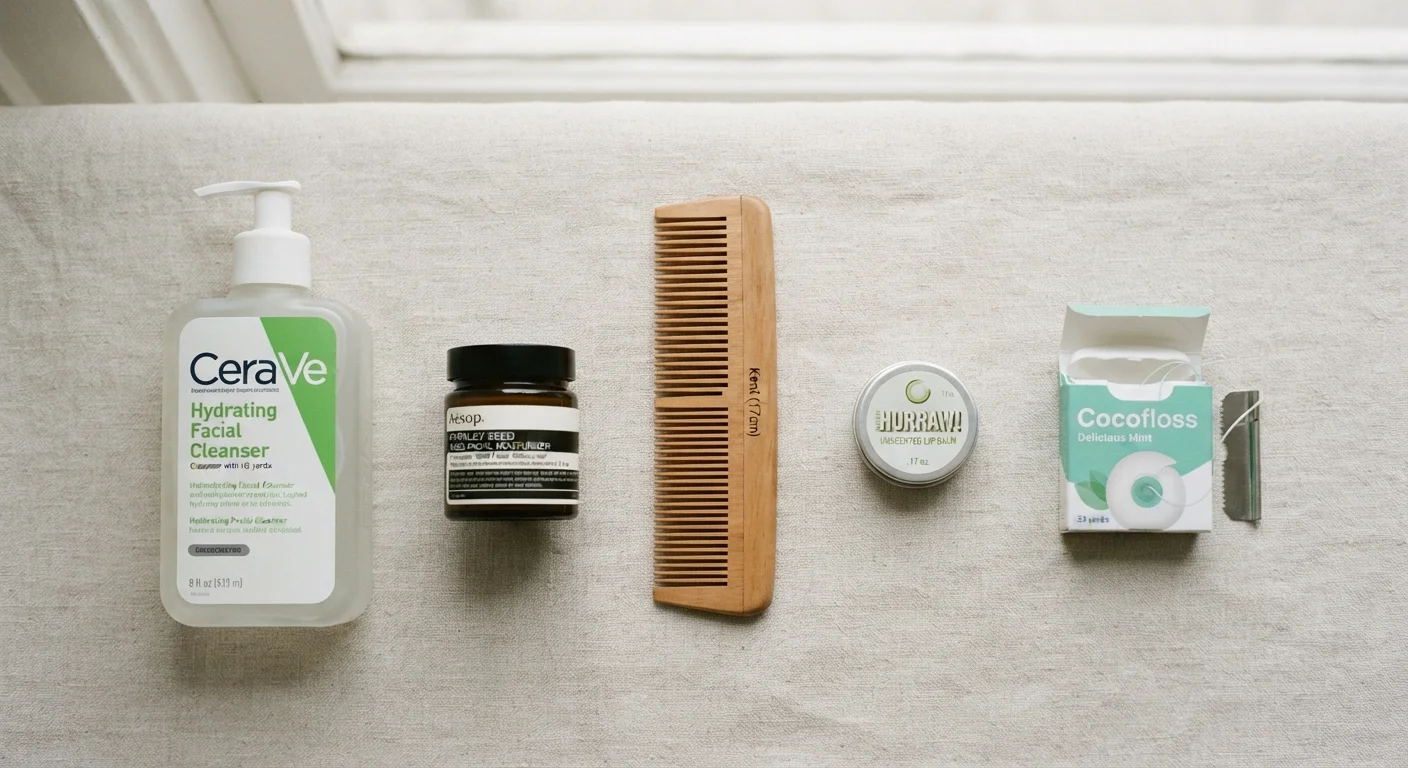
You don't need a stocked bathroom counter to cover these bases. A handful of reliable tools handle most of what this checklist requires.
Gentle pH-balanced cleanser
Removes oil, sweat, and residue from skin without disrupting the moisture barrier.
Broad-spectrum SPF 30+ sunscreen
Protects against UV-related skin damage during daily sun exposure.
Wide-tooth comb or detangling brush
Detangles hair gently from ends upward, minimizing breakage during daily styling.
Tongue scraper
Removes odor-causing bacteria from the tongue surface that brushing alone may miss.
Cuticle oil or balm
Moisturizes the cuticle area to prevent hangnails and keep nails looking maintained.
Unfragranced hand cream
Restores moisture to hands after frequent washing, supporting the skin barrier.
Nail clippers (finger and toe)
Keeps nails trimmed to prevent snagging, ingrown nails, and breakage.
If you're unsure whether your current product lineup is pulling its weight, audit your routine before adding anything new — it's often more effective than buying something additional.
The Steps Most People Actually Skip
When grooming routines fall short, it's rarely the obvious steps — people generally remember to wash their face and brush their teeth. The gaps tend to cluster in a few specific areas.
Scalp and hairline
The scalp is skin, and it benefits from the same basic attention as skin elsewhere on your body — gentle cleansing, moisture balance, and occasional tactile checks for dryness or buildup. Many people shampoo without massaging the scalp, which limits both cleansing effectiveness and circulation. For a fuller picture of how wash-day habits connect to long-term hair health, see the hair care routine guide.
Lips and perioral area
Lips lack oil glands, making them inherently prone to dehydration. A thin application of an unfragranced balm in the morning and before bed takes seconds and prevents the cracking and peeling that many people treat reactively rather than preventively.
Hands, nails, and cuticles
Frequent handwashing strips the skin barrier. A brief application of hand cream after washing — especially at night — is one of the highest-return grooming habits that regularly gets skipped. Cuticle care (gentle pushing back after a shower when skin is soft, light oil application) prevents hangnails and keeps nails looking neat without salon visits.
Avoid Cutting Cuticles — Push, Don't Remove
Cutting cuticles removes a protective seal that keeps bacteria and debris from entering the nail bed. Dermatologists generally recommend gently pushing cuticles back after softening with water rather than trimming them. If you experience redness, swelling, or tenderness around the nail fold, consult a dermatologist — these can be signs of infection.
Ears and behind the ears
The skin behind the ears and around the outer ear canal accumulates product residue, sweat, and natural oils. This area is easy to miss during face washing. A quick pass with a damp cloth during your shower or face routine is sufficient — no need for cotton swabs inside the ear canal, which can push debris deeper.
For guidance on keeping the full routine on track day to day, the daily reset checklist pairs well with this grooming audit.
This article provides general grooming information for educational purposes and is not a substitute for advice from a qualified dermatologist or healthcare professional. If you experience persistent skin irritation, scalp issues, or other concerns, consult a licensed professional.