

Key Takeaways
Start here
Why Grooming Habits Matter (And Why Simple Works)
Next
The Core Daily Routine: Face, Body, and Hair
Then
Weekly Grooming: The Steps You Don't Need Every Day
Finally
Building Your Routine So It Actually Sticks
Why Grooming Habits Matter (And Why Simple Works)
Good grooming isn't about vanity or following trends — it's about basic self-care that supports physical health, confidence, and how you move through the world. Clean skin, managed hair, and maintained nails all reduce the risk of irritation, infection, and odor. And yet, for beginners, the sheer volume of advice online can make the whole thing feel intimidating.
The truth is, a grooming routine that actually works is a short one. Elaborate multi-step regimens look impressive in articles, but consistency with a few fundamentals beats an ambitious routine you abandon after a week. This guide cuts to what genuinely matters — no lengthy product lists, no jargon — so you can build a daily habit that sticks.
If you're also thinking about other everyday wellness habits, the principles overlap: simplicity and consistency are the foundation. For a parallel look at another lifestyle essential, healthy eating fundamentals for beginners follow similar logic.
Start With What You'll Actually Do
The best grooming routine is the one you follow consistently — not the most comprehensive one on paper. If three steps feel manageable and twelve don't, start with three. You can always build from a foundation that's already working.
The Core Daily Routine: Face, Body, and Hair
Your daily routine should cover three areas: face, body, and hair. Each has its own needs, but none requires more than a few minutes.
Face
Cleanse your face twice a day — morning and evening — using a gentle cleanser suited to your skin type. After cleansing, apply a basic moisturizer to help maintain your skin's protective barrier. In the morning, a product with SPF (sun protection factor) built in provides daily UV protection without adding an extra step. For a deeper dive into building this part of your routine, building a skincare routine from scratch walks through each step clearly.
Body
Daily bathing or showering removes sweat, bacteria, and environmental residue. Use a mild body wash or soap, paying attention to areas prone to odor or buildup. Follow up with a body moisturizer while skin is still slightly damp — this locks in hydration more effectively. Apply deodorant or antiperspirant daily as part of this sequence.
Hair
Wash frequency depends entirely on your hair type and texture. Finer or oilier hair may need washing every one to two days; coarser or curlier textures often do better with less frequent washing and more conditioning. Rather than following a generic schedule, pay attention to how your hair feels and looks. Building a hair care routine from scratch offers an adaptable framework for every texture.
Skin barrier
The outermost layer of the skin that locks in moisture and protects against irritants, bacteria, and environmental damage. Harsh cleansing or over-exfoliating can weaken it.
SPF
Sun Protection Factor — a measure of how well a product shields skin from UVB rays, which contribute to sunburn and long-term skin damage. Applied daily, even on cloudy days.
Exfoliation
The process of removing dead skin cells from the surface, either with a gentle physical scrub or a mild chemical agent. Done once or twice a week, not daily.
Habit stacking
A behavioral technique where you link a new habit to an existing one — for example, doing your skincare routine immediately after brushing your teeth — to make it easier to remember.
Antiperspirant vs. deodorant
Deodorant masks or neutralizes odor, while antiperspirant also reduces sweating by temporarily blocking sweat glands. Both are applied to underarms as part of daily hygiene.
Weekly Grooming: The Steps You Don't Need Every Day
Some grooming tasks belong on a weekly — not daily — schedule. Doing them too often can cause irritation; skipping them entirely leads to buildup and neglect.
- Nail care: Trim fingernails and toenails once a week or as needed. Keeping nails short and clean prevents bacteria buildup and reduces the risk of snagging or breakage. What your hands and feet reveal about your grooming habits covers this area in more detail.
- Exfoliation: Exfoliating the face and body once or twice a week removes dead skin cells and prevents clogged pores. Use a gentle physical scrub or a mild chemical exfoliant — over-exfoliating strips the skin barrier and causes more harm than good.
- Ear and nose maintenance: A quick, careful clean of the outer ear and visible nose hair trim once a week keeps these areas tidy without requiring daily attention.
- Lip care: Dry, cracked lips benefit from a gentle weekly exfoliation and regular application of a plain lip balm.
If you have sensitive skin, approach exfoliation with particular caution. Grooming for sensitive skin outlines habits that help avoid triggering irritation.
Building Your Routine So It Actually Sticks
Knowing what to do is only half the challenge — the other half is making it a real habit. A few practical strategies make the difference between a routine that lasts and one that fades within days.
Attach grooming to existing habits. Behavioral research consistently supports habit stacking: linking a new behavior to one you already do reliably. Cleansing your face immediately after brushing your teeth, for example, reduces the mental effort of remembering a separate step.
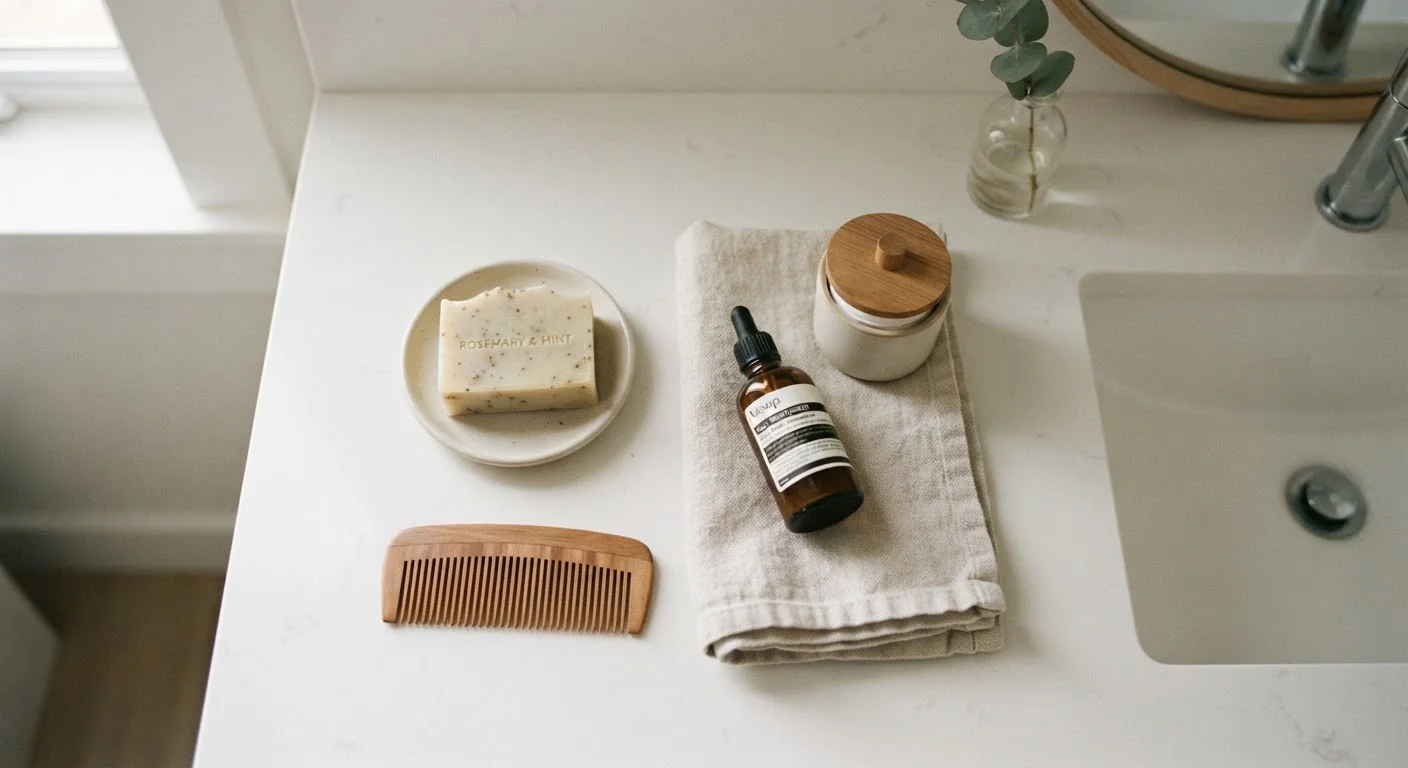
Keep it visible and accessible. Products stored out of sight tend to get skipped. A simple countertop setup with only what you use daily removes friction from the process.
Start smaller than you think you need to. If you're new to any structured routine, beginning with just three steps — face cleanse, moisturize, deodorant — and adding from there is more effective than attempting a full routine on day one.
For a more detailed look at how to build and maintain any new habit over the first month, your first 30 days of building a daily habit is a useful companion guide. You can also explore broader daily habit strategies for supporting your overall routine.
Finally, check the daily grooming checklist for the commonly skipped steps that quietly make a noticeable difference over time.
This article is for general informational purposes only and does not constitute medical or dermatological advice. For personal skin concerns or conditions, consult a qualified healthcare or skincare professional.