

Key Takeaways
Heat Damage
Heat damage refers to permanent structural changes in the hair strand caused by exposure to high temperatures from styling tools such as flat irons, curling wands, or blow dryers. Unlike temporary styling effects, heat damage breaks down the proteins and bonds within the hair shaft itself. The result is hair that loses its natural texture, strength, and elasticity — changes that cannot be reversed by conditioning treatments alone.
Heat damage disrupts disulfide bonds within keratin — the fibrous protein that gives hair its strength — and denatures the cortex proteins, leading to irreversible alteration of the hair's internal architecture.
What's Actually Happening Inside the Hair Strand
Hair looks simple from the outside, but each strand has a layered architecture. The outermost layer — the cuticle — consists of overlapping, scale-like cells that protect the inner cortex. The cortex makes up the bulk of the strand and contains the keratin proteins and disulfide bonds responsible for your hair's strength, elasticity, and natural shape. When heat is applied, these layers are stressed in predictable ways.
At moderate temperatures, the cuticle lifts slightly, which is how heated tools achieve straightening and smoothing effects. But as temperatures climb, the cuticle can crack, bubble, or separate — leaving the cortex exposed. More critically, the proteins inside the cortex begin to denature, meaning they unfold and lose their original configuration. Disulfide bonds — the chemical links that give hair its shape, including curl patterns — can be permanently broken or rearranged. Once that happens, no conditioner can rebuild what's been lost.
This is why heat damage is categorically different from ordinary dryness. Dryness is a surface and moisture issue. Heat damage is a structural one. Understanding this distinction matters because it changes what you can realistically expect from treatments. See the full picture of what influences hair health for context on how multiple factors interact with your hair's condition.
The Visual Signs — and What They're Telling You
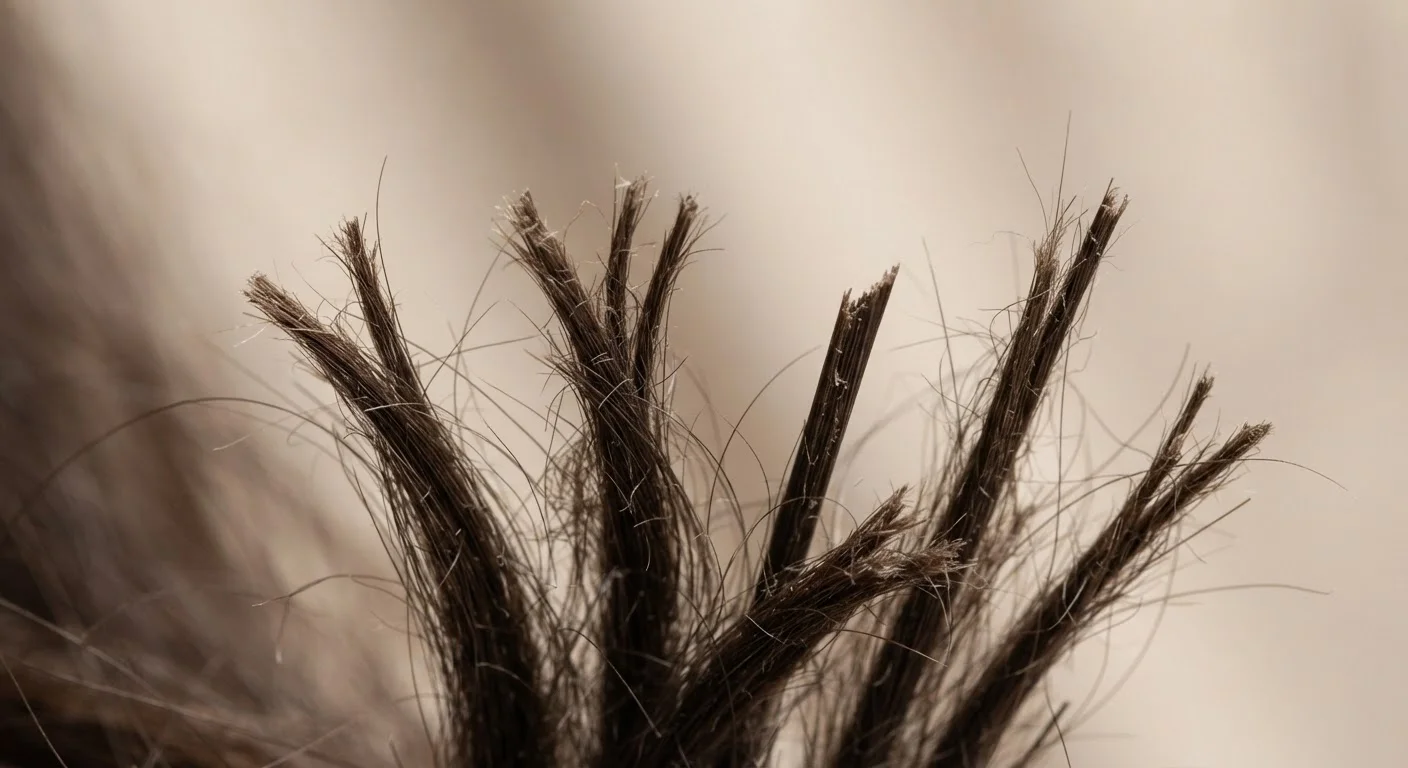
Heat damage has a recognizable look, though it can be subtle early on. Knowing what to notice helps you catch it before the damage accumulates.
~300°F
Temperature where hair protein stress begins
Research on keratin thermal behavior suggests meaningful protein changes start around 150°C (300°F), with greater disruption as temperatures climb.
~30%
Reduction in tensile strength from severe heat damage
Studies on thermally stressed hair have shown that repeated high-heat exposure can significantly reduce the force required to break a strand, indicating structural weakening.
3 layers
Structural layers affected by heat
Heat impacts the cuticle, cortex, and in extreme cases the medulla — all three layers of a hair strand's internal architecture.
- Persistent frizz that doesn't smooth: When the cuticle is disrupted or missing sections, hair can't lay flat — even immediately after heat styling. If your hair frizzes again within minutes of using a flat iron, that's a cuticle integrity problem.
- Loss of curl or wave pattern: For naturally curly or coily hair, one of the earliest and most definitive signs is sections that no longer coil back after washing and air drying. The bonds responsible for that curl geometry have been altered. Unlike a blowout that washes out, this change persists through multiple wash cycles.
- Snapping and breakage: Healthy hair stretches slightly before breaking — that's elasticity at work. Heat-damaged hair often snaps immediately under tension. If you're noticing short, broken pieces that aren't split ends, loss of tensile strength is likely the cause.
- Gummy texture when wet: Hair that feels overly soft, mushy, or stretchy when wet — then dries limp or weak — has lost significant protein structure. This is sometimes called over-processed texture and is a sign of advanced damage.
- Unresponsiveness to moisture: Damaged hair often seems unable to absorb and retain moisture effectively. The compromised cuticle can't regulate what enters and exits the strand, so hydration doesn't hold.
These signs can appear together or in isolation, and they tend to worsen with continued heat exposure. Comparing how your hair behaves now versus its baseline — in terms of curl return, breakage rate, and texture — is often the most reliable self-assessment.
Why Some Hair Is More Vulnerable Than Others
Not all hair responds to heat the same way, and this isn't arbitrary. Several structural and chemical factors influence heat tolerance.
Check Your Tool's Temperature Display
Many flat irons and wands display temperatures that may not reflect what's actually reaching the hair strand, especially on cheaper models. If your tool doesn't have precise temperature control, consider investing in one that does — guessing at heat levels is one of the most common causes of unintentional overheating across all hair types.
Hair diameter and density: Fine hair has a smaller cortex relative to its surface area, meaning heat penetrates proportionally deeper and faster. Fine-haired individuals typically see damage at lower temperatures than those with coarser strands.
Chemical processing history: Hair that's been bleached, colored, relaxed, or permed has already had its protein bonds chemically altered. That makes the hair significantly more susceptible to thermal stress — the existing disruption lowers the threshold for further damage.
Porosity: High-porosity hair — whether naturally occurring or acquired through damage — has gaps in its cuticle layer. Heat enters more readily and moisture escapes faster, compounding both the short-term and long-term effects of styling tools.
Natural curl pattern: Tightly coiled hair strands have points of natural structural variation along their length that can be more vulnerable to heat stress. Combined with the fact that curly hair is often drier to begin with, this increases the visibility of heat damage. Damage to the scalp environment can also compromise the integrity of new growth — see how scalp health affects the hair you grow for more on this connection.
Managing Heat Exposure Without Swearing Off Styling
Heat styling doesn't have to be eliminated to protect your hair, but it does require intentionality. The goal is minimizing cumulative stress, not achieving perfection.
Using the lowest temperature that achieves your styling goal is a consistently sound approach — there's rarely a reason for a flat iron to exceed 400°F (205°C) on most hair types, and many styles are achievable at significantly lower settings. Frequency matters as much as temperature: daily high-heat styling accumulates damage faster than weekly or occasional use.
Heat protectants, applied to towel-dried or fully dry hair (depending on the product formulation), help create a thermal buffer. They don't make heat harmless, but they do reduce the rate of protein degradation. Ensuring hair is thoroughly dry before using flat irons or wands is particularly important — applying intense heat to water-logged hair causes rapid steam formation inside the shaft, which accelerates structural breakdown.
For those managing textured or chemically treated hair, pairing heat awareness with attention to other stressors matters. Mechanical tension from tight styles compounds the vulnerability heat creates — both affect the structural integrity of the strand from different angles.
Once heat damage is present, the path forward is trimming affected sections progressively while supporting healthy regrowth through sound care habits — moisture balance, gentle handling, and reduced heat frequency. There's no shortcut to undoing structural damage, but there's a clear and achievable path to healthier hair over time.
This article is for general informational and educational purposes only and is not a substitute for professional advice from a licensed cosmetologist or trichologist. If you have concerns about hair loss or scalp conditions, consult a qualified healthcare professional.