

Key Takeaways
Normal Hair Shedding
Hair shedding is the natural, ongoing process by which individual hairs complete their growth cycle and fall out, making room for new growth. Most adults shed between 50 and 100 hairs per day without any noticeable thinning. This is distinct from hair loss, where hair falls out faster than it regrows — or stops regrowing altogether.
The hair growth cycle has three phases: anagen (active growth, lasting 2–7 years), catagen (transition, ~2 weeks), and telogen (resting/shedding, ~3 months). At any given time, roughly 85–90% of scalp hairs are in the anagen phase.
What Normal Hair Shedding Actually Looks Like
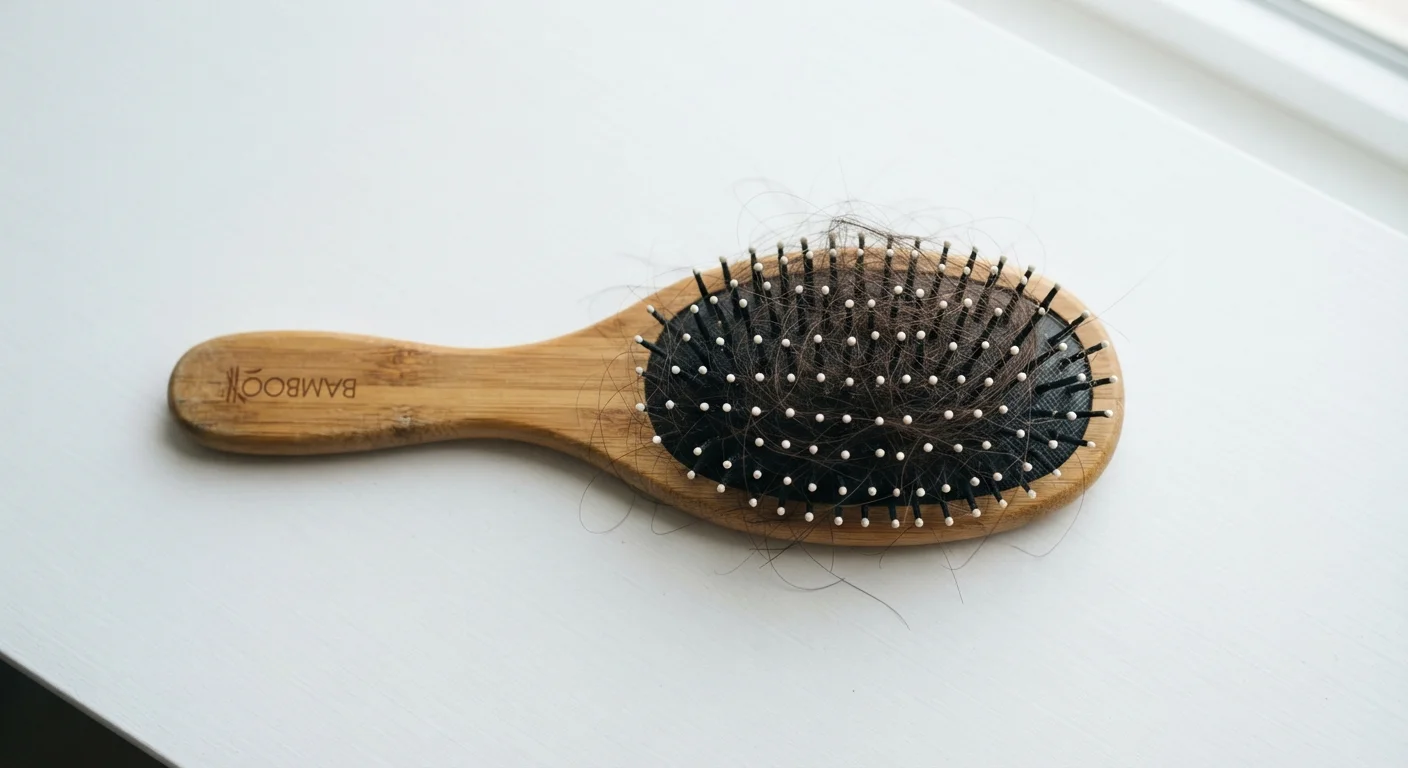
Finding hair on your pillow, in the shower drain, or collected on a brush is rarely cause for alarm. The average scalp contains roughly 100,000 hair follicles, and each one operates on its own independent growth cycle. At any given moment, a small percentage of those follicles are releasing hairs in the natural shedding phase — which is why daily loss of 50–100 strands is considered typical.
Shedding tends to be diffuse, meaning hairs fall from across the entire scalp rather than concentrated in one area. The key indicator of normal shedding: new hair is actively replacing what's lost, so density and coverage remain consistent over time.
Seasonal variation is also real. Some research suggests people shed more hair in late summer and autumn — a pattern thought to echo ancestral cycles, though individual variation is significant. A brief uptick in shedding at certain times of year is generally not a red flag on its own.
To track your baseline, consider doing a weekly hair care audit to observe your shed rate, scalp condition, and strand strength over time. Having a documented baseline makes it far easier to notice meaningful change.
Common Causes of Increased Hair Shedding
When shedding exceeds your normal range or continues for more than a few months, an underlying cause is usually at work. Some of the most common include:
- Telogen effluvium: A temporary but significant increase in shedding triggered by physical stress (surgery, illness, childbirth) or severe emotional stress. Hair enters the resting phase en masse and sheds two to three months later. This typically resolves on its own.
- Nutritional deficiencies: Low iron, inadequate protein, or insufficient zinc and B vitamins can all disrupt the hair growth cycle. Hair follicles are metabolically active tissues — they need consistent nutritional support. For more on how diet and lifestyle intersect with hair health, see how nutrition and environment affect hair.
- Hormonal changes: Thyroid dysfunction, postpartum shifts, perimenopause, and conditions such as polycystic ovary syndrome (PCOS) can all disrupt the growth cycle and increase shedding.
- Traction and styling stress: Tight hairstyles — including high ponytails, braids, and extensions — can place chronic mechanical stress on follicles. Over time, this can progress from shedding to permanent follicle damage. See which hairstyles cause traction damage for an in-depth look.
Track Changes, Not Just Single Days
A single heavy shed day means very little on its own. Instead, observe your hair over two to four weeks: check the density of hair collected on your brush, the width of your part, and whether your ponytail circumference is changing. Patterns over time are far more informative than individual snapshots.
Patterns That Warrant Professional Attention
While temporary shedding is common, certain patterns signal something that deserves a clinical evaluation rather than a wait-and-see approach:
50–100
Hairs shed per day considered normal
Dermatologists widely cite this range as the typical daily shed count for a healthy adult scalp with roughly 100,000 follicles.
~50%
Hair volume lost before thinning is visible
Research suggests that visible thinning on the scalp generally does not become noticeable until approximately half of the hair in a given area has been lost.
2–7 years
Duration of the active hair growth phase
The anagen (growth) phase varies considerably by individual genetics, health status, and scalp region, influencing maximum achievable hair length.
- Patchy or circular bald spots: These may indicate alopecia areata, an autoimmune condition in which the immune system mistakenly targets hair follicles.
- Progressive widening of the part: Gradual thinning along the part line — especially in women — is a hallmark of androgenetic alopecia (pattern hair loss), which responds well to early intervention.
- Scalp changes: Redness, flaking, scaling, or tenderness alongside hair loss may suggest a scalp condition such as seborrheic dermatitis, psoriasis, or scarring alopecia, all of which require specific treatment.
- Sudden, dramatic loss: Losing large amounts of hair in a very short period warrants prompt evaluation to rule out systemic illness or nutritional crisis.
A dermatologist or trichologist (a specialist in hair and scalp health) can assess the pattern, examine the scalp, and order blood work or a scalp biopsy when needed. Early assessment typically leads to better outcomes regardless of the underlying cause.
This article is for informational purposes only and does not constitute medical advice. If you are experiencing hair loss that concerns you, please consult a qualified healthcare professional for personalized guidance.