
Crossing Into Mexico by Land: What the Process Looks Like at Major Border Crossings

Key Takeaways
What to Know Before You Reach the Border
Crossing into Mexico by land is a well-traveled route for millions of Americans every year — whether heading to Baja California, the colonial cities of the interior, or beach towns along the Pacific or Gulf coasts. The process is straightforward once you understand what's involved, but arriving unprepared can cost you time, money, or worse, entry into the country.
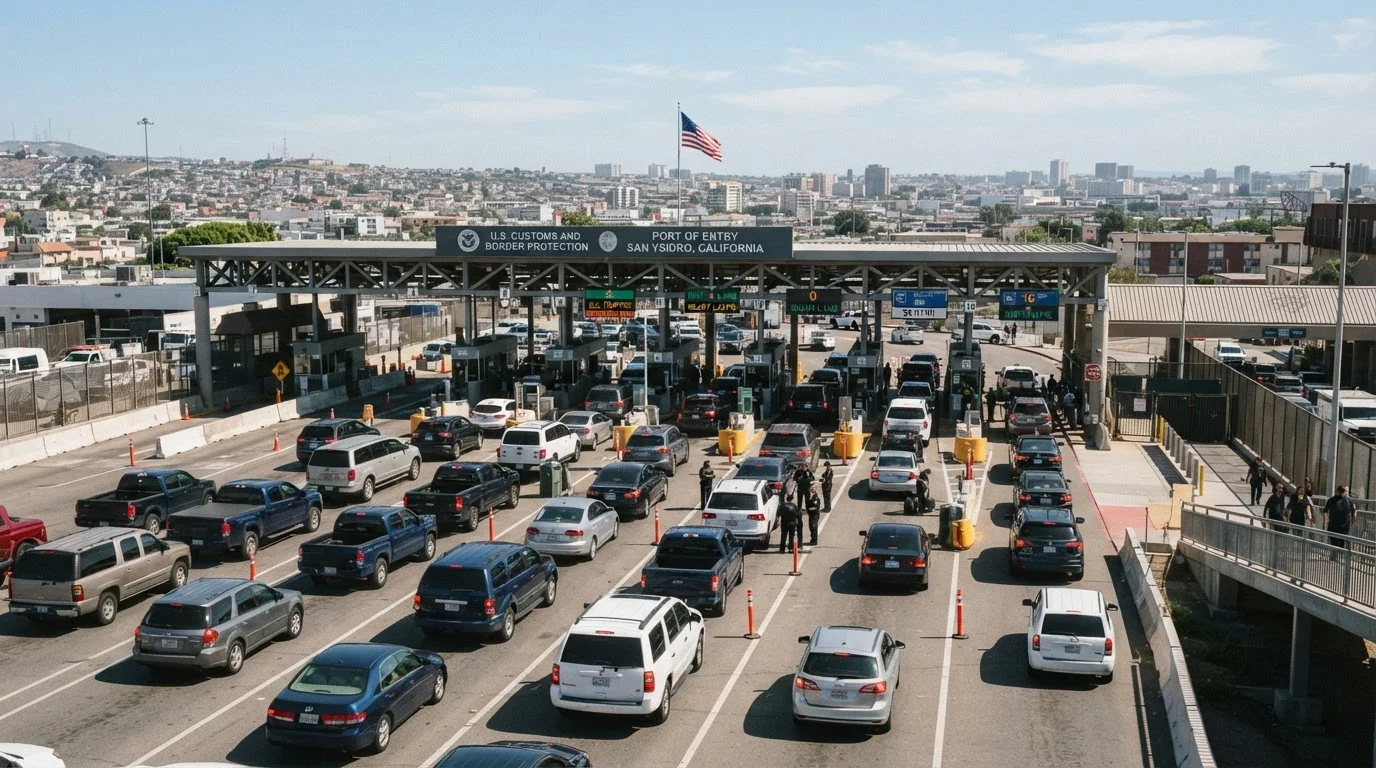
The two most heavily used crossing corridors are San Diego–Tijuana (the San Ysidro port of entry being the busiest land border crossing in the world) and the El Paso–Ciudad Juárez corridor in Texas, though dozens of ports of entry span the nearly 2,000-mile US-Mexico border. Each crossing has slightly different layouts and lane configurations, but the core process is consistent.
What you will need
If you're planning a road trip through the American Southwest on your way down, our region-wide Southwest guide can help you plan the US leg of your journey before the border dip.
Step-by-Step: The Crossing Process
Whether you're walking or driving, here's what a typical crossing into Mexico looks like from the US side through Mexican entry processing.
Choose your port of entry and check wait times
Not all crossings are equal in terms of lanes, hours, or pedestrian access. Research which port serves your destination most directly, then check live vehicle and pedestrian wait times via the CBP website or app before departing. This simple step can save you from sitting in a multi-hour queue.
Organize your documents before the approach
Have your passport (book or card) accessible before you reach the inspection booth — rummaging through bags in a vehicle lane frustrates agents and slows everyone down. If you have a tourist permit (FMM) pre-purchased online, print it or save it on your phone. Drivers should also have their vehicle registration and Mexican auto insurance card ready.
Cross into Mexico through Mexican immigration
Unlike the US-side crossing (where agents scrutinize entry), Mexico's northbound inspection is typically light — many travelers simply drive through without being stopped. However, a random light system (semáforo) may flag your vehicle for a secondary inspection. If stopped, stay calm, follow agent instructions, and declare any goods honestly.
Obtain or validate your tourist permit (FMM) if needed
If you're staying within the designated border zone (roughly 20–30 km from the border in most areas), an FMM isn't required for short visits. For travel beyond the border zone — or if you plan to stay more than 72 hours — you'll need to stop at the immigration office (Migración) at or near the port of entry to get your FMM stamped. There is a fee for stays beyond the free zone.
Clear the Mexican customs inspection if selected
After immigration, you'll pass through a customs checkpoint. Similar to US customs, you may be asked to declare goods, particularly items above personal-use quantities, large amounts of cash (over $10,000 USD must be declared), or commercial goods. The random traffic-light system may also apply here.
If you're bringing any prescription medications across the border, review the rules well in advance — our guide on traveling with medications covers what to check before you go.
Tips for a Smoother Experience
Plan Your Return Crossing Too
Re-entering the US often takes longer than entering Mexico. US CBP agents conduct thorough inspections, and wait times heading north on Sunday evenings or Monday mornings can stretch beyond two hours at major crossings. Factor return crossing time into your itinerary so you don't miss a flight or appointment.
Wait times are one of the most frustrating variables at any land crossing. The US Customs and Border Protection (CBP) website publishes live wait time estimates for all ports of entry — checking this tool an hour before you leave can save significant time. Midweek mornings tend to be less congested than Friday afternoons or Sunday evenings, when return traffic from Mexico spikes.
SENTRI (for frequent travelers) and Ready Lane programs can dramatically reduce crossing time for those who qualify and cross regularly. These trusted-traveler programs require advance application and background screening but are worth exploring if you plan multiple crossings per year.
Road rules change significantly once you cross — speed limits, signage, and right-of-way conventions all differ. Before heading deeper into Mexico behind the wheel, our guide to driving abroad walks through the key differences worth knowing in advance.
This article provides general informational guidance about land border crossing procedures. Entry requirements, regulations, and conditions at border crossings can change. Always verify current requirements with official sources including the U.S. Department of State, U.S. Customs and Border Protection, and the Instituto Nacional de Migración (Mexico's immigration authority) before traveling.