

Key Takeaways
Summary
18 items · 20–45 minutes
Why Planning Comes Before the First Box
Most reorganisation efforts fail not because of poor execution, but because they skip the thinking stage entirely. You move things around, buy some storage bins, and feel productive — then discover three weeks later that nothing stayed where you put it. The room drifted back because the new system didn't match how you actually live in the space.
Before you shift a single piece of furniture or empty a single drawer, work through this checklist. It takes less time than a hardware store run, and it dramatically increases your chances of landing on an arrangement that sticks. If you haven't yet done a broader review of your home, the room-by-room audit for a more intentional home is a strong companion to start with.
Understand How the Space Is Actually Used
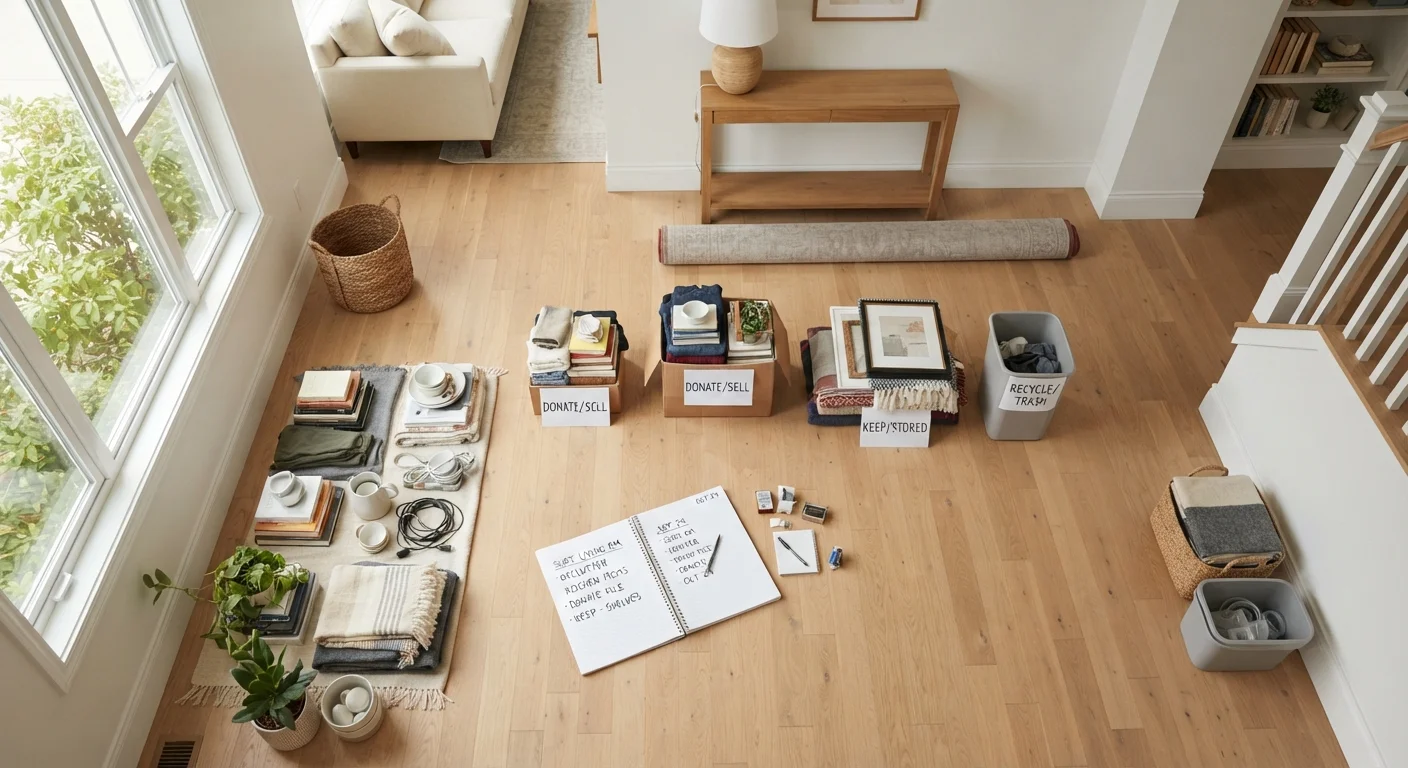
Declutter Before You Organise
Define Your Organisation Goals
Plan the Layout and Storage Logic
Build In a Maintenance Plan
Tools Worth Having on Hand
You don't need much to work through this checklist — just a few simple items that help you think clearly and capture decisions before you forget them.
Notepad or digital notes app
Capture your answers to planning questions, room measurements, and decisions as you work through the checklist.
Measuring tape
Measure room dimensions and storage unit sizes accurately before committing to a layout or buying containers.
Sticky notes or masking tape
Temporarily label zones and draft placement ideas on shelves or floors before finalising any arrangement.
Camera or smartphone
Photograph the room before you begin so you have a clear reference point and can compare the before and after.
Common Pitfalls to Avoid
Even well-intentioned reorganisation projects can unravel quickly. The most common pattern is skipping the declutter phase and building an elaborate system around too much stuff. Organisation containers can't fix a volume problem — they just make the clutter look tidier for a week or two. Always reduce before you reorganise. The room-by-room decluttering walkthrough takes you through this step methodically, space by space.
Another frequent mistake is reorganising a shared space without consulting the people who use it. If partners, roommates, or kids don't understand or agree with the new system, they won't maintain it. Build the logic collaboratively — even a five-minute conversation up front prevents weeks of friction. For guidance on navigating different tidiness tolerances, see organising a shared home when everyone has different standards.
Don't Buy Storage Before You Declutter
Purchasing bins, baskets, or shelving units before you've reduced your belongings almost always results in the wrong sizes and wasted money. Complete your declutter first, then measure what remains and shop with specific dimensions and categories in mind. This single step prevents one of the most common — and costly — reorganisation mistakes.
Finally, resist the impulse to buy storage solutions before you know what you're storing. Measure, categorise, and decide on placement first. Containers purchased in advance almost always turn out to be the wrong size, shape, or quantity.
If this is your first time building a deliberate home organisation system, starting your first real organisation system from nothing covers the foundational concepts worth understanding before you begin. For smaller spaces, small-space organisation strategies offers approaches that work without structural changes or major spending.