

Key Takeaways
Why Watering Decisions Matter More Than You Think
Most garden problems blamed on pests or disease actually start with water — too much, too little, or delivered at the wrong time. Overwatering suffocates roots by displacing oxygen in the soil, while underwatering forces plants into stress that stunts growth and reduces yield. Getting water right isn't about following a rigid schedule; it's about reading your plants, your soil, and your local conditions.
If you're just getting started, our guide to starting a vegetable garden from scratch covers how soil preparation affects drainage — a foundation that directly shapes your watering strategy.
Water in the early morning, before temperatures peak.
Morning watering reduces water lost to evaporation and ensures foliage dries quickly, limiting conditions that favor fungal disease. It also means roots have access to moisture during the warmest and most demanding part of the day.
Water slowly and deeply rather than quickly and shallowly.
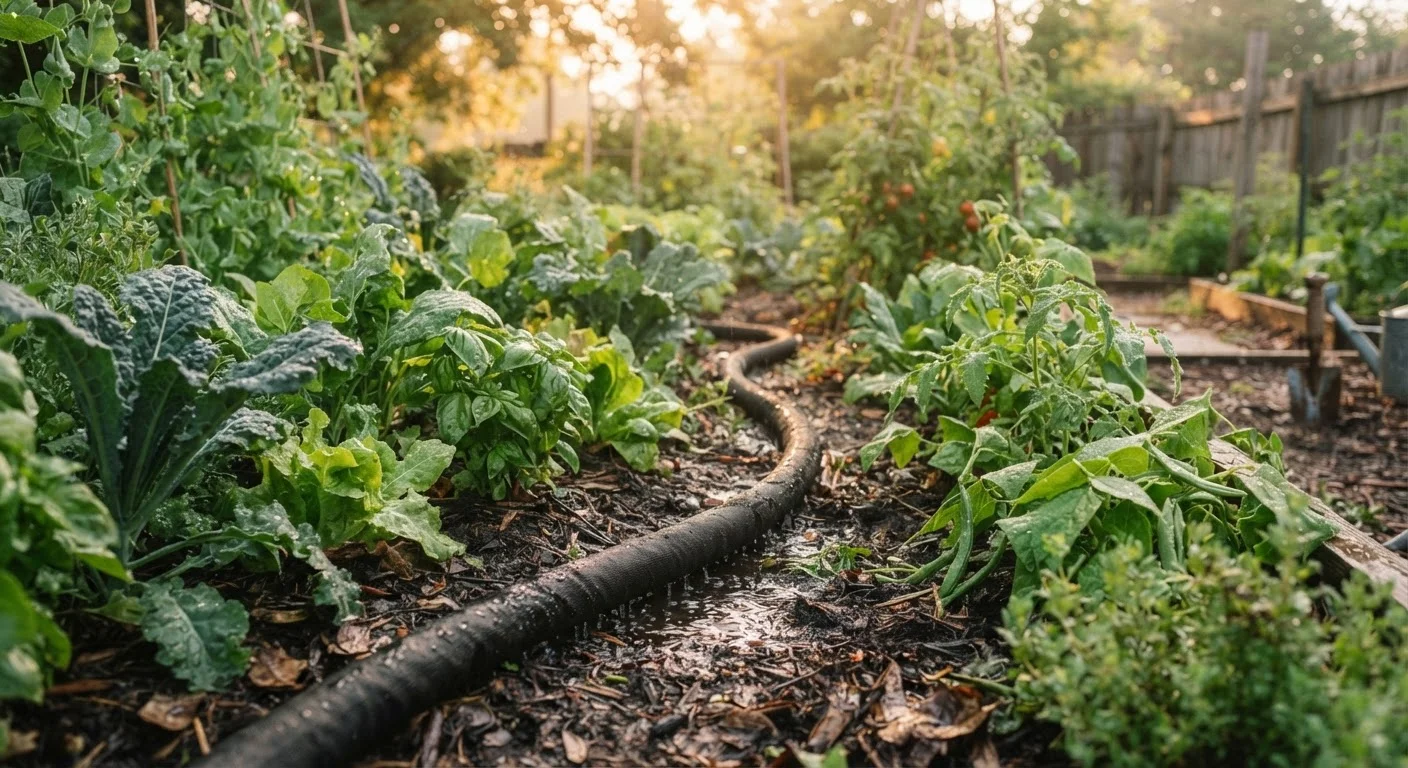
Fast, surface-level watering runs off before penetrating the root zone and promotes shallow root systems that struggle during dry spells. Slow delivery — via soaker hoses or drip irrigation — lets water percolate down to where roots are actively growing.
Use the finger test before every watering session.
Plants and schedules are imperfect guides to actual soil moisture. The finger test accounts for recent rainfall, temperature changes, and plant uptake — all of which vary day to day and week to week.
Adjust frequency based on plant growth stage and season.
Seedlings and newly transplanted plants have limited root systems and need more frequent, lighter watering. Established plants require less frequent but deeper sessions. Summer heat and spring winds also increase evaporation, requiring seasonal adjustments.
Apply mulch to extend the time between waterings.
Organic mulch acts as a moisture barrier, significantly slowing evaporation from the soil surface. This can reduce watering frequency by 30 to 50 percent in hot months, though results vary by climate and soil type.
Timing: When to Water for Maximum Effect
Early morning — roughly 6 to 10 a.m. — is the most effective window for watering. Temperatures are cooler, wind is typically calm, and plants have access to moisture before the heat of the day triggers peak evaporation. Water applied in the evening tends to linger on foliage overnight, which encourages fungal diseases like powdery mildew.
Midday watering isn't harmful to leaves (despite the old myth), but a significant portion evaporates before reaching roots, making it inefficient. Consistency in timing also helps plants develop predictable moisture rhythms, which supports steady growth over erratic cycles of feast and drought.
Use a Rain Gauge to Track Actual Rainfall
A basic rain gauge — an inexpensive tool available at most garden centers — tells you exactly how much rain your garden received, so you're not guessing whether last night's shower was enough. Most vegetables need roughly 1 inch of water per week from rain and irrigation combined, though this varies by plant type, soil, and temperature. Checking your gauge before you water prevents the common mistake of adding water to soil that's already sufficiently moist.
Depth and Frequency: What Roots Actually Need
Shallow, frequent watering encourages roots to stay near the surface — where they're most vulnerable to heat and dry spells. Deep, infrequent watering trains roots to grow downward, making plants more resilient. A general rule: water until moisture reaches 6 to 8 inches deep for most vegetables, and 12 inches or more for established shrubs and perennials.
To check whether you've watered deeply enough, push a wooden dowel or long screwdriver into the soil after watering. It slides easily through moist soil and meets resistance when it hits dry layers. Doing this once teaches you how long your particular setup takes to reach root depth — a calibration that pays off all season.
Raised beds and in-ground plots behave differently when it comes to drainage: raised beds typically drain faster and may need more frequent attention, especially in hot weather.
Soil Type, Mulch, and Other Variables That Change the Equation
Sandy soils drain quickly and dry out fast, often requiring more frequent watering. Clay soils hold water longer but can become waterlogged if overwatered. Loamy soil — a balanced mix of sand, silt, and clay — holds moisture well without becoming saturated. Knowing your soil's general texture helps you adjust frequency rather than guessing.
Mulch is one of the most practical tools for reducing watering needs. A 2- to 3-inch layer of organic mulch over your beds slows evaporation, moderates soil temperature, and reduces how often you need to water. Our article on mulching and its broader benefits explains how different materials perform across bed types.
Finally, factor in weather. A stretch of overcast days, recent rainfall, or a sudden heat wave all shift what your garden actually needs. The finger test — pushing two fingers about two inches into the soil — remains one of the simplest and most reliable indicators: if it feels dry at that depth, water; if it still feels cool and moist, hold off.
For a deeper understanding of how soil structure affects nutrient and water uptake, see our piece on soil pH and plant health.