

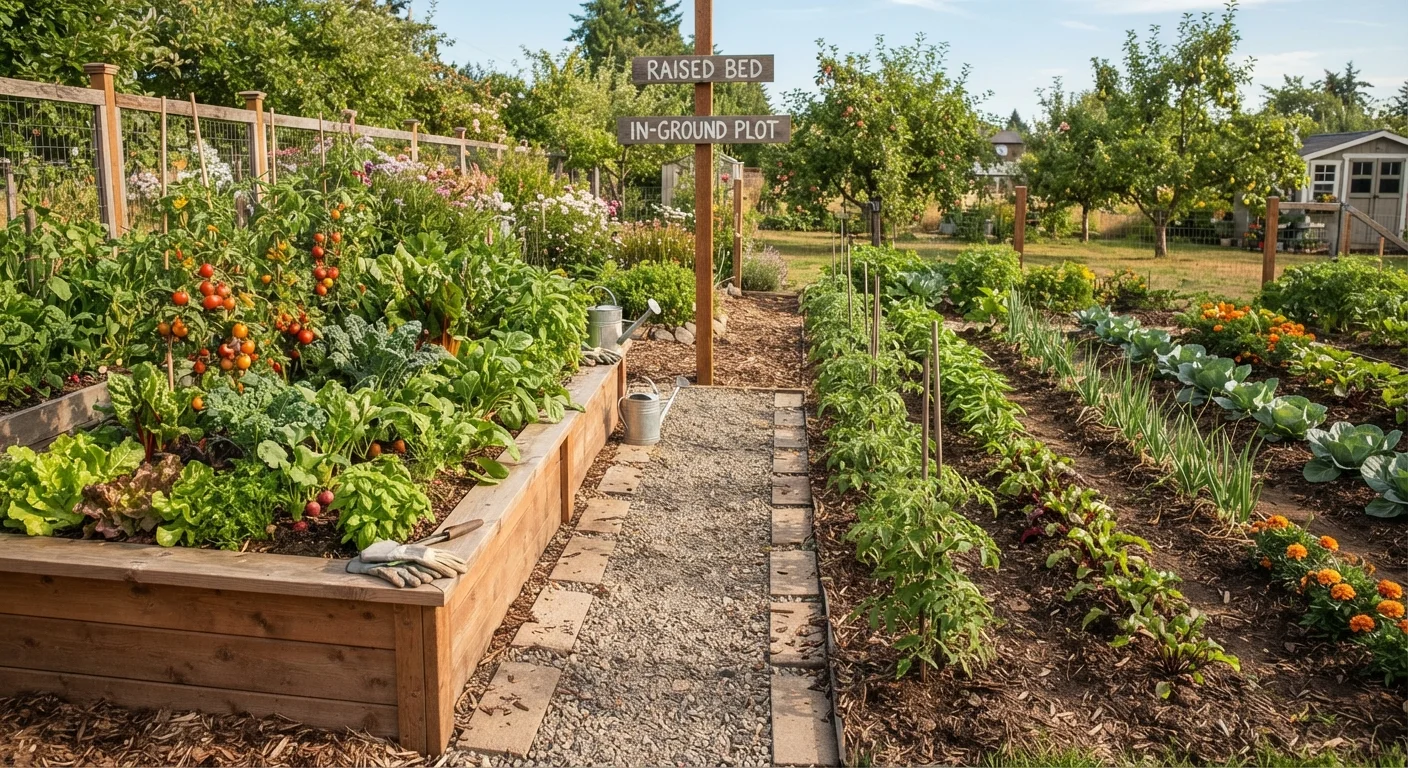
Key Takeaways
Option A
Raised Beds
The controlled, accessible growing environment.
Best for: Gardeners with poor native soil, limited mobility, or who want precise drainage and soil management.
Option B
In-Ground Planting
The traditional, low-barrier approach to growing.
Best for: Gardeners with decent existing soil who want to grow at scale without significant upfront investment.
If you have compacted, clay-heavy, or poor-quality native soil
Raised Beds
Raised beds let you bypass problematic native soil entirely by filling with a custom growing mix, giving plants an immediate advantage without years of soil rehabilitation.
If you want to grow large crops like corn, squash, or sprawling melons
In-Ground Planting
Space-hungry and deep-rooted crops thrive better in open ground where they can spread freely without being constrained by a bed's footprint or depth.
If back pain, mobility issues, or kneeling is a concern
Raised Beds
A raised bed built 24–30 inches high reduces bending and kneeling significantly, making regular tending more comfortable and sustainable over time.
If you're on a tight startup budget and have reasonable soil
In-Ground Planting
Digging and amending existing ground costs far less than purchasing lumber, hardware, and bulk soil mix to build and fill raised beds.
If you're a first-time gardener who wants reliable early results
Raised Beds
Good drainage, weed suppression, and consistent soil quality reduce early growing mistakes, giving beginners a more forgiving and productive starting point.
The Core Differences at a Glance
Raised beds are contained growing structures — typically built from wood, galvanized metal, or composite materials — filled with a custom soil blend sitting above ground level. In-ground planting means working directly with your yard's native soil, amended as needed, in open or row-style plots.
The distinction matters more than it might seem. Your soil type, climate, physical ability, available space, and gardening goals all influence which approach will actually work for you. Neither method is universally superior — each makes real trade-offs that are worth understanding before you dig in.
| Criterion | Raised Beds | In-Ground Planting |
|---|---|---|
| Startup Cost | Higher (materials + soil) | Lower (amend existing soil) |
| Soil Control | Full — custom mix from day one | Limited by native soil quality |
| Drainage | Excellent by design | Depends on terrain and soil |
| Weed Pressure | Generally lower | Higher from native seed bank |
| Accessibility | High — adjustable height | Ground level only |
| Growing Scale | Limited by bed size and fill cost | Easily expanded |
| Root Depth | Limited by bed depth | Unlimited |
| Longevity of Setup | Materials age and need replacing | Permanent with ongoing care |
For a broader look at getting started, see our guide to starting a vegetable garden from scratch, which covers soil prep, plot selection, and first-season planning.
Soil Control and Drainage
Soil quality is where raised beds earn their strongest argument. When you build a raised bed, you fill it with a blend you choose — typically a mix of topsoil, compost, and coarse material for drainage. This sidesteps years of amending clay-heavy or nutrient-depleted native soil. Plants in raised beds often establish faster and produce more consistently in their first seasons because growing conditions are controlled from the start.
In-ground plots depend on whatever your yard's soil is. If you're fortunate enough to have loamy, well-draining native soil, in-ground growing can be genuinely excellent — deep-rooted crops like tomatoes, peppers, and asparagus can anchor themselves without restriction. But if your soil is compacted, waterlogged, or sandy, in-ground planting requires significant amendment work before it becomes reliably productive.
Drainage is another practical gap. Raised beds naturally drain faster because they're elevated above the water table and filled with loose, aerated soil. This makes them particularly valuable in regions with heavy rainfall or heavy clay soil where waterlogging can rot roots. In-ground beds, unless the terrain naturally drains well, can hold moisture longer — which suits some drought-tolerant crops but harms others.
A Note on Soil Depth for Raised Beds
Most vegetables need at least 12 inches of soil depth to thrive, though shallow-rooted crops like lettuce and herbs can manage with 6–8 inches. Root vegetables and tomatoes benefit from 18 inches or more. When building a raised bed, plan depth based on what you intend to grow rather than defaulting to the shortest standard height. Beds placed directly on soil also benefit from subsoil roots pushing through — a real advantage over beds placed on concrete or paved surfaces.
Cost, Effort, and Long-Term Maintenance
Upfront costs differ substantially. Building and filling a single 4×8-foot raised bed with quality lumber and bulk soil mix can run anywhere from $100 to $300 or more depending on materials and regional pricing — and most productive gardens need several beds. In-ground planting, by contrast, requires little more than a spade, some compost, and your time.
Over the long term, however, in-ground plots need ongoing soil amendment — compost added each season, possible pH adjustments, and vigilant weed management from a persistent seed bank in native soil. Raised beds, once established, tend to have fewer weeds (especially if you line the base with cardboard or landscape fabric) and maintain their soil structure with modest annual top-dressing of compost.
It's worth noting that raised bed materials do eventually age. Untreated wood may last five to ten years; cedar and composite materials last longer. Factor in eventual replacement costs when assessing long-term value. And don't overlook popular gardening assumptions — our look at common gardening myths addresses some widely repeated advice (like gravel drainage layers) that doesn't hold up under scrutiny.
5–10 yrs
Typical lifespan of untreated wood raised beds
Cedar and redwood last longer due to natural rot resistance; composite and galvanized metal options can exceed 20 years with proper care.
~4×8 ft
Standard raised bed size recommended by extension services
This footprint lets a gardener reach the center from either side without stepping in, reducing soil compaction — a common concern cited by university cooperative extension programs.
Accessibility, Scale, and What to Plant Where
For gardeners managing back problems, arthritis, or limited mobility, raised beds offer a practical advantage that goes beyond gardening technique — they change the physical experience of tending plants. A bed built to counter height eliminates the need for kneeling entirely. Even a standard 12-inch height reduces how far you need to bend compared with ground-level work.
Scale is where in-ground planting wins clearly. If you want to grow a large vegetable patch, a market garden, or plant crops that sprawl — like pumpkins, sweet corn, or indeterminate vining squash — open ground gives them the room and root depth they need. Raised beds, by nature, are finite in size and depth, and filling a large productive area with purchased soil is neither cheap nor practical.
Some crops also genuinely prefer in-ground conditions. Root vegetables like parsnips and carrots grow best in deep, stone-free, well-loosened soil that can be harder to replicate in a shallow bed. Perennial plantings — fruit trees, asparagus, rhubarb — benefit from the continuity and depth of in-ground growing. If you're considering smaller-space alternatives altogether, our guide to container gardening explores a third option worth knowing about.