

Key Takeaways
Soil pH
Soil pH is a measure of how acidic or alkaline your soil is, expressed on a scale from 0 to 14. A reading of 7 is neutral — numbers below 7 indicate acidic soil and numbers above 7 indicate alkaline (basic) soil. Most garden plants grow best somewhere between 6.0 and 7.0, where nutrients in the soil are most readily available to plant roots.
pH stands for 'potential of hydrogen' and reflects the concentration of hydrogen ions in the soil solution. Even small shifts on the scale represent large changes, since pH is logarithmic — a soil at pH 5 is ten times more acidic than one at pH 6.
Why pH Controls What Your Plants Can Eat
Think of soil nutrients — nitrogen, phosphorus, potassium, iron, and others — as food locked inside a pantry. Soil pH is the key. Even if those nutrients are physically present in your soil, plants can only absorb them when the pH falls within a range that keeps the nutrients dissolved and chemically available. Outside that range, nutrients become locked in forms roots simply cannot take up.
Nitrogen, phosphorus, and potassium are most available between pH 6.0 and 7.5. Iron and manganese become more soluble in acidic conditions but can reach toxic levels in very acidic soils. Molybdenum, important for nitrogen use in legumes, becomes more available as pH rises. This is why two gardens with identical fertilizer inputs can produce completely different results if their pH levels differ.
6.0–7.0
Optimal pH range for most vegetables
This range is widely recommended by university extension services across the United States as the target for vegetable garden beds.
4.5–5.5
Preferred pH for blueberries and azaleas
Acid-loving plants require a significantly lower pH than most crops — planting them in neutral soil commonly leads to nutrient deficiencies.
10x
Acidity difference per pH unit
Because pH is a logarithmic scale, a soil at pH 5 is ten times more acidic than one at pH 6, making even small changes significant for plant health.
Reading the Scale: Acidic, Neutral, and Alkaline
The pH scale runs from 0 to 14, but for garden purposes, the relevant range is roughly 4.5 to 8.5. Here's a practical breakdown:
- Below 6.0 (acidic): Common in humid, high-rainfall areas and under conifer trees. Blueberries, azaleas, and rhododendrons thrive here. Most vegetables struggle.
- 6.0–7.0 (slightly acidic to neutral): The sweet spot for the majority of vegetables, herbs, and ornamentals. Nutrient availability is broadly optimized.
- Above 7.0 (alkaline): Frequent in arid climates and areas with limestone-rich geology. Lavender and certain ornamental grasses adapt well, but many plants show yellowing leaves — a sign of iron deficiency — as pH climbs.
If you're planning a new vegetable garden, testing your soil pH before you plant is one of the most practical first steps you can take.
How to Test and Adjust Your Soil pH
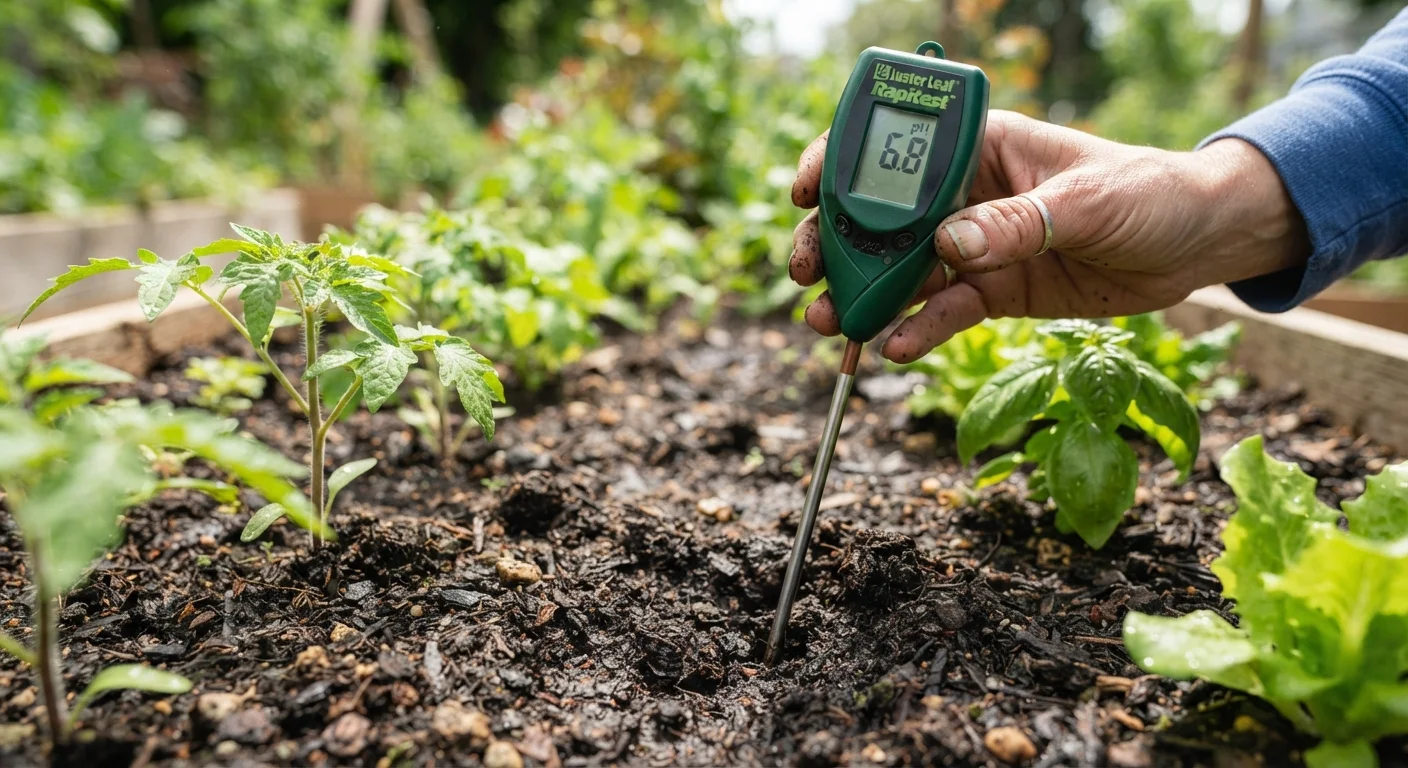
Testing is straightforward. You can purchase a basic test kit at any garden center, or send a sample to your local cooperative extension service for a detailed lab analysis that also covers nutrient levels. Take samples from several spots in your garden bed, about 4–6 inches deep, and combine them for a representative reading.
To raise pH (make soil less acidic): Ground agricultural limestone (calcium carbonate) is the standard approach. The amount needed depends on your current pH, your target pH, and your soil texture — clay soils require more amendment than sandy ones. Follow the application rate on the product label or your soil test recommendation.
To lower pH (make soil more acidic): Elemental sulfur is commonly used and works as soil bacteria convert it to sulfuric acid over time. Incorporating acidic organic matter like pine needle mulch can help gradually over seasons. For a more in-depth look at how mulch affects soil conditions, see our guide on how mulching habits shape soil health.
Test Before You Amend
Never add lime or sulfur based on guesswork — always test first. Over-correcting soil pH can cause as many problems as the imbalance you started with. Aim for gradual adjustments and retest a few months after any amendment to track actual change.
If you're gardening in raised beds, you have a real advantage — you can tailor your growing mix from the start. Our article on raised beds versus in-ground planting covers how soil control factors into that decision.
Common Signs That pH May Be Off
Plants signal pH stress in recognizable ways. Yellowing leaves with green veins (called interveinal chlorosis) often point to iron or manganese deficiency, typically caused by overly alkaline soil. Stunted growth, purple-tinged leaves, or poor fruiting can suggest phosphorus lockout in highly acidic conditions. Legumes that fail to fix nitrogen may be struggling in soil that's too acidic for beneficial soil bacteria to function properly.
Before adding more fertilizer, always check pH first. Applying nutrients to soil with an uncorrected pH imbalance is largely ineffective — and can lead to buildup that creates new problems. Healthy, well-watered soil at the right pH is also more resilient; watering practices interact with soil structure and nutrient movement in ways that make pH management even more impactful.