

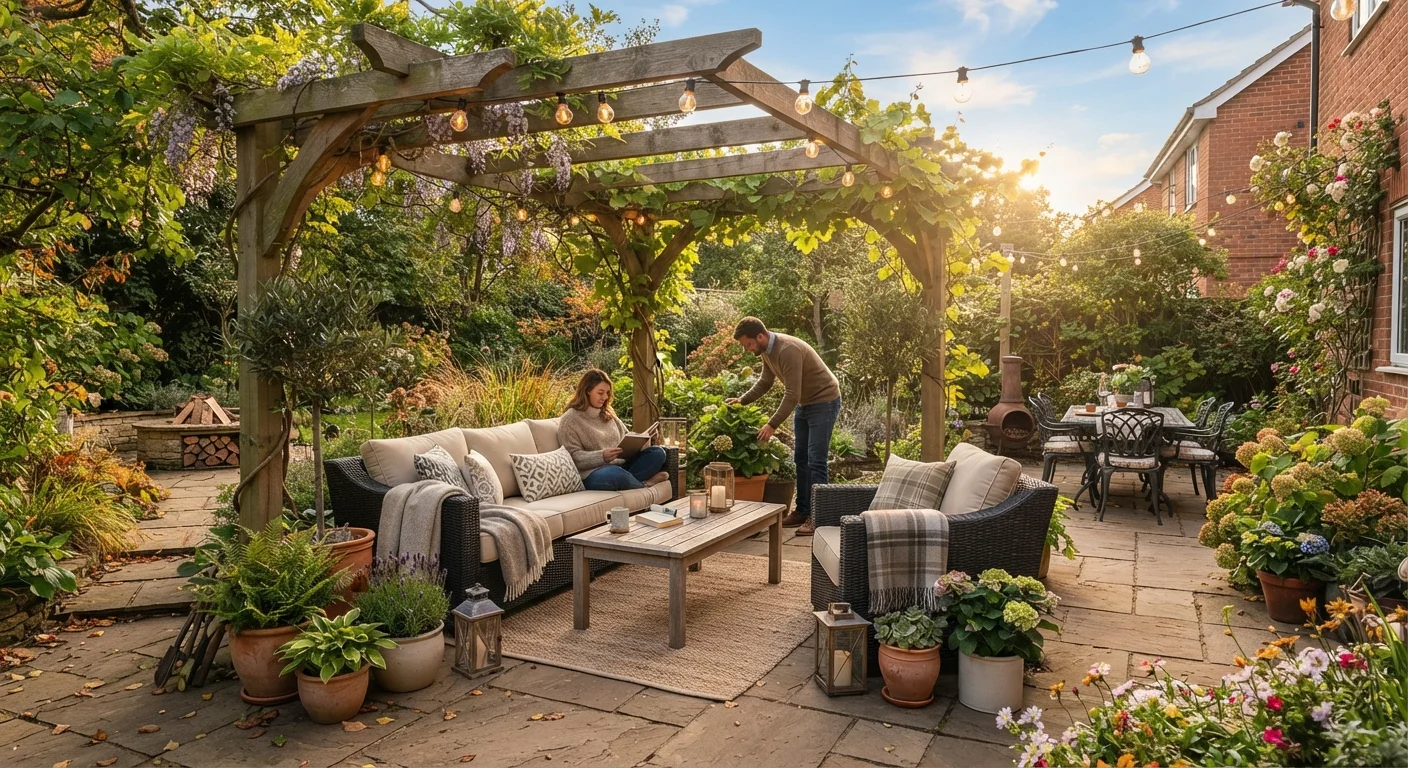
Key Takeaways
Why Most Outdoor Spaces Underperform
A common frustration for homeowners is investing in patio furniture or a deck only to find the space genuinely usable for just a handful of weeks each year. Too much direct sun in July, too much wind in October, and nowhere to put anything when rain arrives — these aren't bad luck, they're planning gaps that can be corrected.
A year-round outdoor living space isn't about adding more features. It's about addressing the specific conditions your yard faces in each season, then solving those conditions in a layered, low-maintenance way. Before you spend time or money, take stock of your space at different times of day and in different seasons if possible. Note where afternoon sun hits hardest, where wind channels through, and where standing water appears after rain. That audit shapes every decision that follows.
For broader seasonal upkeep that supports your outdoor living setup, the annual home maintenance calendar is a useful companion reference.
What You'll Need Before You Begin
Gather your materials and make key decisions before any physical work starts. Trying to figure out surface drainage mid-project leads to costly rework.
What you will need
Measuring tape (25 ft minimum)
Accurately map out your space to plan furniture layout and structure placement.
Level (4 ft)
Check that paving or decking surfaces drain away from the house and sit flat.
Ground anchor kit
Secure freestanding pergolas, umbrellas, or shade sails against wind movement.
Outdoor-rated extension cord or low-voltage lighting kit
Power string lights or pathway fixtures without requiring an electrician.
Waterproof storage bench or deck box
Protect cushions and accessories between uses and during off-season periods.
Step-by-Step: Building Your All-Season Setup
Follow these steps in order. Each builds on the last, and skipping ahead — particularly on drainage and shade — tends to create problems that are expensive to fix retroactively.
Map Sun, Wind, and Water Movement
Stand in your outdoor space at midmorning and again in mid-afternoon. Note where direct sun falls and for how long. Identify where wind enters — typically gaps between structures or along fence lines. After the next rainfall, check for pooling water. Mark these observations on a rough sketch; they determine where your seating zone, shade structure, and windbreak should go.
Choose and Position Your Shade Structure
Shade is the highest-impact element for comfort. Your options range in permanence and cost:
- Pergola or shade sail: Provides partial shade and allows airflow. Good for hot, drier climates.
- Retractable awning: Flexible but requires wall attachment — check that your exterior wall surface is appropriate before installing. For guidance on wall materials and treatments, see protecting external walls.
- Large market umbrella: No installation required but needs a heavy base and annual inspection of the canopy fabric.
Position your shade structure to cover your main seating zone during peak afternoon sun hours (roughly 1–4 pm).
Address Wind and Cold with Simple Barriers
Wind makes outdoor spaces uncomfortable well before temperatures become truly cold. A partial windbreak — a dense hedge, a slatted fence panel, or even a row of tall planters — can raise the felt temperature noticeably. Aim to block prevailing wind without completely enclosing the space, which can create stagnant air on still hot days. For retained warmth in shoulder seasons (spring and fall), a freestanding outdoor radiant heater can extend usable hours in the evening.
Select Weather-Appropriate Furniture
Choose seating and tables designed for outdoor exposure in your specific climate. All-weather wicker (resin-based, not natural rattan), powder-coated aluminum, and teak are all durable options that require different levels of maintenance. Avoid raw wrought iron in humid climates without a rust-resistant finish. Prioritize furniture with removable, washable cushion covers — outdoor fabrics rated for UV and moisture resistance will hold up significantly longer than standard upholstery.
Add Lighting That Works After Dark
Layer two types of lighting: ambient and task. For ambient, string lights hung along a pergola or fence line create warmth without requiring hardwired installation. For task lighting — illuminating a dining or cooking area — focused downlights or table lanterns work well. Use outdoor-rated fixtures only (look for a UL wet-location or damp-location rating). Set lights on timers to avoid leaving them on unintentionally.
Plan for Seasonal Transitions
Build a simple end-of-season routine: clean and cover or store cushions before first frost, inspect and re-anchor any shade structures before wind season, and check surface drainage before heavy rainfall periods. A dedicated storage bench or weatherproof deck box eliminates the scramble of hunting for covers in a hurry. Pair this with the spring garden readiness checklist each year to bring the space back online efficiently after winter.
Start Small and Expand Gradually
It's tempting to plan a fully equipped outdoor room from scratch, but most successful outdoor spaces evolve over several seasons. Start with a solid shade structure and comfortable seating, then add lighting and windbreaks once you've observed how the space actually gets used. This approach reduces wasted spending on features that don't fit your real habits.
Surfaces, Lighting, and Finishing Touches
Once your structural elements are in place, surface and lighting choices determine how livable the space actually feels. For paving, prioritize materials that don't become slippery when wet — textured concrete, brushed stone, and composite decking all hold grip better than smooth tile. If you're working with an existing timber deck, keeping it structurally sound is critical; see our guide on maintaining timber decking year after year for inspection and sealing advice.
For lighting, low-voltage LED string lights or pathway lights connected to a simple timer are the most practical option for most homeowners — no electrician required for basic setups, and they add genuine warmth after dark. Solar path lights work well in high-sun regions but may underperform in shadier yards or through cloudy winters.
Finally, tie your outdoor space into the broader garden. Even a small seating area benefits from nearby planting — screening shrubs reduce wind and noise, fragrant herbs add sensory comfort, and pollinator-friendly plants make the space feel alive. Our guide to attracting pollinators to a small garden has practical planting suggestions that work well alongside seating areas.
For seasonal transitions, consider where you'll store cushions and accessories during harsh weather. A practical look at rotating your belongings by season can help you decide whether dedicated outdoor storage makes sense for your situation.