
Whole Foods vs. Processed Foods: What the Difference Really Means for Your Diet

Key Takeaways
Option A
Whole Foods
The minimally altered, nutrient-dense foundation of a balanced diet.
Best for: People seeking to maximize nutrient density, fiber intake, and long-term dietary quality.
Option B
Processed Foods
A broad category ranging from mildly convenient to heavily engineered.
Best for: Consumers navigating busy lifestyles who benefit from understanding which processed options are nutritionally acceptable.
If you want to maximize nutrient density with every meal
Whole Foods
Whole foods deliver fiber, vitamins, minerals, and phytonutrients in their most intact form, with minimal interference from additives or industrial processing.
If you have a busy lifestyle and need convenience without sacrificing nutrition
Processed Foods
Minimally processed options — such as canned legumes, frozen vegetables, and plain yogurt — can fit well into a balanced diet and offer genuine time-saving benefits.
If you are managing a chronic condition or specific health goal
Whole Foods
Research consistently supports whole-food dietary patterns for cardiovascular health, blood sugar regulation, and weight management — though personal medical decisions require professional guidance.
If you're trying to reduce added sugars and sodium in your diet
Whole Foods
Whole foods contain naturally occurring sugars and salts in far lower concentrations than most packaged processed products, making it easier to stay within recommended limits.
Defining the Terms: What Counts as Whole or Processed?
The terms whole foods and processed foods are used constantly in nutrition conversations, yet they're rarely defined with precision. That vagueness creates confusion — and sometimes unwarranted fear or misplaced confidence about what we eat.
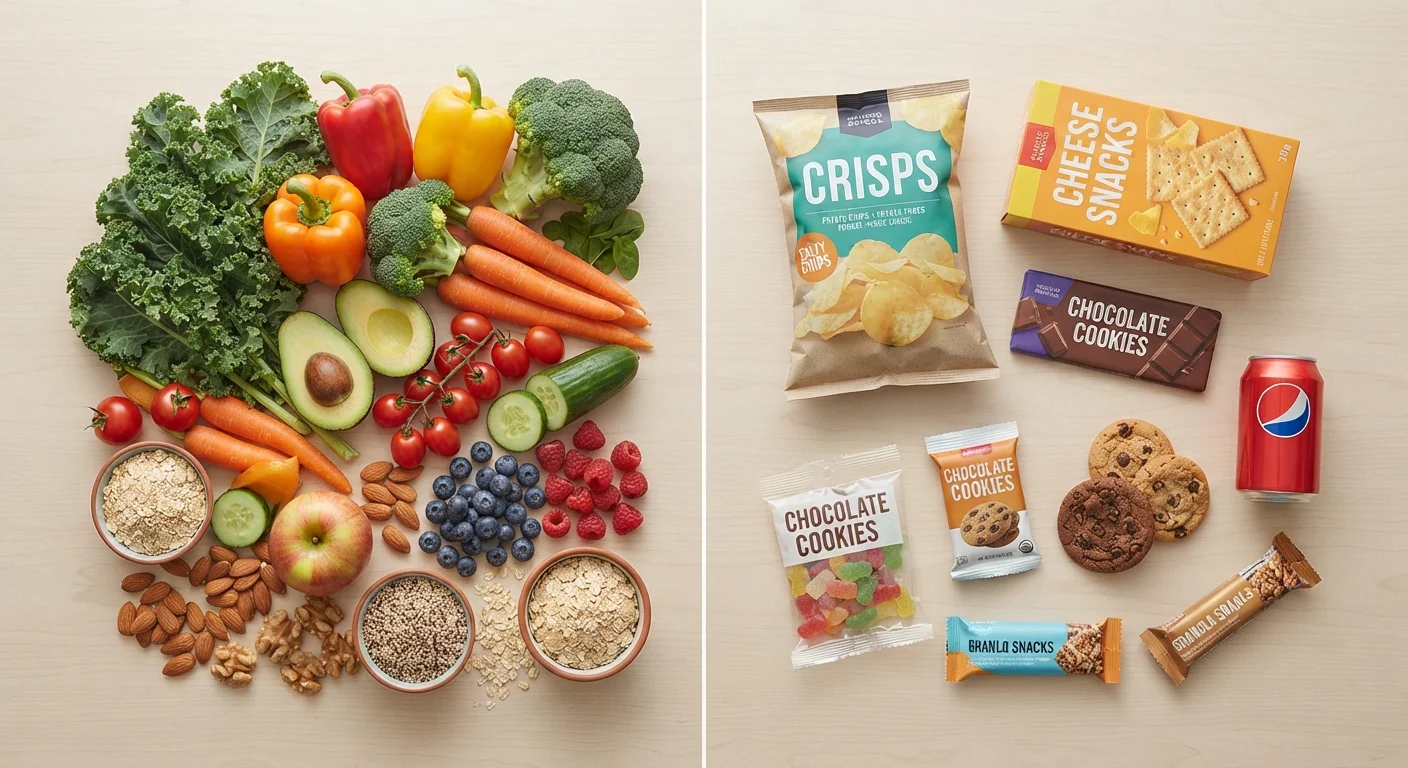
Whole foods are foods that have been minimally altered from their natural state. Think fresh vegetables, whole fruits, legumes, nuts, seeds, eggs, and unrefined grains. They haven't had nutrients stripped out or additives introduced. What you see is largely what the plant or animal produced.
Processed foods, by contrast, cover an enormous range. The NOVA classification system — developed by researchers at the University of São Paulo and widely referenced in nutrition science — groups foods into four categories based on the extent and purpose of their processing. At one end sits minimally processed food (frozen peas, plain rolled oats). At the other sits ultra-processed food: industrial formulations containing ingredients rarely found in home kitchens, such as emulsifiers, flavor enhancers, hydrogenated oils, and high-fructose corn syrup.
The critical insight is that "processed" is not a single condition — it's a spectrum. For a deeper look at how that spectrum works in practice, see understanding the full processing spectrum.
| Criterion | Whole Foods | Ultra-Processed Foods |
|---|---|---|
| Ingredient list | Short, recognizable ingredients | Long, often includes additives |
| Fiber content | Naturally high | Typically low or absent |
| Added sugars | None or minimal | Often high |
| Sodium | Low naturally | Frequently elevated |
| Nutrient bioavailability | Generally high | Variable; often lower |
| Satiety | High (fiber and water content) | Lower; engineered for palatability |
| Convenience | Requires more preparation | Ready-to-eat or quick to prepare |
| Cost | Varies; can be affordable | Varies; often low upfront cost |
What the Nutritional Differences Actually Look Like
When comparing whole and ultra-processed foods at the nutritional level, several consistent differences emerge.
Fiber: Whole plant foods retain their natural fiber, which supports digestive health, blood sugar regulation, and satiety. Ultra-processed foods are typically fiber-poor, having had the fibrous portions of source ingredients removed during manufacturing.
Micronutrients: Processing can degrade vitamins — particularly heat-sensitive nutrients like vitamin C and certain B vitamins. While some manufacturers fortify products after the fact, research suggests that the matrix in which nutrients are delivered matters: nutrients in whole foods tend to be more bioavailable (meaning your body can absorb and use them more effectively).
Added sugars and sodium: The Centers for Disease Control and Prevention (CDC) notes that most Americans consume more added sugar and sodium than recommended, and ultra-processed foods are a primary source of both. Understanding the difference between natural and added sugars is a useful next step for anyone reviewing food labels more critically.
Caloric density: Ultra-processed foods are often engineered to be hyper-palatable — highly caloric, easy to overconsume, and low in satiety signals. Whole foods, by contrast, tend to regulate appetite more effectively through their fiber and water content.
57%
Share of US calories from ultra-processed foods
Research published in the BMJ estimated that ultra-processed foods account for more than half of daily caloric intake among US adults.
10x
More fiber in whole grains vs. refined equivalents
Nutritional analyses consistently show whole grains can contain up to ten times more dietary fiber than their refined, heavily processed counterparts.
~70%
Of added sodium comes from processed foods
The CDC estimates that roughly 70% of the sodium Americans consume comes from packaged and processed foods, not from the salt shaker.
Making the Shift: Practical Steps Without Perfection
Nutrition research doesn't support an all-or-nothing approach. The goal isn't to eliminate every packaged item — it's to shift proportions toward foods that deliver more nutritional value per calorie.
Here are practical, evidence-informed principles to apply:
- Default to whole food anchors. Build meals around a vegetable, whole grain, or legume as the primary component, rather than as a side.
- Read ingredient lists, not just nutrition panels. A long list of unfamiliar chemical names is a reliable signal of heavy processing. A short, recognizable list is generally a better sign.
- Don't discard all convenience foods. Canned beans (rinsed to reduce sodium), frozen vegetables without sauces, and plain full-fat yogurt are all processed to some degree — but they retain meaningful nutritional value and fit well into a practical diet.
- Apply the 80/20 principle. Aiming for whole or minimally processed foods at roughly 80% of meals leaves room for flexibility without compromising overall dietary quality.
For guidance on making snacks count nutritionally, understanding what separates useful snacks from empty ones offers clear, applicable guidance. And if you want to evaluate how different protein sources fit into a whole-foods approach, our comparison of animal and plant protein sources is a helpful complement.
This article is intended for general informational and educational purposes only and does not constitute medical or nutritional advice. Individual dietary needs vary. Consult a qualified healthcare professional or registered dietitian before making significant changes to your diet, especially if you have a medical condition.