
Pantry Staples vs. Fresh Ingredients: Structuring Your Kitchen for Everyday Cooking

Key Takeaways
Option A
Pantry Staples
The reliable, always-available backbone of everyday cooking.
Best for: Cooks who want consistent meal options regardless of when they last shopped.
Option B
Fresh Ingredients
The flavour-forward, nutrient-rich side of a well-rounded kitchen.
Best for: Cooks who prioritize vibrant flavours, seasonal variety, and whole-food nutrition.
If you cook infrequently and want meals available with minimal shopping
Pantry Staples
A well-stocked pantry lets you pull together satisfying meals on any given night without a fresh grocery run, reducing reliance on takeout.
If you cook most days and care deeply about nutrient density and flavour
Fresh Ingredients
Frequent cooks benefit most from a rotating selection of fresh produce, proteins, and herbs that keep meals varied and nutritionally diverse.
If you want a sustainable, low-stress approach to everyday eating
Pantry Staples
Building meals around a pantry foundation with fresh ingredients layered in as available is the most practical long-term kitchen strategy for most households.
What Each Approach Actually Offers
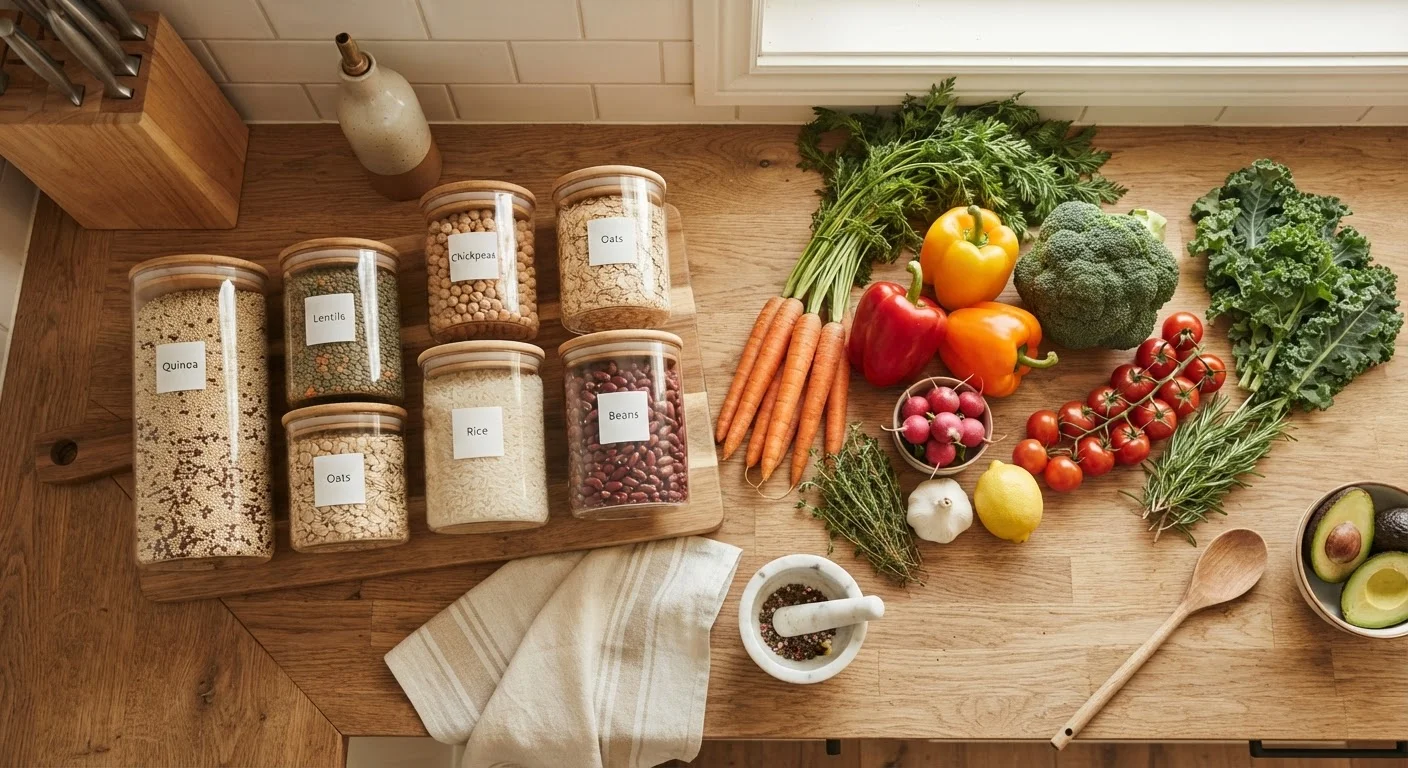
Pantry staples — dried legumes, whole grains, canned tomatoes, olive oil, vinegars, spices — are the kitchen's insurance policy. They don't spoil quickly, require little daily management, and can anchor a meal even when your refrigerator is nearly empty. Their strength lies in consistency: they're always there, lowering the mental load of deciding what to cook.
Fresh ingredients, by contrast, are where flavour and nutritional variety come alive. Seasonal vegetables, leafy greens, eggs, fresh herbs, and quality proteins contribute nutrients that are harder to replicate from shelf-stable sources alone — including certain vitamins that degrade with processing and storage. They also make meals feel more dynamic and satisfying.
The distinction isn't really about which is better. It's about recognizing what each does well and building a kitchen that draws on both deliberately. If you're new to thinking about kitchen structure, this beginner's guide to healthy eating is a useful starting point.
Side-by-Side: How They Compare
Understanding the trade-offs between pantry staples and fresh ingredients helps you stock your kitchen more intentionally rather than reactively.
| Criterion | Pantry Staples | Fresh Ingredients |
|---|---|---|
| Shelf life | Months to years | Days to weeks |
| Nutritional variety | Moderate; consistent | High; seasonally varied |
| Meal flexibility | High with planning | High but time-sensitive |
| Waste risk | Low | Moderate to high |
| Shopping frequency needed | Low; periodic restocking | High; frequent trips |
| Flavour contribution | Depth (spices, umami bases) | Brightness, freshness, aroma |
| Cost predictability | High; stable pricing | Variable; seasonal shifts |
The key insight this comparison surfaces: neither category compensates for a complete absence of the other. A kitchen with only pantry staples can produce adequate but monotonous meals. A kitchen with only fresh ingredients creates pressure to cook constantly before things spoil — which often leads to waste and stress.
Building a Practical Kitchen Balance
The most functional everyday kitchen treats pantry staples as a foundation and fresh ingredients as a rotating layer. In practice, this means your pantry holds enough to build a complete meal on any day — grains plus a protein source plus aromatics and a sauce base — while your refrigerator carries a smaller, intentional selection of fresh items that you cycle through within their usable window.
30–40%
Food wasted in average US households
The USDA estimates that US consumers waste roughly 30–40% of the food supply, with fresh produce accounting for a significant share of household losses.
6x
Longer shelf life of dried legumes vs. cooked fresh
Dried beans and lentils stored properly can last up to two years or more, compared to cooked or fresh equivalents that must be used within days.
One of the most effective habits supporting this balance is maintaining a simple food inventory. Knowing exactly what you have prevents you from doubling up on staples you already own and helps you spot fresh items that need using before they turn. See how a simple food inventory can reduce waste for a low-effort approach to getting started.
Pairing this with a weekly reset — a short planning window where you assess what's on hand and sketch out a few meals — removes the daily friction of figuring out dinner from scratch. A structured Sunday prep checklist can help you cover the essentials without spending hours in the kitchen.
Shopping Smarter to Support Both
How you shop determines how well your pantry-fresh balance holds up week to week. Shopping reactively — grabbing whatever looks good at the store — tends to fill your refrigerator with fresh items that don't combine into coherent meals, while pantry essentials run low unnoticed.
Deliberate shopping means knowing what your pantry actually needs before you go and choosing fresh items that complement what you already have. These grocery principles apply across any budget and household size, and they reinforce rather than replace a solid pantry foundation.
For those who find daily cooking difficult to sustain, batch cooking offers another layer of support — preparing larger quantities of pantry-based staples like grains or legumes in advance so they're ready to pair with fresh components throughout the week. A clear-eyed look at batch cooking covers who it suits and what it realistically takes.
A Note on Nutritional Trade-offs
Some canned and shelf-stable foods retain excellent nutritional profiles — canned legumes, for example, are a comparable protein and fibre source to home-cooked dried beans. However, some processing methods reduce certain heat-sensitive vitamins. Eating a genuine mix of pantry and fresh ingredients helps ensure broader nutritional coverage over time. This article is for general informational purposes; speak with a registered dietitian for personalised dietary guidance.