

Key Takeaways
Summary
22 items · 1–2 hours
Why a Weekly Reset Matters for What You Eat
Most people don't struggle with knowing what healthy eating looks like — they struggle with making it happen under the pressure of a busy week. When Monday arrives without a plan, last-minute decisions tend to default toward whatever is fastest and most convenient, which isn't always the most nourishing option.
A Sunday food reset addresses this by shifting the effort to a lower-stakes moment. You're not tired from a long workday, you're not scrambling before a meeting — you have a window to think, prep, and set yourself up. Research in behavioral nutrition consistently points to environment and accessibility as key drivers of food choices: when wholesome ingredients are ready to grab, people use them.
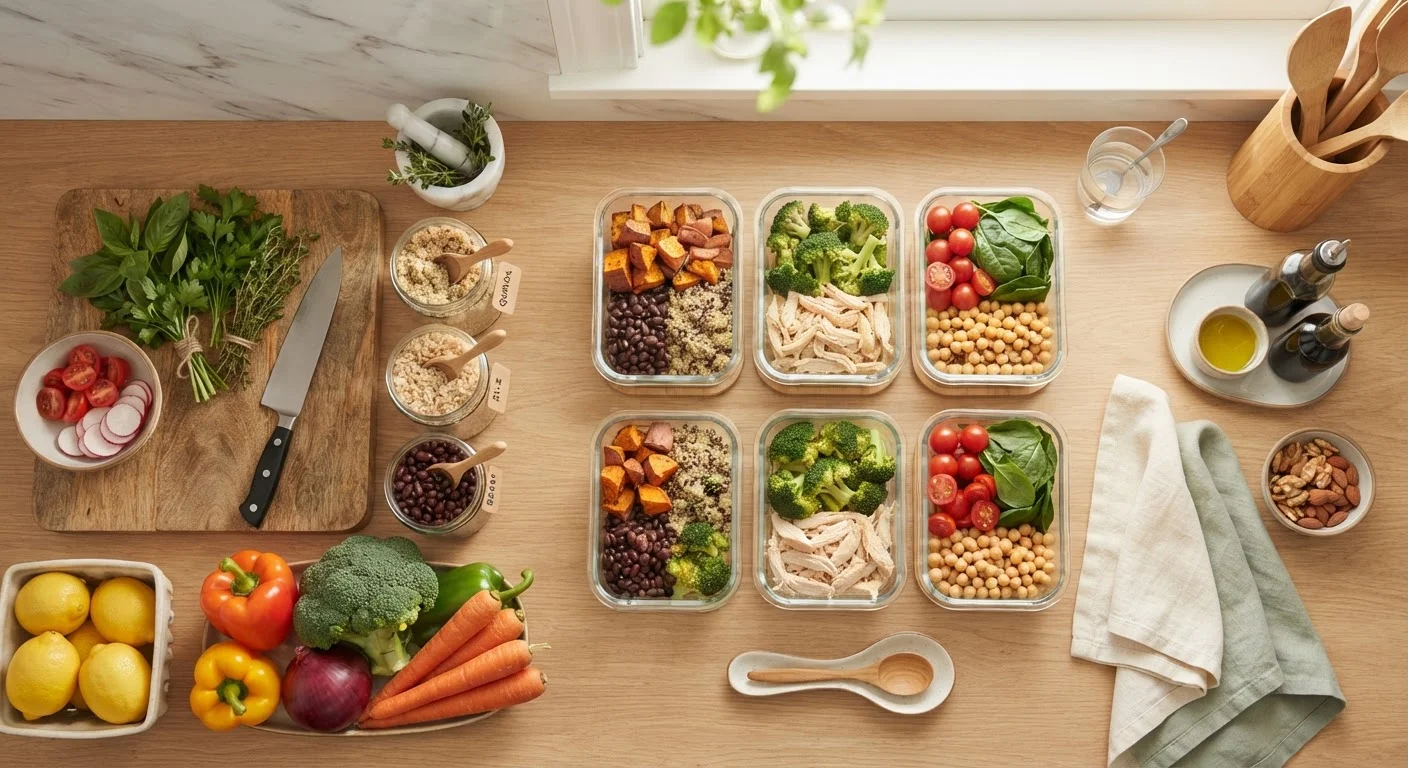
This checklist isn't about cooking an entire week of meals in one sitting. That approach tends to feel overwhelming and unsustainable. Instead, the goal is to prep components — cooked grains, washed produce, a protein or two — that make assembling meals through the week genuinely easy. Think of it as reducing friction, not eliminating all flexibility.
If you'd like a broader framework for structuring your eating patterns, building a weekly meal rhythm that fits your real schedule is a useful companion read. And if you want to evaluate what your current week of eating actually looks like nutritionally, a nutritional audit for what you actually eat can help you spot gaps before you plan.
Before You Start: Assess and Plan
Jumping straight into cooking without a quick assessment almost always leads to duplicate purchases or wasted food. Spend the first 10–15 minutes doing a clear-eyed review before you open a recipe or a shopping app.
Assessment & Planning
Protein Prep
Grains & Starches
Produce Prep
Snacks & Extras
Kitchen Reset
Knowing what's already in your kitchen is the foundation of efficient prep. A habit of keeping a simple food inventory makes this step significantly faster each week — you won't be guessing at what's buried in the back of the freezer.
When you do shop, balancing pantry staples with fresh ingredients gives your kitchen a reliable foundation so that individual prep sessions only require topping up, not rebuilding from scratch.
Don't Skip the Fridge Check
Shopping without reviewing what you already have is one of the most common causes of food waste. Ingredients that were prepped or bought the previous week can get pushed to the back and forgotten. Before finalizing your list, physically move things around and take stock — it takes five minutes and can save both money and usable food.
The Core Prep Work
Once your plan is clear and your groceries are in, the actual prep can begin. The order below is designed to be efficient — longer-cooking items go on first while you work on quicker tasks.
Food Safety Applies to Prepped Ingredients Too
Cooked proteins and grains should be cooled promptly after cooking and refrigerated within two hours. Most prepped cooked foods are safe in the refrigerator for three to four days; anything intended for later in the week should be frozen rather than left to sit. When in doubt, follow USDA food safety guidelines for refrigeration and storage times.
If you're newer to meal planning and want a more guided starting point, building a weekly meal plan from scratch walks through the decision-making process step by step before you even get to prep.
For the rest of the week, pairing this prep habit with a daily reset routine helps you stay on track even after disrupted or unproductive days — keeping the momentum your Sunday work created.
This article is for general informational and educational purposes only. It is not a substitute for personalized advice from a registered dietitian or qualified healthcare professional. Consult a professional before making significant changes to your diet, especially if you have any medical conditions or specific nutritional needs.