

Key Takeaways
Meal Formula
A meal formula is a structural template — such as protein + grain + vegetable + sauce — that guides how you build a meal without prescribing specific ingredients. Instead of following a step-by-step recipe, you fill each slot with whatever fits your pantry, preferences, or nutritional goals. This approach makes everyday cooking faster, more flexible, and easier to sustain.
Meal formulas align closely with dietary guidance frameworks like MyPlate, which recommends filling half your plate with vegetables and fruits, a quarter with protein, and a quarter with grains — providing an evidence-based rationale for the formula structure.
Why Recipes Aren't Always the Answer
Recipes are genuinely useful — they teach technique, introduce new flavor combinations, and provide reliable structure for unfamiliar dishes. But as a daily cooking tool, they have a significant limitation: they require full commitment to a specific set of ingredients, many of which you may not have on hand or may not want to buy for a single use.
The result is a common pattern: you search for a recipe, realize you're missing two ingredients, either abandon the plan or make a last-minute grocery run, and end up feeling like cooking is more trouble than it's worth. Over time, this friction erodes the habit of cooking at home at all.
Meal formulas address this by shifting the focus from "what dish am I making?" to "what structure am I building?" The formula holds constant; the ingredients rotate. This keeps cooking manageable on weeknights without producing the same meal every time. If you're thinking about building more sustainable daily food habits, see our guide to building a weekly meal rhythm for broader context.
The Core Formula Structure
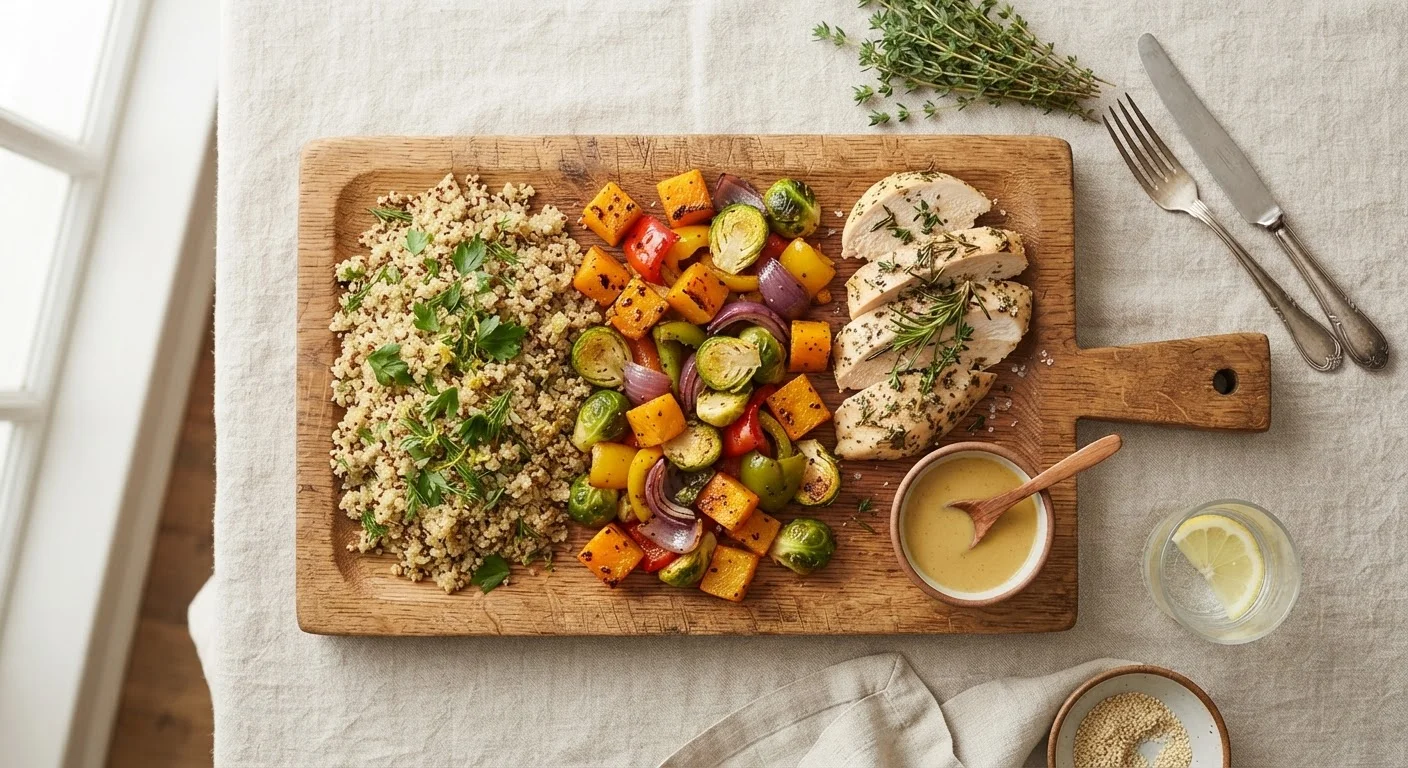
The most widely applicable meal formula follows this pattern: protein + grain + vegetable + flavor element. Each slot is a category, not a specific ingredient.
- Protein: Chicken thighs, canned tuna, eggs, tofu, lentils, black beans, shrimp
- Grain: Brown rice, quinoa, farro, whole-wheat pasta, barley, corn tortillas
- Vegetable: Roasted broccoli, sautéed spinach, raw cucumber, steamed green beans, caramelized onions
- Flavor element: A sauce, spice blend, acid (lemon juice, vinegar), or fresh herb that ties the meal together
This four-part structure maps closely onto the proportional plate guidance covered in our article on building a balanced plate. The formula makes that guidance practical and repeatable rather than theoretical.
~35%
Of US adults report rarely or never cooking at home
According to USDA Economic Research Service data, home cooking frequency is linked to improved dietary quality across population groups.
4–5x
More vegetables consumed in home-cooked meals
Research published in the journal Public Health Nutrition found home-cooked meals contained significantly more vegetables and less saturated fat than restaurant or takeout meals.
The flavor element is what prevents formula fatigue. The same chicken, rice, and broccoli combination tastes completely different with a sesame-ginger sauce versus a lemon-herb vinaigrette versus a smoky chipotle blend. Varying this one slot alone produces meaningful variety without changing your shopping or prep logic.
Putting Formulas Into Practice
The practical power of a meal formula becomes clearest when you apply it across a week. Consider a single formula — grain bowl — and rotate ingredients through it:
- Monday: Farro + roasted chickpeas + kale + tahini dressing
- Wednesday: Brown rice + baked salmon + edamame + ginger-soy glaze
- Friday: Quinoa + soft-boiled eggs + roasted sweet potato + harissa yogurt
Three distinct-feeling meals, one structural pattern, and a shopping list that overlaps significantly across the week. This approach pairs naturally with batch cooking strategies — preparing a large quantity of grains on Sunday, for example, reduces active cooking time to just the protein and vegetable on weeknights. Our article on the case for batch cooking explores that habit in more depth.
Start With One Formula, Not Four
If formula cooking is new to you, pick a single template — the grain bowl is usually the most accessible starting point — and practice it for two to three weeks with different ingredients each time. Once that structure feels automatic, adding a second formula becomes much easier. Trying to adopt too many frameworks at once tends to recreate the same friction that recipes produce.
You don't need to memorize many formulas to cover most situations. Two or three reliable templates — a grain bowl, a stir-fry structure, and a sheet-pan meal — can cover the majority of weeknight dinners for most households. The goal is reducing daily decision load while keeping nutritional quality consistent.
Expanding Your Formula Repertoire
Once the base formula feels automatic, adding a second or third template multiplies variety without multiplying mental effort. Common meal formulas beyond the grain bowl include:
- Stir-fry formula
- Protein + aromatics (garlic, ginger, scallions) + vegetables + sauce, served over rice or noodles
- Sheet-pan formula
- Protein + sturdy vegetables + seasoning, roasted together at high heat
- Soup or stew formula
- Protein (or legume) + aromatics + vegetables + broth + finishing acid or herb
- Wrap or taco formula
- Protein + crunchy element + fresh vegetable + sauce, wrapped in a grain-based vehicle
Each of these works the same way: the structure is fixed, the ingredients rotate freely. For anyone trying to increase vegetable intake within these formulas, our article on eating more vegetables without overhauling your routine offers low-effort strategies that slot directly into formula-based cooking.
Formula cooking also integrates naturally with planned leftovers. A grain bowl made on Tuesday evening can become the base of a wrap on Wednesday lunch — same formula logic, different presentation. See our piece on cooking once and eating twice for more on building this habit intentionally.
This article provides general nutrition and cooking education and is not a substitute for personalized dietary advice. Speak with a registered dietitian or qualified healthcare professional for guidance tailored to your individual health needs.