

Key Takeaways
Why Planned Leftovers Are Different From Accidental Ones
Most people have experienced the refrigerator archaeology version of leftovers: a container of something from four days ago that you are now obligated to eat before it goes bad. That is not what this approach is about.
Planned leftovers start with intention. You decide in advance that tonight's cooking will produce tomorrow's meal as a deliberate output — not as a byproduct of portion miscalculation. This shift in framing changes how you shop, how you cook, and how satisfying the second meal feels.
Compared to full batch cooking — which involves dedicating a larger block of time to cooking multiple meals at once — planned leftovers are lower commitment and easier to sustain. As explored in the case for batch cooking, that approach suits some households well, but it is not the only way to reduce daily cooking effort. Planned leftovers work within your normal cooking rhythm rather than requiring a separate dedicated session.
This method also sidesteps one of the most common reasons healthy eating efforts stall. Many well-intentioned dietary changes backfire because they demand too much daily effort to maintain. Reducing that friction — by having a solid meal waiting in the refrigerator — removes one of the most common decision-making obstacles.
What You Need Before You Start
What you will need
Glass or BPA-free airtight containers
Store portioned leftovers safely, prevent odor transfer, and allow easy reheating.
Sheet pan or large roasting pan
Roast larger quantities of vegetables or protein in a single session efficiently.
Large pot or Dutch oven
Cook grains, soups, or stews in bulk quantities suited for multiple meals.
Adhesive labels or masking tape
Label containers with contents and date to track freshness and reduce waste.
Instant-read food thermometer
Verify reheated leftovers reach a safe internal temperature before eating.
How to Make It Work: Step-by-Step
Choose one anchor ingredient to cook in bulk
Start by identifying a single versatile ingredient that will appear in more than one meal. Strong candidates include whole grains (brown rice, farro, quinoa), legumes (lentils, chickpeas), or a simply seasoned protein (roasted chicken thighs, baked salmon, hard-boiled eggs). Cook a quantity large enough to cover at least two meals for your household — typically double your single-serving recipe.
The key is choosing something that is genuinely neutral or adaptable in flavor. Heavily spiced or sauced dishes are harder to repurpose without the second meal tasting identical to the first.
Plan the second meal before you cook the first
This is what separates intentional planned leftovers from simply hoping you have something usable tomorrow. Before you start cooking, decide specifically how the surplus will be used. For example: tonight's roasted vegetables become tomorrow's grain bowl base; tonight's lentil soup becomes a wrap filling for lunch.
If you need a broader structure for this kind of thinking, the weekly meal planning approach provides a solid framework for mapping meals across several days at once.
Cook and portion deliberately
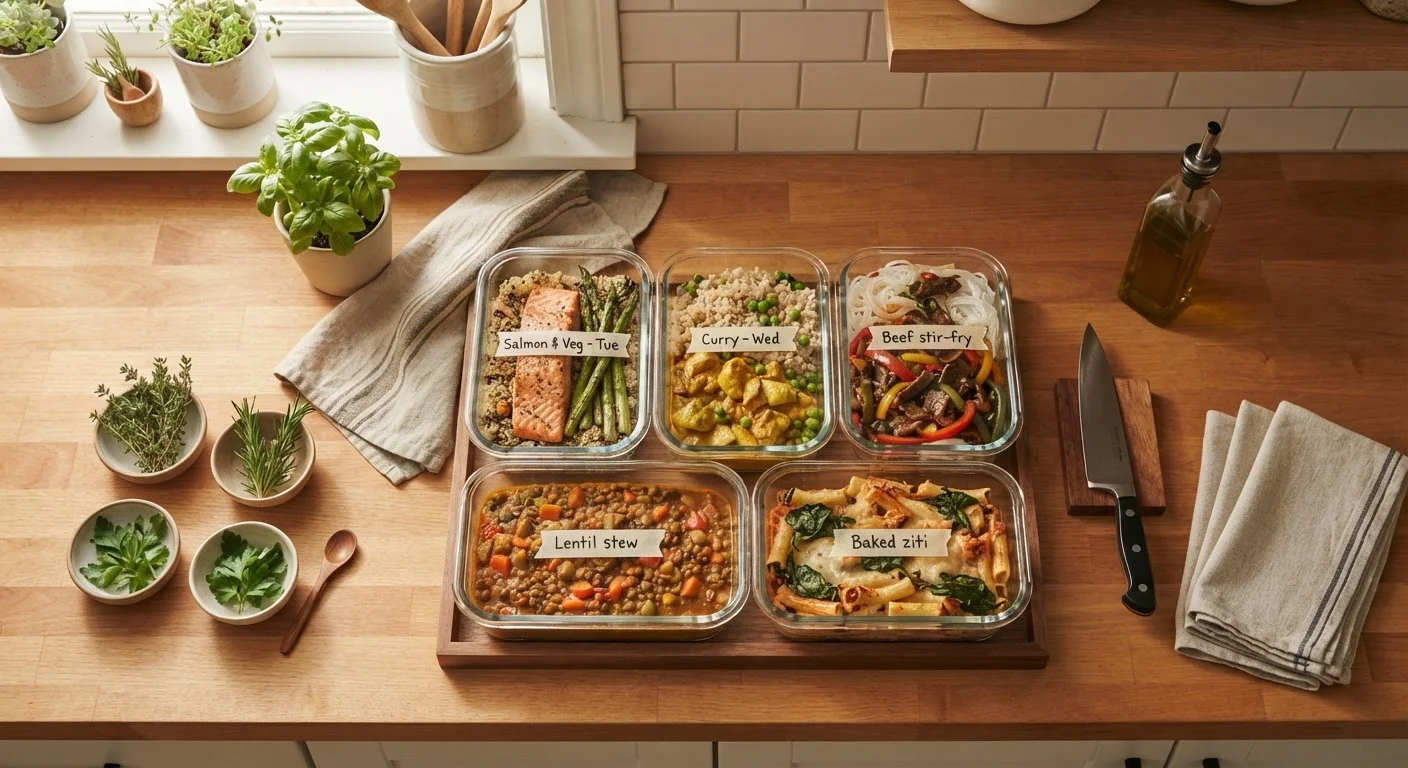
When you cook, separate the planned-leftover portion before serving. This prevents the natural tendency to serve larger portions when there is more food available. Place the leftover portion in a labeled, airtight container while it is still hot, then allow it to cool slightly before refrigerating — ideally within two hours of cooking.
Label each container with the contents and the date. This small habit eliminates the mental effort of remembering what is in your refrigerator and when it needs to be eaten.
Transform, don't just reheat
The biggest reason people resist eating leftovers is the experience of eating the exact same meal twice. The solution is minor transformation rather than full-scale re-cooking. Change the format: a grain and protein from last night's dinner becomes a salad with fresh greens and a new dressing at lunch. Add one fresh element — a squeeze of lemon, a handful of fresh herbs, a different sauce — to shift the flavor profile meaningfully.
Flexible meal frameworks are especially useful here: thinking in terms of protein-grain-vegetable structures rather than specific recipes makes it easier to recombine components without a recipe in hand.
Incorporate more vegetables with minimal extra effort
Planned leftover meals are a natural opportunity to increase vegetable intake. When roasting your anchor protein, fill the rest of the pan with seasonal vegetables that will store and reheat well — think broccoli, sweet potato, zucchini, or cauliflower. These cook in the same time window and give you ready-to-use vegetable portions for the next day's meal.
For more low-effort strategies along these lines, eating more vegetables without overhauling your routine covers approaches that integrate easily into existing habits.
Food Safety Comes First
Cooked foods should be refrigerated within two hours of cooking and consumed within three to four days, according to USDA food safety guidelines. When reheating, bring leftovers to an internal temperature of 165°F (74°C) throughout. If you are unsure whether a leftover is still safe, discard it — foodborne illness is not worth the risk.
Keep Sauces and Dressings Separate
Storing grains, proteins, and vegetables as separate components rather than fully assembled meals gives you far more flexibility. A portion of roasted chicken stored plain can become a grain bowl, a wrap, or a soup ingredient depending on what you pair it with. This modular approach is the foundation of truly versatile planned leftovers.
Making This a Sustainable Routine
The goal is not perfection — it is reducing the number of decisions and cooking sessions you need to get through a week of decent meals. Start with one planned leftover per week and build from there. Over time, this approach becomes intuitive: you naturally cook slightly larger portions and think one meal ahead without having to consult a plan.
Combining planned leftovers with a broader weekly structure — even a loose one — amplifies the benefit significantly. If you are starting from scratch with meal planning, the step-by-step approach to weekly meal planning offers a practical starting point that does not require hours of preparation. For broader strategies on building productive food habits, everyday productivity strategies can help frame cooking as part of a sustainable daily system rather than an isolated chore.
This article is for general informational purposes only and does not constitute nutritional or medical advice. Consult a registered dietitian or qualified healthcare professional for personalized dietary guidance.