

| Regulatory status | None of these terms are legally defined or regulated by the FDA or USDA |
| Most specific term | Whole food — defined by minimal processing from natural state |
| Most flexible term | Clean eating — a philosophy with no fixed ingredient boundaries |
| Values dimension | Real food often includes emphasis on ingredient transparency and traditional cooking |
| Common overlap | All three frameworks discourage ultra-processed foods and artificial additives |
Why These Terms Get Tangled
Walk through any grocery store or scroll a nutrition feed and you'll encounter the same rotating cast of labels: whole food, clean eating, real food. They sound nearly synonymous — and they do overlap — but each carries a distinct set of assumptions about what belongs on your plate and why. Conflating them leads to confusion when you're trying to build a consistent eating pattern.
None of these are clinically defined terms regulated by a standards body. That's precisely why unpacking them matters. Understanding the intent behind each framework helps you borrow what's useful and discard what doesn't fit your goals. See Healthy Eating Basics for the foundational nutrition principles that underpin all three approaches.
| Regulatory status | None of these terms are legally defined or regulated by the FDA or USDA |
| Most specific term | Whole food — defined by minimal processing from natural state |
| Most flexible term | Clean eating — a philosophy with no fixed ingredient boundaries |
| Values dimension | Real food often includes emphasis on ingredient transparency and traditional cooking |
| Common overlap | All three frameworks discourage ultra-processed foods and artificial additives |
Whole Food: The Most Specific of the Three
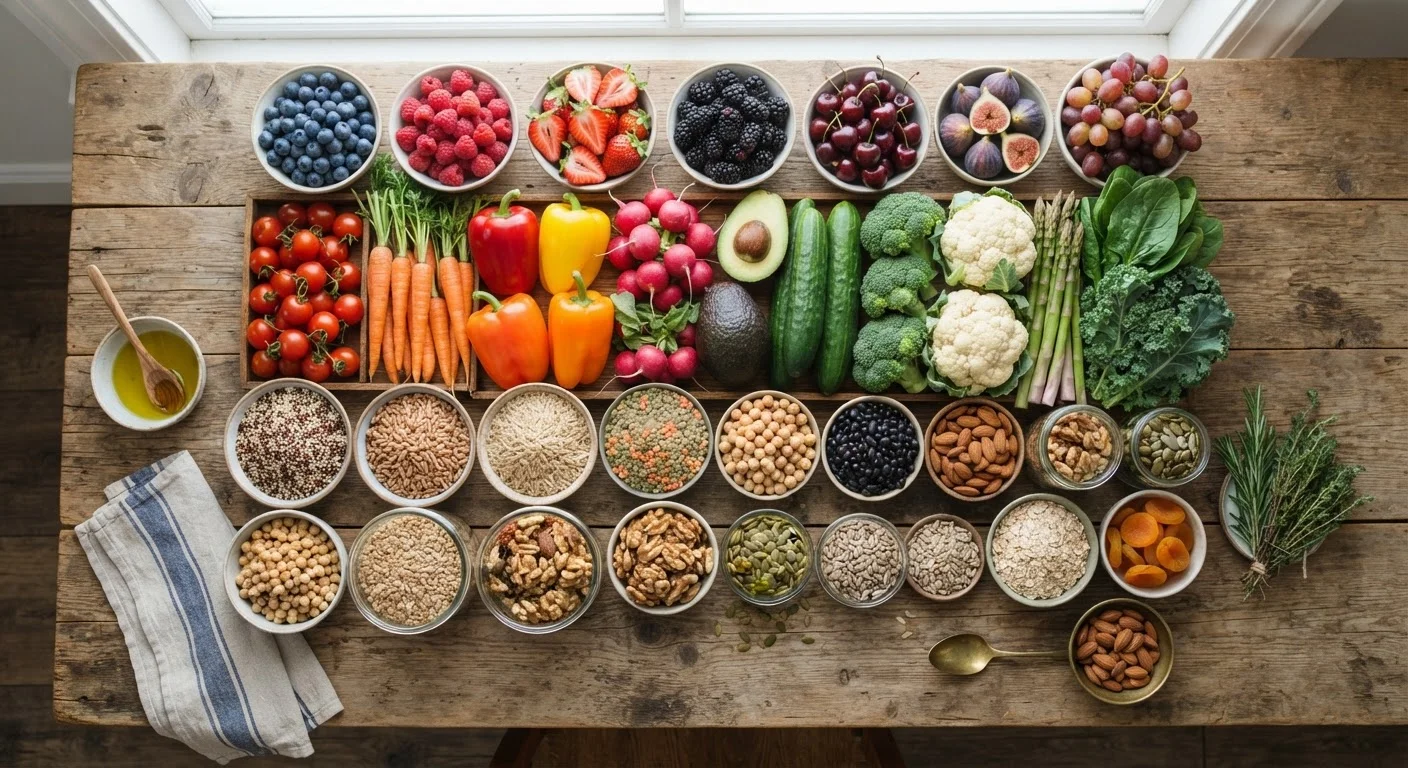
Whole food refers to foods that are eaten in — or very close to — their natural, unprocessed state. Think an apple rather than apple juice, oats rather than an oat-based cereal bar, or a chicken breast rather than a chicken nugget. The defining quality is minimal alteration between field and fork.
The concept has a clear nutritional rationale. Processing often strips fiber, micronutrients, and beneficial plant compounds. A whole food retains its original matrix — the structural relationship between nutrients that affects how the body absorbs and uses them. For a detailed side-by-side look at what sets these foods apart, see Whole Foods vs. Processed Foods.
It's worth noting that "whole food" doesn't mean raw or entirely uncooked — cooking a sweet potato doesn't disqualify it. The concern is industrial transformation, not basic home preparation.
Whole Food
A food consumed in or very close to its natural state, with minimal industrial processing. Examples include fresh fruits, vegetables, legumes, nuts, and unrefined grains.
Clean Eating
A flexible dietary philosophy focused on avoiding heavily processed foods, artificial additives, and refined sugars. Its specific boundaries vary by individual interpretation.
Real Food
A values-driven approach emphasizing foods with simple, recognizable ingredients and traditional preparation. It often includes skepticism toward ultra-processed food products.
Ultra-Processed Food
Foods that undergo significant industrial processing and typically contain additives, preservatives, flavor enhancers, or ingredients not commonly found in home kitchens. Contrasted with minimally processed or whole foods.
Food Matrix
The physical and chemical structure of a whole food that determines how nutrients are absorbed and interact in the body. Processing can disrupt this matrix and alter nutritional impact.
Clean Eating: A Philosophy More Than a Definition
Clean eating is the broadest and most loosely defined of the three. It generally describes a commitment to avoiding heavily processed foods, artificial additives, preservatives, and refined sugars — while favoring foods closer to their natural state. But unlike "whole food," clean eating is a philosophy, and its specific boundaries shift depending on who's describing it.
Some interpretations allow minimally processed foods like whole-grain bread or plain yogurt; others push toward a stricter whole-food approach. Because the term lacks a fixed definition, two people describing themselves as "clean eaters" may have meaningfully different diets. This vagueness can make clean eating feel accessible — it's flexible — but it also means the label carries limited informational weight on its own.
Added sugars are a common focal point of clean eating frameworks. Understanding where sugar shows up — and how it's labeled — is valuable context. Sugar in Your Diet covers the difference between naturally occurring and added sugars in plain terms.
Real Food: Values-Driven and Ingredient-Focused
Real food is perhaps the most values-driven framing of the three. It emphasizes food that has recognizable, pronounceable ingredients — the idea being that if a label lists fifteen chemical-sounding compounds, it's no longer "real." Real food advocates typically prioritize whole ingredients, traditional preparation methods, and skepticism toward highly engineered food products.
This framework often includes a cultural or ethical dimension: cooking from scratch, sourcing from local producers, and pushing back against ultra-processed convenience foods. It shares ground with both whole food and clean eating but places additional weight on ingredient transparency and food literacy.
Knowing how to read a nutrition label is a practical skill that supports all three frameworks. Nutrition Labels: The Numbers Most People Ignore walks through the details that actually shape what you're eating.
If you're navigating more structured diet plans — like Whole30, which operationalizes many real food principles with strict elimination rules — see Whole30: What the 30-Day Reset Actually Restricts for a clear breakdown.
This article is for general informational and educational purposes only and is not a substitute for personalized medical or dietary advice. Consult a qualified healthcare professional before making significant changes to your diet.