

Key Takeaways
Nutrition Facts Label
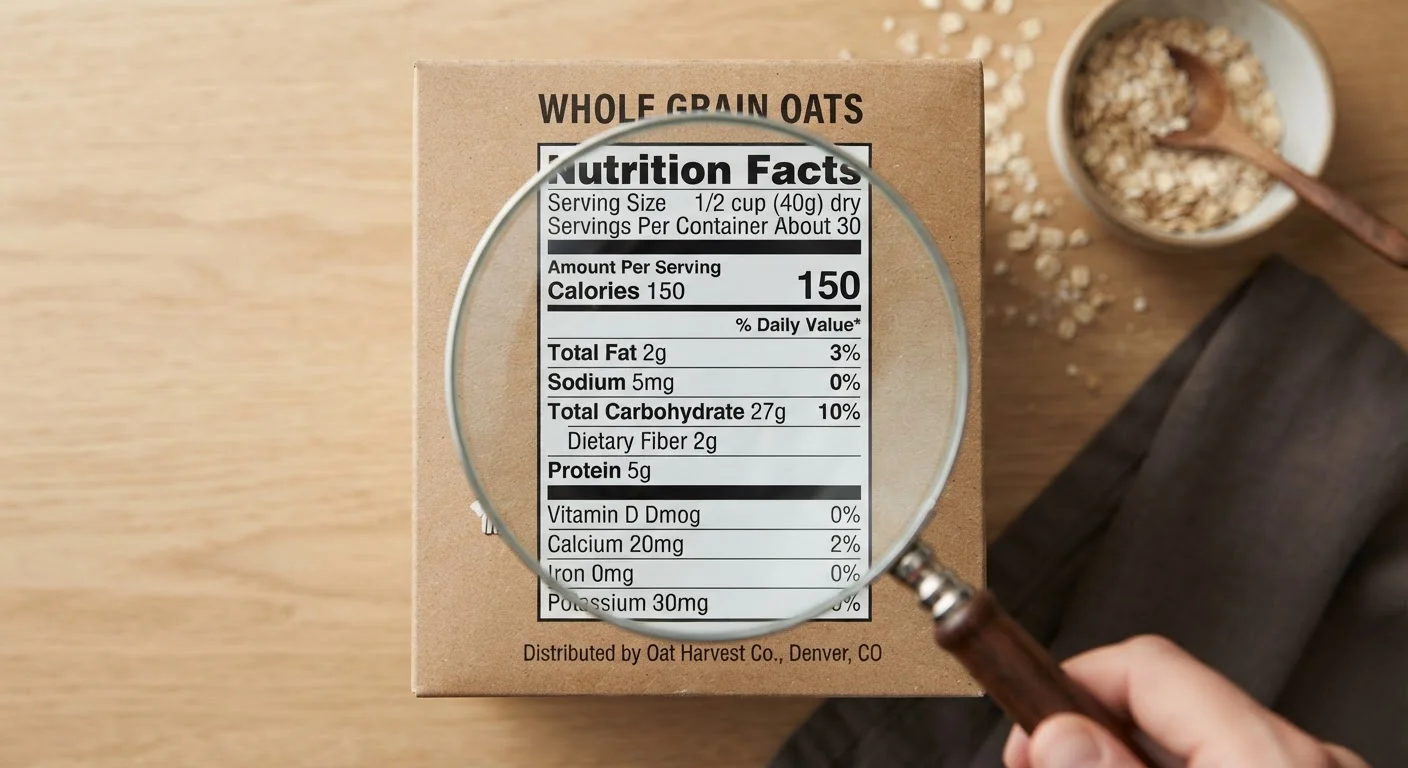
A Nutrition Facts label is a standardized panel required on most packaged foods in the United States. It lists serving size, calorie count, and the amounts of key nutrients per serving. The label is designed to help consumers understand what they're eating and compare foods at a glance.
The FDA updated the Nutrition Facts label format in 2020, requiring manufacturers to declare added sugars separately and adjust serving sizes to reflect amounts people typically eat.
Start Here: Serving Size Sets the Stage
Before reading a single number on a nutrition label, find the serving size. It's listed at the very top of the panel for a reason — every figure that follows is calculated based on that amount. A bag of chips labeled "140 calories" may contain three servings, meaning the whole bag is 420 calories.
The FDA updated serving size requirements so they better reflect how much people actually eat, not idealized portions. This change made labels more honest, but it also means some single-item packages now list two servings, worth double-checking before you assume a container is one serving.
For a deeper grounding in how these fundamentals connect, see our complete guide to nutrition fundamentals.
Check the Servings Per Container First
Before calculating anything else, look at the "servings per container" line directly below the serving size. If a small bag lists 2.5 servings, all the label figures need to be multiplied accordingly. This single habit prevents the most common mistake people make when reading packaged food labels.
The % Daily Value Column: A Surprisingly Useful Shortcut
The right-hand column on a Nutrition Facts label shows the % Daily Value (%DV) for each nutrient. This percentage tells you how much of a standard daily reference amount — based on a 2,000-calorie diet — one serving provides. Use the 5/20 rule as a quick filter: 5% DV or less means a nutrient is present in low amounts; 20% DV or more is high.
This shortcut is especially useful for nutrients you want to limit. A food with 35% DV of sodium per serving is delivering more than a third of a day's worth in one portion — a detail easy to miss when looking only at milligrams. Conversely, a yogurt with 25% DV of calcium is a meaningful contributor to bone health.
Calorie counts only tell part of the story — the %DV column is one tool for evaluating actual nutritional value.
Added Sugars, Fiber, and the Nutrients Worth Tracking
Two line items on the updated label deserve particular attention. First, added sugars now appear as a sub-line under total sugars. This distinction matters because naturally occurring sugars in whole fruit come packaged with fiber and micronutrients, while added sugars contribute calories without those benefits. The Dietary Guidelines for Americans recommend keeping added sugars below 10% of daily calories. Understanding the difference between natural and added sugars helps you make sense of what that line item means in practice.
Second, dietary fiber is a nutrient most Americans fall short on. The %DV for fiber is one of the most informative columns to scan when comparing breads, cereals, or snack foods. A food with 15% or more DV of fiber per serving is a genuinely good source. Learn why fiber matters more than most people realize for digestion and long-term health.
Daily Values Are a Reference, Not a Personal Target
The %DV figures on a Nutrition Facts label are based on a 2,000-calorie reference diet established for general guidance. Individual calorie and nutrient needs vary based on age, sex, activity level, and health status. The %DV is a useful comparative tool, but it isn't a personalized prescription. A registered dietitian can help translate label reading into guidance suited to your specific health needs.
The Ingredient List: What the Label Doesn't Shout
The ingredient list sits below the Nutrition Facts panel and often tells a more complete story than the numbers above. Ingredients appear in descending order by weight — the first ingredient is present in the greatest amount. A loaf of bread that lists enriched white flour first, with whole wheat flour appearing fifth, is primarily a refined-grain product regardless of the word "wheat" on the front of the package.
Sugar can appear under many names — corn syrup, dextrose, maltose, fruit juice concentrate — and a product may list several of them separately to keep any single sugar lower on the list. Scanning for multiple sugar names within the first five ingredients is a practical check. This kind of label literacy complements understanding what "whole food" and "clean eating" actually mean in practice.
Building these reading habits is part of the broader work of eating more mindfully across every meal.