

Key Takeaways
Why a Vehicle Log Is Worth the Effort
Most drivers don't think about keeping a vehicle log until they need one — and by then, it's too late. Whether you're filing an insurance claim after a fender-bender, selling the car, or trying to understand why running costs have crept up, a consistent log answers questions that memory cannot.
Insurance adjusters and buyers alike give weight to documented history. A log showing regular oil changes, tyre rotations, and prompt repairs tells a clearer story than a verbal assurance. It also helps you stay aligned with your warranty obligations, since many manufacturers require proof that scheduled servicing was completed on time. For drivers who use a personal vehicle partly for work, mileage records can also support legitimate tax deductions — consult a tax professional for guidance on what qualifies.
The habits that go into routine maintenance tracking pair naturally with a personal log. Both are about making the invisible visible — turning maintenance into a record rather than a memory.
Start Simple, Stay Consistent
You don't need a comprehensive system from day one. A date, an odometer number, and a one-line description is enough to start. Regularity matters far more than detail. A partial log updated faithfully is more useful than an elaborate one that gets abandoned after three entries.
What to Include in Every Log Entry
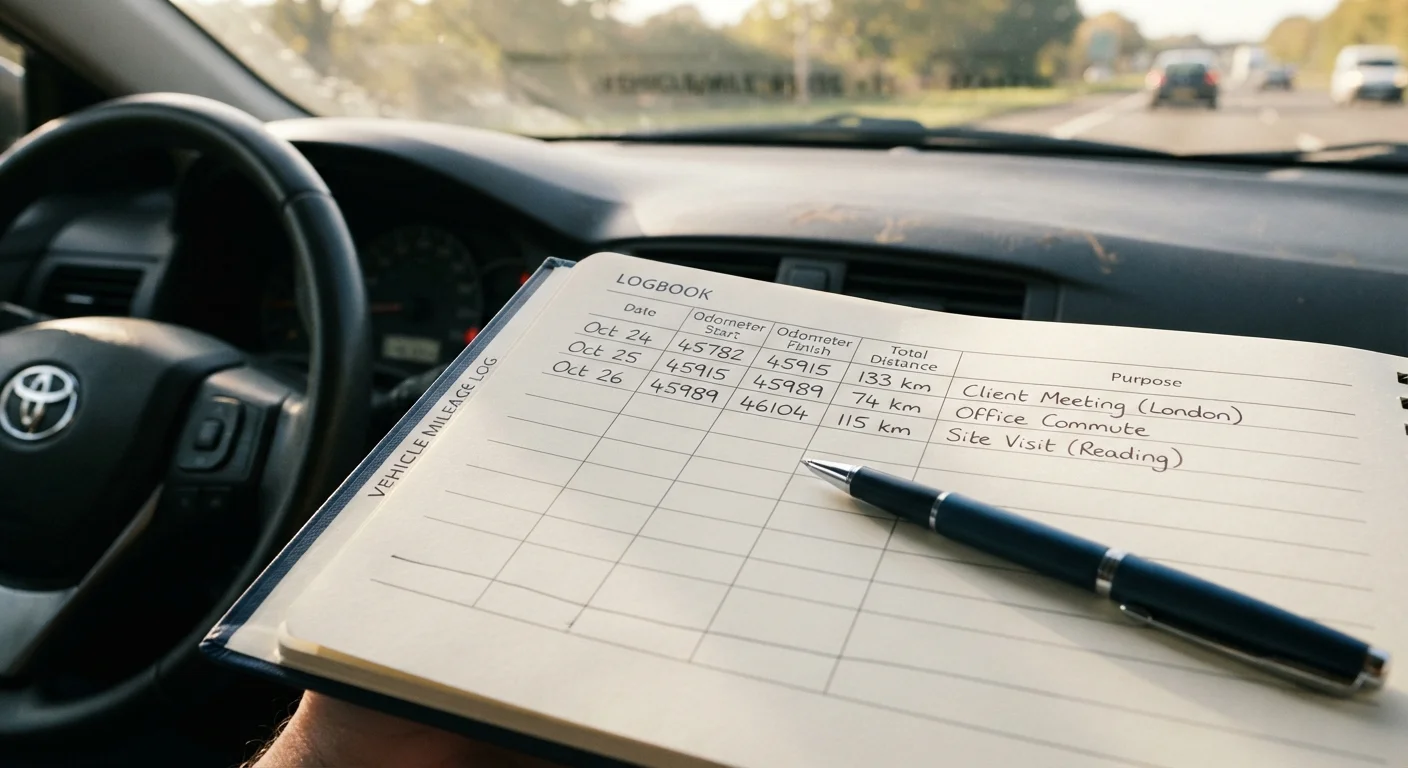
A useful vehicle log doesn't need to be elaborate. Focus on consistency over completeness. The core fields to capture are:
- Date — when the event occurred
- Odometer reading — the mileage at the time of the entry
- Event type — fuel fill-up, oil change, tyre rotation, repair, inspection, incident, or other
- Cost — what you spent, including parts and labor
- Notes — the name of the shop or mechanic, any parts replaced, or relevant observations
For fuel entries specifically, recording the amount of fuel added and the cost per gallon lets you calculate average fuel economy over time — a useful early indicator of engine or tyre issues. See our guide to managing long-term running costs for how fuel tracking fits into the bigger picture.
Incident entries deserve extra detail: note the date, location, weather conditions, what happened, who was involved, and any photos taken. This kind of contemporaneous record is exactly what insurers and attorneys look for.
Don't Rely on Dealer or Shop Records Alone
Service centers may keep records, but those records belong to them — not you. Shops close, databases change, and records may not transfer between owners or across chains. Your personal log is the only record that remains fully in your control throughout the vehicle's life.
Choosing a Format That You'll Actually Use
The best format is the one you'll maintain. Options range from a pocket-sized spiral notebook kept in the glove box, to a shared spreadsheet on your phone, to a dedicated app. Each has trade-offs.
A physical notebook requires no battery, no login, and is immediately accessible at the pump or service bay. A digital spreadsheet makes it easy to sort, calculate totals, and share records with a mechanic or insurer. Apps can prompt you with reminders and auto-fill date and location fields.
Whatever format you choose, back it up. If your log lives only in a glove-box notebook and the car is stolen or totaled, you lose the records when you need them most. Photographing notebook pages periodically or syncing a digital file to cloud storage solves this.
Drivers of rarely used vehicles face a particular challenge: gaps in the log can look like neglect. Our article on caring for a car you don't drive often explains why infrequent use still demands consistent records.
Building the Habit From Day One
Starting a log mid-ownership is better than never starting, but beginning from the day you acquire the vehicle gives you a complete ownership history. If you're buying a used car, ask whether the previous owner kept records — even partial logs add value at resale.
Set a low bar for yourself: a two-second odometer note at each fill-up, and a longer entry whenever you visit a shop. Review the log briefly every few months to check whether service intervals are approaching and whether any costs are trending upward. Paired with the broader maintenance fundamentals every driver should know, a vehicle log becomes part of an overall ownership strategy rather than a standalone chore.
Over years, the log transforms into a full ownership timeline — one that supports confident insurance claims, honest resale conversations, and a clearer picture of what your vehicle actually costs to run.