
Canada's Provinces as Destinations: A Reference to What Each Region Offers Travelers

How to Use This Regional Reference
Canada spans six time zones and ten provinces plus three territories, each with its own climate window, cultural character, and access considerations. This reference is organized west to east across the provinces, with a note on the territories at the end. Use it as a planning anchor — then verify entry requirements, travel advisories, and seasonal conditions with official Canadian government sources before booking.
For a useful contrast in North American road-trip planning, see our American Southwest region guide, which covers a very different landscape and climate profile just south of the border.
Western Canada: British Columbia, Alberta, and the Prairies
British Columbia is Canada's Pacific gateway. Vancouver delivers urban density, waterfront access, and world-class Asian cuisine alongside outdoor pursuits. The interior offers wine country in the Okanagan, old-growth rainforests on Vancouver Island, and the dramatic Haida Gwaii archipelago for those willing to travel farther. Summer is peak season; winter draws skiers to Whistler. Ferry and air access are both well developed.
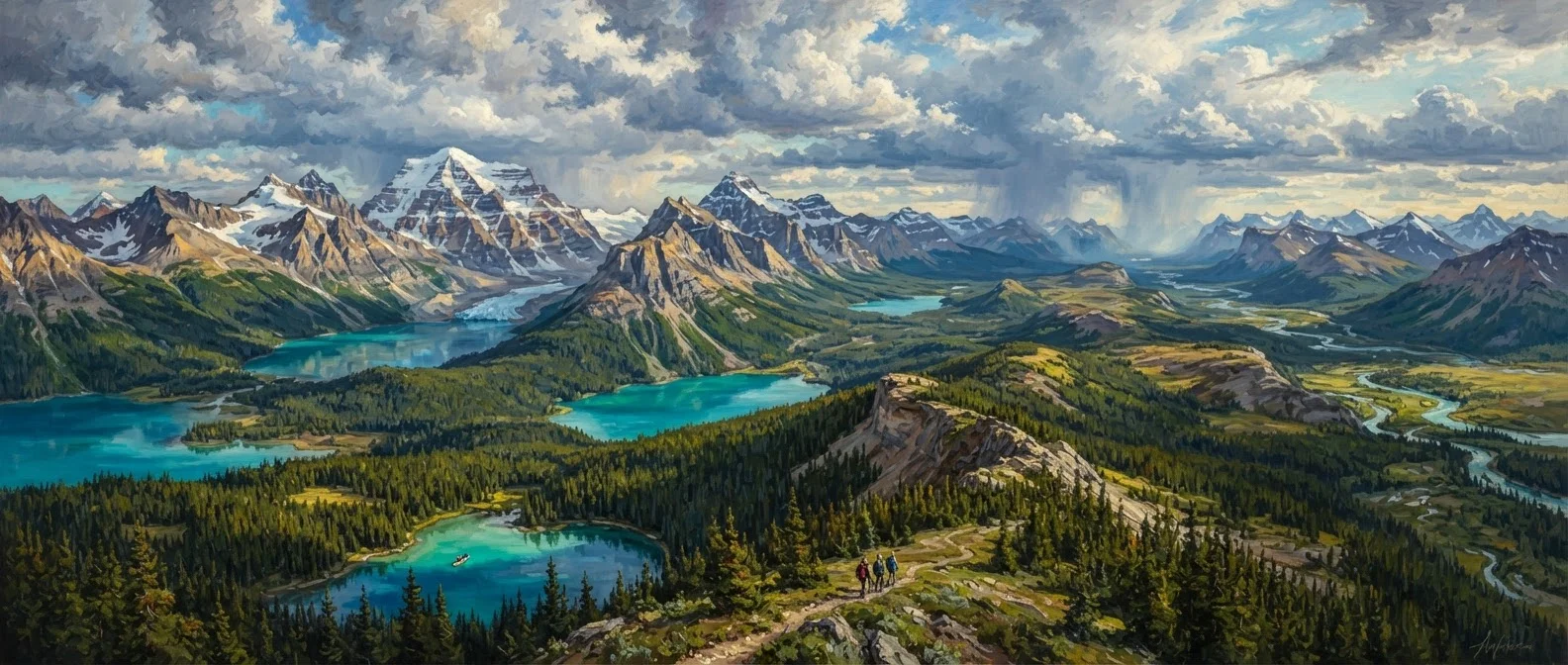
Alberta anchors Rocky Mountain travel for most international visitors. Banff and Jasper National Parks contain glaciers, turquoise lakes, and wildlife corridors that are genuinely bucket-list caliber. Calgary serves as the main southern gateway; Edmonton anchors the north. Summer and early fall offer the clearest mountain conditions. Winter is cold but manageable for experienced travelers, with far thinner crowds.
Saskatchewan and Manitoba are prairie provinces often bypassed but worth knowing. Saskatchewan has some of the darkest skies in North America — exceptional for stargazing — plus Waskesiu and the Prince Albert National Park boreal region. Manitoba's Churchill is one of a small number of places on Earth where wild polar bears and beluga whales are reliably accessible; it requires a flight and advance planning but delivers a rare wildlife experience.
Central and Eastern Canada: Ontario, Québec, and Atlantic Provinces
Ontario is Canada's most visited province. Toronto is the country's largest city — multicultural, dense with museums, neighborhoods, and a serious food scene. Niagara Falls draws massive crowds but remains genuinely impressive. Cottage country north of Toronto (Muskoka, Algonquin) offers accessible wilderness for paddling and hiking. Ottawa, the capital, is compact and navigable with strong museum infrastructure.
Québec is functionally a destination unto itself. Montréal operates as a bilingual, festival-driven city with a European character and notably walkable neighborhoods. Québec City, the only walled city north of Mexico in North America, is a UNESCO World Heritage Site and especially atmospheric in winter during its famous Carnaval. The Gaspésie peninsula and Charlevoix region offer rugged coastal scenery for road trippers who want to move beyond the cities.
New Brunswick, Nova Scotia, Prince Edward Island, and Newfoundland and Labrador form Atlantic Canada — a region defined by tidal shorelines, maritime heritage, and a pace that rewards slow travel. Nova Scotia's Cabot Trail is widely considered one of the top coastal drives in North America. PEI is compact, agricultural, and beach-friendly in summer. Newfoundland demands more effort to reach but offers iceberg viewing, seabird colonies, and a culture genuinely unlike anywhere else in Canada. If you enjoy matching a destination's personality to your travel style, the same principles apply here as in our Caribbean island-matching guide.
The Territories: Yukon, Northwest Territories, and Nunavut
Canada's three territories — Yukon, Northwest Territories, and Nunavut — cover over a third of the country's landmass and are home to a small fraction of its population. These are not casual additions to a standard itinerary. Access typically requires flights; infrastructure is limited outside of territorial capitals; and travelers should prepare for real wilderness conditions. The rewards are proportional: aurora borealis viewing, true Arctic landscapes, and Indigenous cultural encounters available nowhere else. Whitehorse (Yukon) and Yellowknife (NWT) are the most accessible entry points. Always research local conditions and community protocols thoroughly before visiting remote areas.
Information in this article is general in nature and intended for trip-planning reference only. Entry requirements, travel advisories, visa rules, and seasonal conditions change. Always verify current requirements with the Government of Canada and relevant provincial tourism authorities before traveling.