

Key Takeaways
Paper Clutter
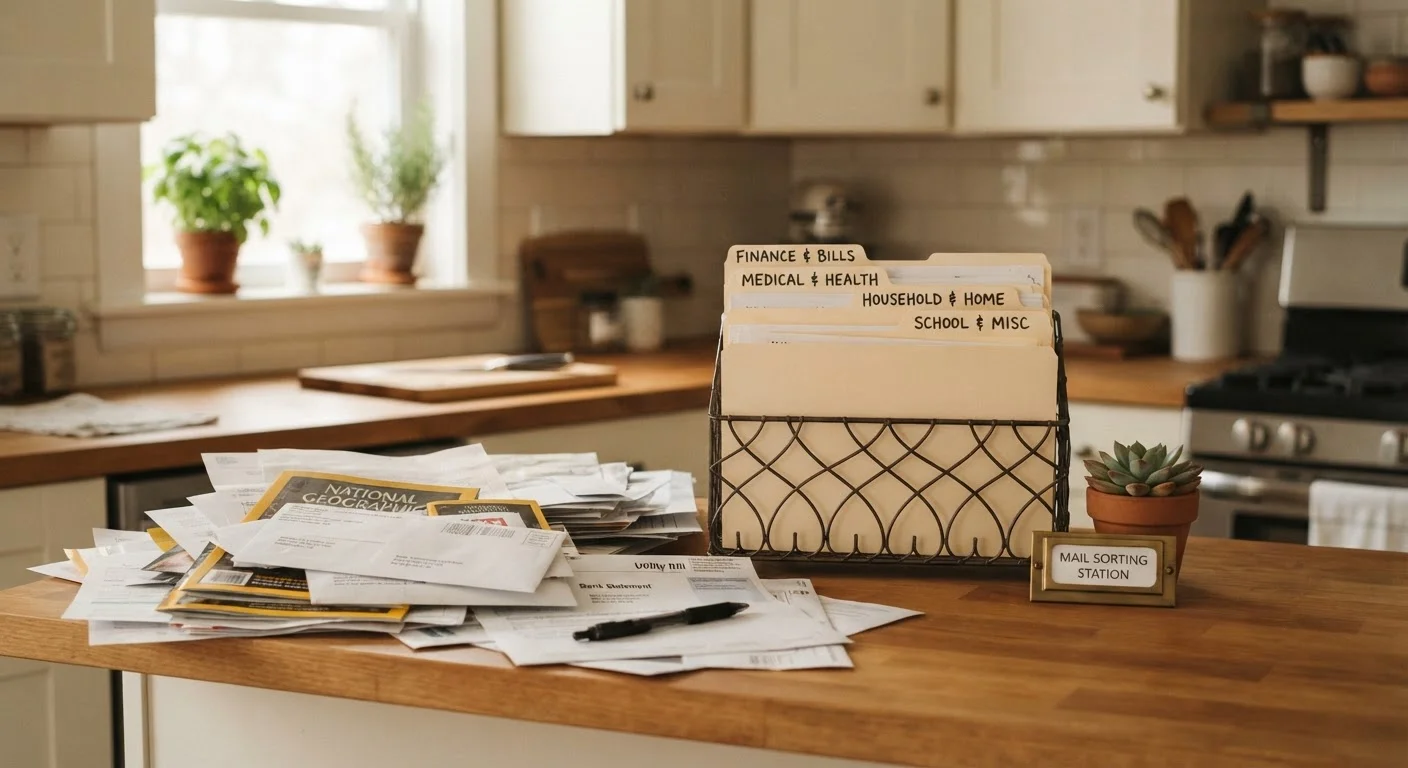
Paper clutter is the accumulation of physical documents — mail, bills, school forms, receipts, manuals, and more — that builds up in a home without a clear system for sorting, storing, or discarding them. Unlike other types of clutter, paper arrives continuously and often feels too important to throw away without review. The result is stacks that grow faster than most households realize.
In information management, this is sometimes called 'document overload' — a state where incoming paper volume outpaces a household's processing capacity, leading to retrieval failures and decision fatigue.
Why Paper Clutter Is Different From Other Clutter
Most household clutter stays where you put it. Paper clutter arrives on its own — daily, in the mailbox, in school backpacks, tucked under the front door. It keeps coming whether you have a system for it or not. That relentless inflow is the core reason paper piles up so reliably in homes that are otherwise well-organized.
There's also an emotional weight that makes paper harder to process than other items. A worn-out sweater is easy to donate. A document that might be important triggers hesitation. What if you need it? What if discarding it causes a problem later? That uncertainty pushes papers into a holding pattern — a stack on the counter that becomes a drawer, that becomes a box.
If you've ever wondered why this feels so persistent, the psychology of holding on to clutter helps explain the cognitive patterns that make letting go genuinely difficult — not just a matter of discipline.
Paper Clutter Isn't a Personal Failing
Most people who struggle with paper clutter aren't disorganized by nature — they simply never had a system designed to handle continuous inflow. Paper accumulation is a structural problem, not a character one. A consistent, low-effort process makes far more difference than motivation or willpower alone.
The Main Sources of Household Paper
Understanding where paper comes from helps you intercept it before it becomes a pile. The typical household receives paper from several distinct channels:
- Mail: Bills, bank statements, insurance explanations, catalogs, political mailers, and promotional offers.
- School and childcare: Permission slips, newsletters, event schedules, report cards, and art projects.
- Purchases and finances: Receipts, warranties, product manuals, and tax documents.
- Medical and legal: Explanation-of-benefits statements, prescription records, insurance cards, and contracts.
- Sentimental: Greeting cards, handwritten notes, children's drawings, and photographs.
Each category has different retention needs and a different emotional pull. Treating all of it the same — keeping everything or discarding everything — leads to either unnecessary accumulation or regrettable losses. A workable system accounts for those differences.
80%
Of filed papers are never referenced again
This widely cited figure in records management circles suggests most households are storing far more than they actually need to retrieve.
~41 lbs
Junk mail received per US household annually
According to estimates from environmental organizations tracking direct mail, the average American household receives substantial unsolicited mail each year.
1 in 3
Adults report difficulty finding important documents
Consumer surveys on home organization consistently find that document retrieval is one of the most common household frustrations.
A Practical System That Actually Works
The most effective paper systems share one trait: they make the default action discard or digitize, not store. Here's a straightforward approach any household can implement:
Step 1: Create One Landing Zone
Designate a single spot where all incoming paper lands — a tray, a wall-mounted organizer, or a dedicated section of a counter. Paper that doesn't have a designated spot migrates everywhere.
Step 2: Sort in Three Categories
Process the landing zone at least once a week using three destinations:
- Action: Needs a response, payment, or signature within the next two weeks.
- File: Important enough to keep but requires no immediate action.
- Recycle or Shred: Junk mail, duplicate receipts, expired coupons, outdated manuals for items you no longer own.
Step 3: Digitize Where Possible
Scan or photograph documents you want to keep for reference — utility bills, medical summaries, receipts for major purchases — and store them in clearly named folders on a cloud service or external drive. This dramatically reduces physical filing needs.
Pairing this approach with long-term decluttering habits is what keeps the system working over time rather than gradually reverting to piles.
The One-Touch Rule for New Paper
When a piece of paper enters your hand, make a decision about it immediately: act on it, file it, or discard it. Placing it in a 'deal with later' pile is what creates clutter in the first place. It takes practice, but the one-touch habit is one of the most effective paper management tools available.
Reducing Paper at the Source
The most sustainable paper strategy is receiving less of it to begin with. Small changes in how you interact with institutions can meaningfully cut inflow:
- Switch bank accounts, credit cards, and utilities to paperless statements.
- Opt out of catalog and marketing mailings through the DMA's mail preference registry.
- Ask your doctor's office and pharmacy about electronic records and communications.
- Unsubscribe from physical newsletters and alumni mailings you no longer read.
Even reducing inflow by a third can make the weekly sort feel manageable rather than overwhelming. It also means the paper that does arrive tends to be more genuinely important — which makes decisions about it faster and less stressful.
For a broader look at how organization myths can quietly undermine efforts like these, see common organization myths that backfire. And if you're tackling paper as part of a larger home project, the room-by-room decluttering walkthrough offers a structured path through every space.