
Capsule Wardrobe Organisation: Cutting a Cluttered Closet Down to What You Actually Wear

Key Takeaways
Why Capsule Wardrobes Work (and What They Actually Are)
A capsule wardrobe is not a rigid formula requiring exactly 33 items or a specific colour palette. At its core, it simply means a wardrobe containing only what you genuinely wear — a curated set of pieces that fit well, suit your real daily life, and can be combined in multiple ways. The result is less visual noise, faster morning decisions, and a closet that's straightforward to maintain.
Clutter in wardrobes accumulates the same way it does everywhere else in the home — through incremental, unconsidered additions and a reluctance to let go. If your wardrobe currently causes frustration — the "I have nothing to wear" feeling despite a full closet — the issue is almost always variety without coherence, not a shortage of clothes. See the room-by-room decluttering walkthrough for context on how this pattern appears throughout the home.
Don't Buy Storage Before You Sort
It's tempting to start with a trip for matching bins, drawer dividers, or a new shoe rack. Buying storage before you've completed your audit almost always results in organising clutter rather than eliminating it. Assess what you actually need to store first — then decide whether any additional tools are necessary.
What You Need Before You Start
Preparation makes the difference between a productive session and a half-finished pile left on the bed for a week. Block off enough time to complete the process in one go — stopping partway through and returning to a heap of clothes is demoralising and leads to hasty decisions.
What you will need
Avoid the common pitfall of turning this into a shopping task. Perfectly labelled storage bins still lead to chaos when the underlying volume of items hasn't been addressed first.
The Step-by-Step Process
Follow the steps below in order. Skipping the audit phase and going straight to organisation is the most common reason these projects don't hold up over time.
Empty the entire closet
Pull every item out of your wardrobe — clothes on hangers, folded items on shelves, shoes on the floor, accessories in bins. Place everything in a visible pile on your bed or floor. Working with a fully empty closet forces you to make a deliberate decision about every single piece rather than leaving defaults in place.
Audit each item against three honest questions
Pick up each piece individually and ask: Does it fit right now? Have I worn it in the past 12 months? Does it work with at least three other things I own? If an item fails two or more of these, place it in the Donate/Sell or Discard box. Sentimental pieces that don't belong in daily rotation can be stored separately — not in your main wardrobe.
Sort your Keep pile into categories
Group what remains into clear categories: tops, bottoms, dresses or jumpsuits, outerwear, workwear, casual wear, and so on. Sub-sort each category by colour, moving from light to dark. This step reveals whether you have genuine gaps (no versatile mid-layer, for example) or unnoticed duplicates you can still pare back.
Clean the wardrobe before returning anything
Wipe down shelves, vacuum the floor of the closet, and check for any moisture or mildew — especially in older homes. This is also the moment to repair loose rods, tighten shelf brackets, or add a hook rail if you've been meaning to. Starting fresh with a clean space reinforces the habit you're building.
Return items using a consistent organisation method
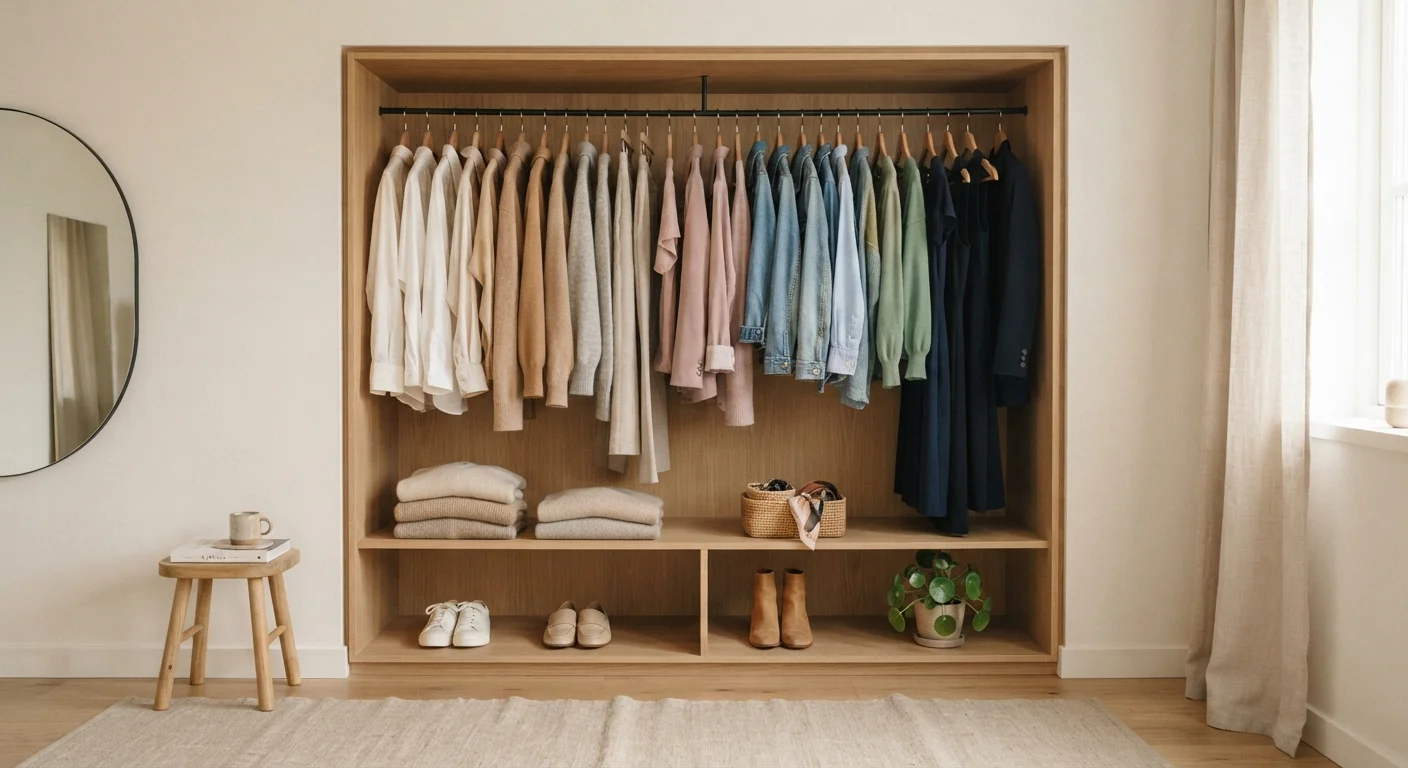
Hang items that wrinkle or stretch when folded — blazers, dress shirts, trousers. Fold knitwear, casual tees, and denim to preserve their shape. Arrange hanging clothes by category first, then by colour within each category. Place the items you reach for most often at eye level and arm's reach. Shoes stored in clear bins or on a rack at the bottom keep the floor visible and accessible.
Apply a one-in, one-out rule going forward
Every new item entering the wardrobe should displace one that leaves. This isn't about restriction — it's about keeping the system stable. Before any purchase, identify which existing item it would replace or improve upon. This single habit does more to prevent wardrobe clutter from returning than any organisational product.
The Reverse Hanger Trick
After your audit, hang all returned items with the hanger facing backward. After wearing and washing something, return it with the hanger facing the normal direction. After three to six months, anything still facing backward is a genuine candidate for donation — you have clear evidence you haven't reached for it.
Keeping the System Working Long-Term
A capsule wardrobe is a maintenance system, not a one-time achievement. The initial sort is the hardest part; sustaining it requires small, consistent habits rather than another big overhaul every year. For practical guidance on building those lasting habits, see our article on sustainable decluttering habits.
Schedule a lighter seasonal review — perhaps 20 minutes at the start of each season — to swap out weather-inappropriate pieces, identify anything that's worn out, and check whether the one-in, one-out rule has actually held. If your closet is in a compact space, pairing this wardrobe system with small-space organisation strategies can make a meaningful difference without requiring structural changes or significant spending.
The goal isn't a photogenic wardrobe — it's a functional one that reduces friction in your daily routine and stays manageable with minimal effort.