

| Typical cycle length | ~90 minutes |
| Cycles per night (average adult) | 4–6 |
| Stage 2 share of total sleep | ~45–55% (American Academy of Sleep Medicine) |
| Deep sleep (N3) predominance | Early cycles |
| REM sleep predominance | Later cycles (pre-waking) |
| REM share of total sleep (adults) | ~20–25% (National Sleep Foundation) |
How Sleep Is Structured
Sleep is not a single, uniform state. Each night, your brain cycles through a predictable sequence of stages, repeating roughly every 90 minutes. A typical adult will complete four to six of these cycles. Understanding this architecture explains why both how long you sleep and when you sleep matter for how recovered you feel.
Sleep is broadly divided into two categories: Non-REM (NREM) sleep, which encompasses three distinct stages, and REM (Rapid Eye Movement) sleep. Together they form one complete cycle. The proportion of each stage shifts across the night — deep sleep dominates early cycles, while REM sleep lengthens in the hours before waking.
For a deeper look at what your body is actually doing during these stages, see what happens to your body during sleep.
NREM Sleep
Non-Rapid Eye Movement sleep — the three stages of sleep (N1, N2, N3) that precede REM. NREM sleep is characterized by slower brain waves and is critical for physical restoration and memory consolidation.
REM Sleep
Rapid Eye Movement sleep, a stage in which the brain is highly active and most vivid dreaming occurs. It plays a central role in emotional regulation and the consolidation of complex memories.
Slow-Wave Sleep
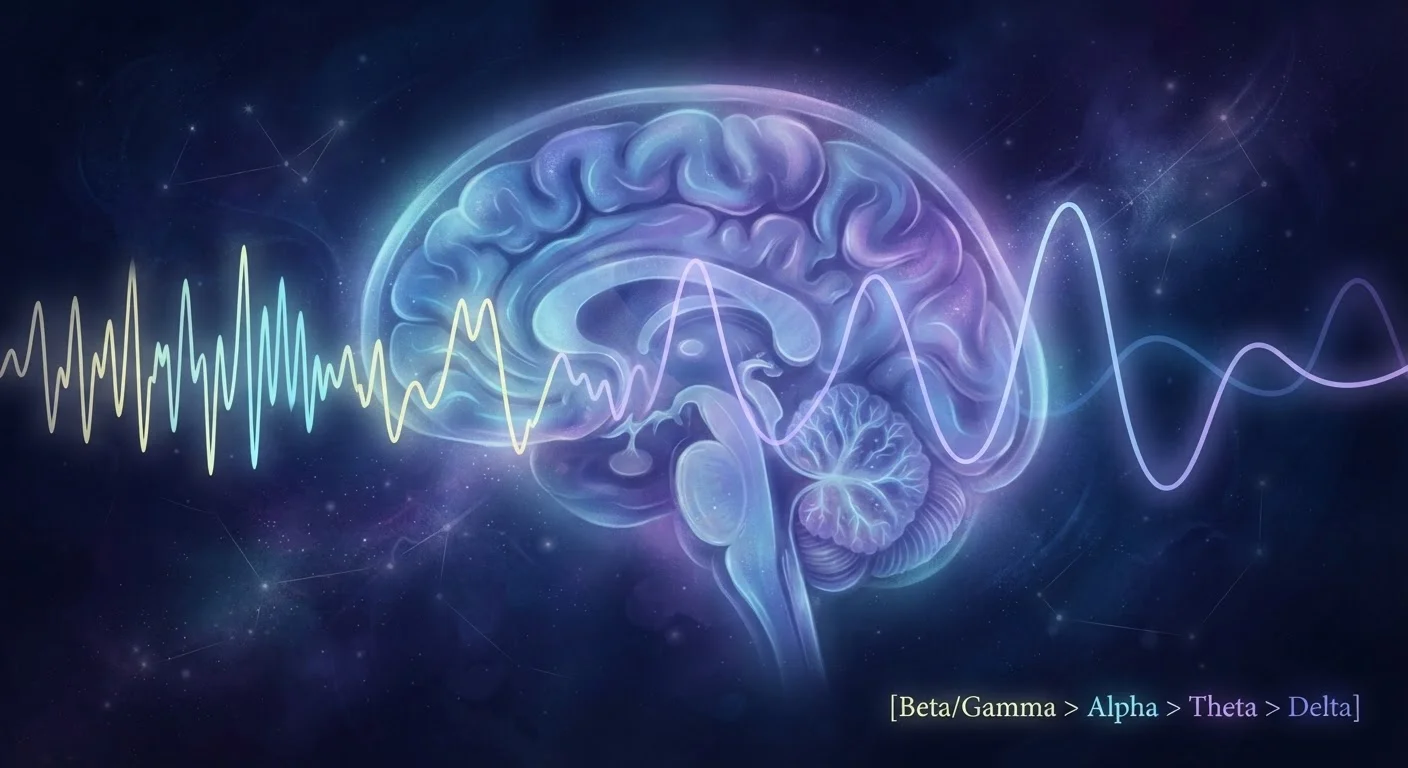
Another name for Stage 3 (N3) NREM sleep, characterized by large, slow delta brain waves. This is the deepest and most physically restorative stage of sleep.
Sleep Spindles
Brief bursts of oscillatory brain activity occurring during Stage 2 NREM sleep. They are thought to play a role in memory consolidation and in shielding the sleeping brain from external stimuli.
Sleep Architecture
The overall pattern and structure of sleep stages across a night, including how long each stage lasts, how often cycles occur, and how these proportions shift from early to late sleep.
Sleep Cycle
One complete progression through NREM stages and REM sleep, typically lasting about 90 minutes. Most adults complete four to six cycles per night.
The Four Sleep Stages Explained
Stage 1 — Light NREM (N1): This is the transitional phase between wakefulness and sleep, typically lasting just one to seven minutes. Muscle activity slows, you may experience brief muscle twitches, and the brain produces theta waves. You can be easily awakened at this point and may not even realize you were asleep.
Stage 2 — Light NREM (N2): Body temperature drops, heart rate slows, and the brain generates brief bursts of activity called sleep spindles and K-complexes — patterns believed to consolidate memories and block external disturbances. Stage 2 typically accounts for roughly 45–55% of total sleep time in adults.
Stage 3 — Deep NREM (N3 / Slow-Wave Sleep): Often called deep or slow-wave sleep, this stage is the most physically restorative. Growth hormone is released, tissues are repaired, the immune system is strengthened, and cellular restoration occurs. It is hardest to rouse someone from this stage. Deep sleep is most abundant in the first half of the night.
REM Sleep: Brain activity surges to near-waking levels. Eyes move rapidly beneath closed lids, and the body's muscles are temporarily paralyzed — preventing you from acting out dreams. REM sleep is central to emotional regulation and memory consolidation, particularly for complex and procedural learning. REM periods grow longer with each successive cycle, making late-morning sleep especially REM-rich.
| Typical cycle length | ~90 minutes |
| Cycles per night (average adult) | 4–6 |
| Stage 2 share of total sleep | ~45–55% (American Academy of Sleep Medicine) |
| Deep sleep (N3) predominance | Early cycles |
| REM sleep predominance | Later cycles (pre-waking) |
| REM share of total sleep (adults) | ~20–25% (National Sleep Foundation) |
Why Stage Balance Matters
Each stage fills a different biological need, which is why cutting sleep short disrupts more than just your total hours. Missing the early, deep-sleep-heavy cycles impairs physical recovery and immune function. Waking before your later REM cycles are complete undermines emotional processing and learning consolidation.
Alcohol is a common disruptor: it suppresses REM sleep in the first half of the night, reducing its restorative effects even when total sleep duration looks adequate. Caffeine consumed too late in the day delays sleep onset, shrinking the window available for deep sleep. Your sleep environment also plays a direct role — discover how temperature, light, and sound shape sleep quality.
It is also worth noting that sleep architecture changes with age — deep sleep naturally decreases and sleep becomes lighter and more fragmented over time. For a fuller picture, see how sleep needs and structure shift across a lifetime.
This article is for general informational purposes only and is not a substitute for advice from a qualified healthcare professional. If you have concerns about your sleep health, please consult a doctor or sleep specialist.