

Key Takeaways
No commute means fewer skipped sessions
Eliminating travel time removes one of the most cited reasons people abandon exercise routines. Training becomes far easier to fit into a busy day when the gym is already in your home.
Zero or low ongoing cost
A gym membership averages $40–$70 per month in the US. Home training can be done with minimal upfront investment in equipment, making it accessible regardless of budget.
Full scheduling flexibility
You can train at 6 a.m., during a lunch break, or at 10 p.m. without worrying about gym hours, class schedules, or peak-time crowds.
Private and low-pressure environment
Many people — especially beginners — feel self-conscious in commercial gyms. Training at home removes social anxiety, which can be a meaningful barrier to starting and sustaining a routine.
Easier to stay consistent long-term
Studies on exercise adherence suggest that convenience is one of the strongest predictors of long-term consistency. Lowering friction consistently produces better long-term outcomes than optimising for short-term intensity.
Limited equipment caps strength progression
Progressive overload — the gradual increase of resistance that drives strength and muscle gains — becomes difficult to sustain without access to a range of weights. Bodyweight movements have a ceiling that committed lifters will reach.
Space constraints limit exercise variety
Exercises like barbell deadlifts, cable rows, or treadmill running require space and equipment that most homes simply can't accommodate. This narrows your movement repertoire over time.
Fewer social accountability cues
Group fitness classes, training partners, and gym culture provide social motivation that home environments lack. Some people need these external cues to train consistently and push their effort levels.
Home distractions undermine session quality
Family members, household tasks, and the general pull of home responsibilities can interrupt sessions or reduce focus. A gym visit creates a psychological boundary that home training doesn't automatically provide.
No expert supervision on form
Without a trainer or experienced training partner nearby, poor movement patterns can develop and persist unnoticed — increasing injury risk, particularly in strength-based movements.
Our Verdict
Home workouts are a genuinely viable primary exercise strategy for most everyday fitness goals — including cardiovascular health, mobility, and moderate strength — when approached with structure and progressive challenge. They fall short primarily for those pursuing advanced strength or powerlifting goals, or for people who need external social motivation to stay consistent. For many Americans, a home-first routine removes the biggest barriers to exercise: time and inconvenience.
Home training as a primary approach works best for people with moderate fitness goals, busy schedules, limited budgets, or a preference for private, flexible exercise environments.
What "Primary" Home Training Actually Means
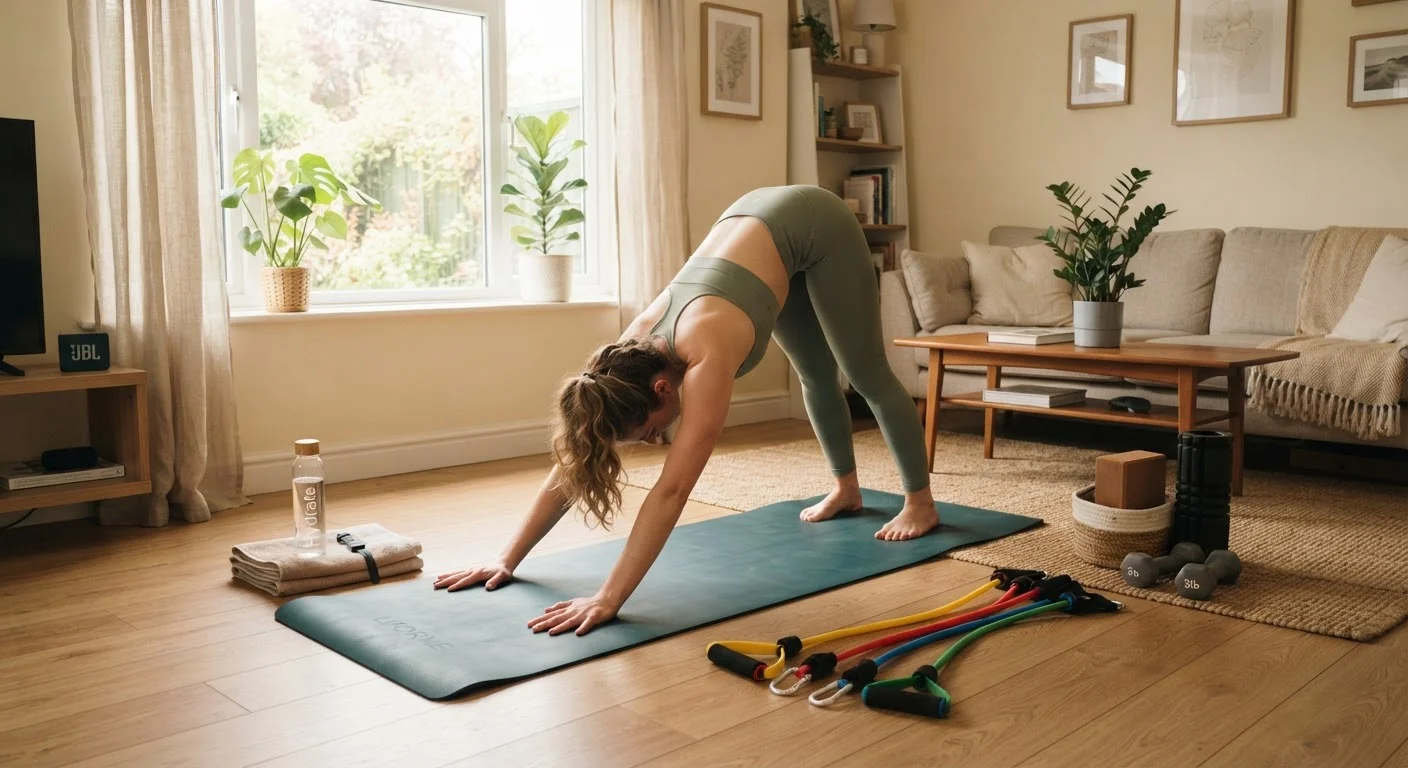
Choosing home workouts as your primary exercise method means relying on your living space — not a commercial gym — as the default setting for structured physical activity. That might involve bodyweight movements, resistance bands, free weights, or exercise videos. It doesn't have to mean exclusively never stepping outside or into a gym, but it does mean your routine is built around what you can access at home.
This distinction matters because the question isn't simply "are home workouts good?" — it's whether they can consistently deliver the stimulus your body needs to meet your specific goals. The answer depends heavily on what those goals are and how well you can design around home training's inherent constraints.
For context on how structured movement fits into broader activity habits, see our guide to everyday movement.
The Case For Home Workouts
The advantages of training at home are substantial — and for many people, they're the difference between exercising regularly and not exercising at all.
No commute means fewer skipped sessions
Eliminating travel time removes one of the most cited reasons people abandon exercise routines. Training becomes far easier to fit into a busy day when the gym is already in your home.
Zero or low ongoing cost
A gym membership averages $40–$70 per month in the US. Home training can be done with minimal upfront investment in equipment, making it accessible regardless of budget.
Full scheduling flexibility
You can train at 6 a.m., during a lunch break, or at 10 p.m. without worrying about gym hours, class schedules, or peak-time crowds.
Private and low-pressure environment
Many people — especially beginners — feel self-conscious in commercial gyms. Training at home removes social anxiety, which can be a meaningful barrier to starting and sustaining a routine.
Easier to stay consistent long-term
Studies on exercise adherence suggest that convenience is one of the strongest predictors of long-term consistency. Lowering friction consistently produces better long-term outcomes than optimising for short-term intensity.
Research consistently shows that adherence is the single greatest predictor of fitness outcomes. Removing friction from the exercise process — no commute, no membership fee, no waiting for equipment — dramatically lowers the barriers that cause people to skip sessions. If you're new to resistance training, bodyweight exercises requiring no equipment can deliver meaningful results without a single piece of gear.
The Case Against Home Workouts
Home training is not without real limitations — and being honest about them helps you either address them proactively or decide a gym-primary approach makes more sense for your situation.
Limited equipment caps strength progression
Progressive overload — the gradual increase of resistance that drives strength and muscle gains — becomes difficult to sustain without access to a range of weights. Bodyweight movements have a ceiling that committed lifters will reach.
Space constraints limit exercise variety
Exercises like barbell deadlifts, cable rows, or treadmill running require space and equipment that most homes simply can't accommodate. This narrows your movement repertoire over time.
Fewer social accountability cues
Group fitness classes, training partners, and gym culture provide social motivation that home environments lack. Some people need these external cues to train consistently and push their effort levels.
Home distractions undermine session quality
Family members, household tasks, and the general pull of home responsibilities can interrupt sessions or reduce focus. A gym visit creates a psychological boundary that home training doesn't automatically provide.
No expert supervision on form
Without a trainer or experienced training partner nearby, poor movement patterns can develop and persist unnoticed — increasing injury risk, particularly in strength-based movements.
Hybrid Training: A Middle Path
Many people find that a home-primary routine supplemented with occasional gym sessions — for heavier lifts, classes, or variety — gives them the best of both approaches. This doesn't require a full gym membership; many facilities offer drop-in rates or day passes. A hybrid model can resolve most of home training's structural limitations without sacrificing its convenience advantages.
It's worth separating home training's structural limitations from motivational ones. Motivation issues can often be addressed with scheduling, accountability partners, or varied programming. Equipment and space limitations are harder to solve without investment.
Who Gets the Most — and Least — Out of Home Training
Home workouts tend to serve specific groups extremely well. People with unpredictable schedules, caregiving responsibilities, social anxiety around gym environments, or tight budgets often thrive with a home-first model. Beginners to strength training in particular can make substantial progress for months using only bodyweight progressions before needing additional resistance.
On the other hand, intermediate and advanced lifters pursuing significant hypertrophy (muscle growth) or maximal strength development will eventually hit a ceiling without access to progressively heavier loads. The progressive overload principle — gradually increasing the demand placed on muscles — becomes harder to sustain at home without a reasonably equipped space.
~59%
US adults who don't meet aerobic activity guidelines
According to CDC physical activity data, a majority of American adults fall short of recommended aerobic activity levels — suggesting barriers like gym access or convenience play a meaningful role.
$40–70/mo
Average US gym membership cost
Industry surveys consistently place the average monthly gym membership in this range, making cost a tangible consideration for budget-conscious exercisers weighing home alternatives.
Home training also suits those who work remotely or spend most of their day at home. Fitting a 30-minute session between tasks is far easier when your "gym" is 20 steps away. For remote workers balancing output and wellbeing, managing energy at home connects directly to consistent movement habits.
Before anchoring your expectations on any single approach, it's also worth examining whether some of your fitness assumptions hold up — common fitness myths can shape unrealistic goals regardless of where you train.
This article is for general informational purposes only and is not a substitute for professional medical or fitness advice. Consult a qualified healthcare provider before starting any new exercise program, particularly if you have existing health conditions or injuries.