

Key Takeaways
Option A
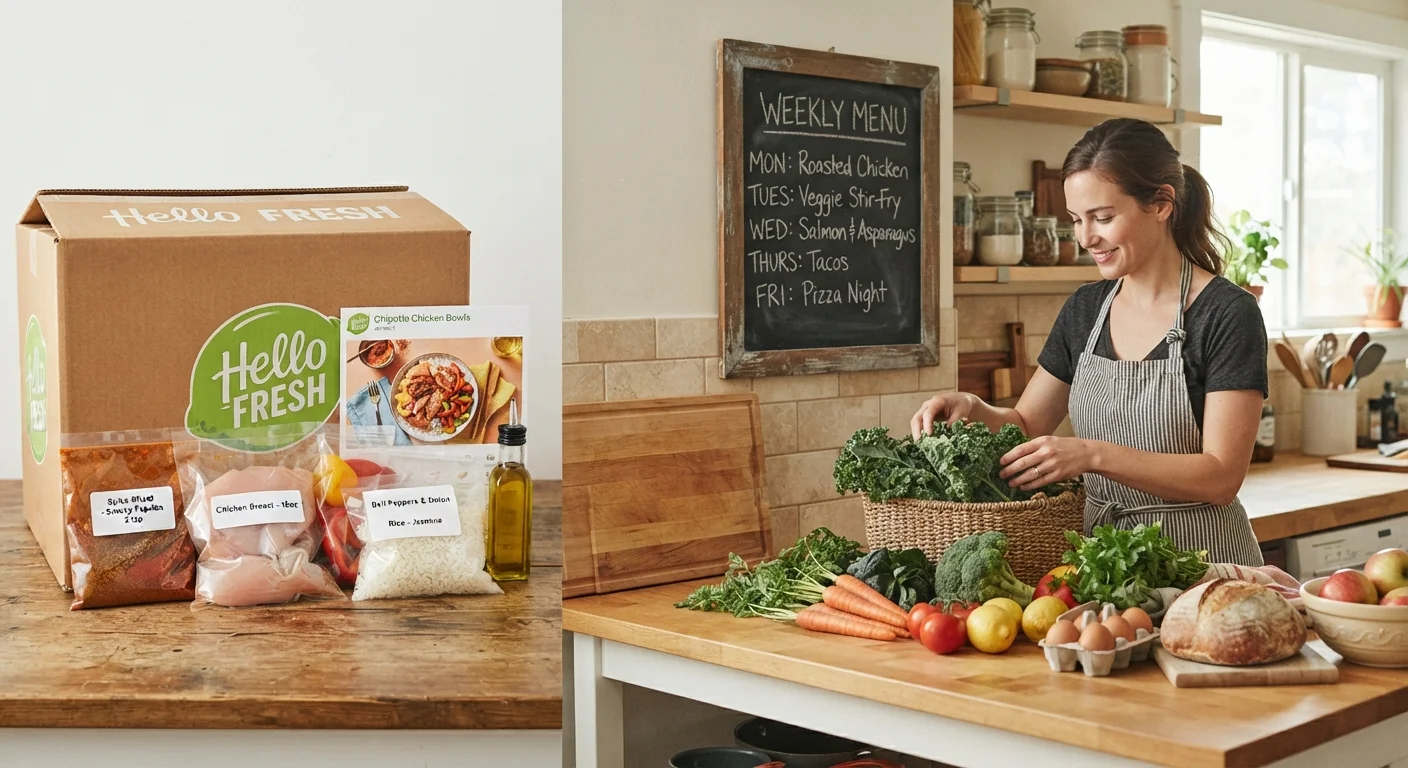
Meal Kits
The structured, low-decision cooking system.
Best for: People who want to cook at home without the effort of shopping, planning, or measuring ingredients.
Option B
Self-Planned Meals
The flexible, fully customizable approach.
Best for: People who want maximum control over ingredients, portions, costs, and variety across their weekly diet.
If you're short on time and often resort to takeout
Meal Kits
Meal kits eliminate shopping and planning friction, making it easier to cook at home consistently even during busy weeks.
If you're managing a specific dietary need or food budget
Self-Planned Meals
Self-planning gives you full ingredient control and the flexibility to shop sales, adjust portions, and avoid foods that don't work for you.
If you're a beginner cook wanting to build kitchen skills
Meal Kits
Step-by-step recipes with pre-portioned ingredients reduce overwhelm and help develop technique with less risk of waste or error.
If you cook for a large household or irregular schedule
Self-Planned Meals
Scaling recipes, using pantry staples, and batch cooking are far more practical when you're in full control of your grocery list.
If you want variety without recipe research fatigue
Meal Kits
Curated menus introduce new cuisines and techniques weekly without requiring you to source, research, or adapt recipes yourself.
How Each Approach Actually Works Day-to-Day
Meal kits deliver pre-portioned ingredients with step-by-step recipes to your door on a set schedule. You choose from a rotating menu, skip or pause weeks, and cook what arrives. Self-planned meals, by contrast, begin with you deciding what to eat, building a grocery list, shopping, and cooking from scratch — with full control at every step.
In practice, the biggest difference isn't the food itself — it's where your effort goes. Meal kits shift effort toward the cooking stage and remove the planning layer entirely. Self-planning front-loads your time into organization and shopping, then frees up decision-making later in the week.
For a deeper look at what meal planning actually involves day-to-day, this overview breaks down the basics without overcomplicating them. If you're starting from zero, a structured weekly planning guide can help you build the habit step by step.
Key Trade-Offs: Time, Cost, and Control
| Criterion | Meal Kits | Self-Planned Meals |
|---|---|---|
| Planning effort | Minimal — menus pre-curated | Higher — requires weekly decisions |
| Grocery shopping | Not required | Required each week |
| Cost per serving | Generally higher | Generally lower |
| Ingredient control | Limited to menu options | Full control |
| Food waste | Low (pre-portioned) | Varies by shopping habits |
| Dietary customization | Limited | Fully flexible |
| Cooking skill building | Guided, structured | Self-directed |
| Scalability for families | Constrained by serving sizes | Easy to scale up or down |
Cost is one of the most cited differences. Meal kits typically cost more per serving than self-sourced groceries — often significantly so — because you're paying for convenience, portioning, and packaging. Self-planned meals reward those who shop strategically, use pantry staples, and cook in bulk. That said, meal kits can reduce food waste by delivering only what you need, which has real value for smaller households where produce frequently goes unused.
Control over nutrition is another key variable. With self-planning, you choose every ingredient — useful if you're managing sodium intake, avoiding allergens, or following a specific dietary pattern. Meal kits offer limited customization within their menus, and nutritional profiles vary widely by provider and dish.
~35%
US households that report food waste weekly
USDA data consistently shows that a substantial share of purchased food is discarded at the household level, a factor where pre-portioned meal kits may offer a practical advantage.
2–3x
Typical cost premium for meal kit vs. self-sourced ingredients
Industry analyses have estimated meal kit per-serving costs are often two to three times higher than equivalent grocery-purchased ingredients, though prices vary widely by provider and meal type.
What Consistency Actually Looks Like
Sustainable eating habits depend less on which system you use and more on whether you can maintain it without burnout. Meal kits can reduce the friction that leads to takeout defaults — if the box arrives, the decision is already made. But subscription fatigue is real: when meals feel repetitive or the box feels like an obligation, adherence drops.
Self-planned meals require more upfront cognitive load, but they build long-term cooking autonomy. Learning to work with flexible meal formulas rather than rigid recipes can make self-planning far less time-intensive than it appears. Many households find a hybrid rhythm — using meal kits during heavier weeks and self-planning when time allows — is the most durable approach.
It's also worth periodically auditing what you're actually eating across the week. A nutritional audit of your weekly meals can reveal gaps in protein, fiber, or food group variety regardless of which cooking method you use.
This Is General Information, Not Personal Dietary Advice
The trade-offs described here are general in nature and may not apply to your specific health situation, dietary requirements, or household circumstances. If you have a medical condition, food allergy, or specific nutritional need, consult a registered dietitian or qualified healthcare professional before making significant changes to how you plan or prepare meals.