

Key Takeaways
The Balanced Plate
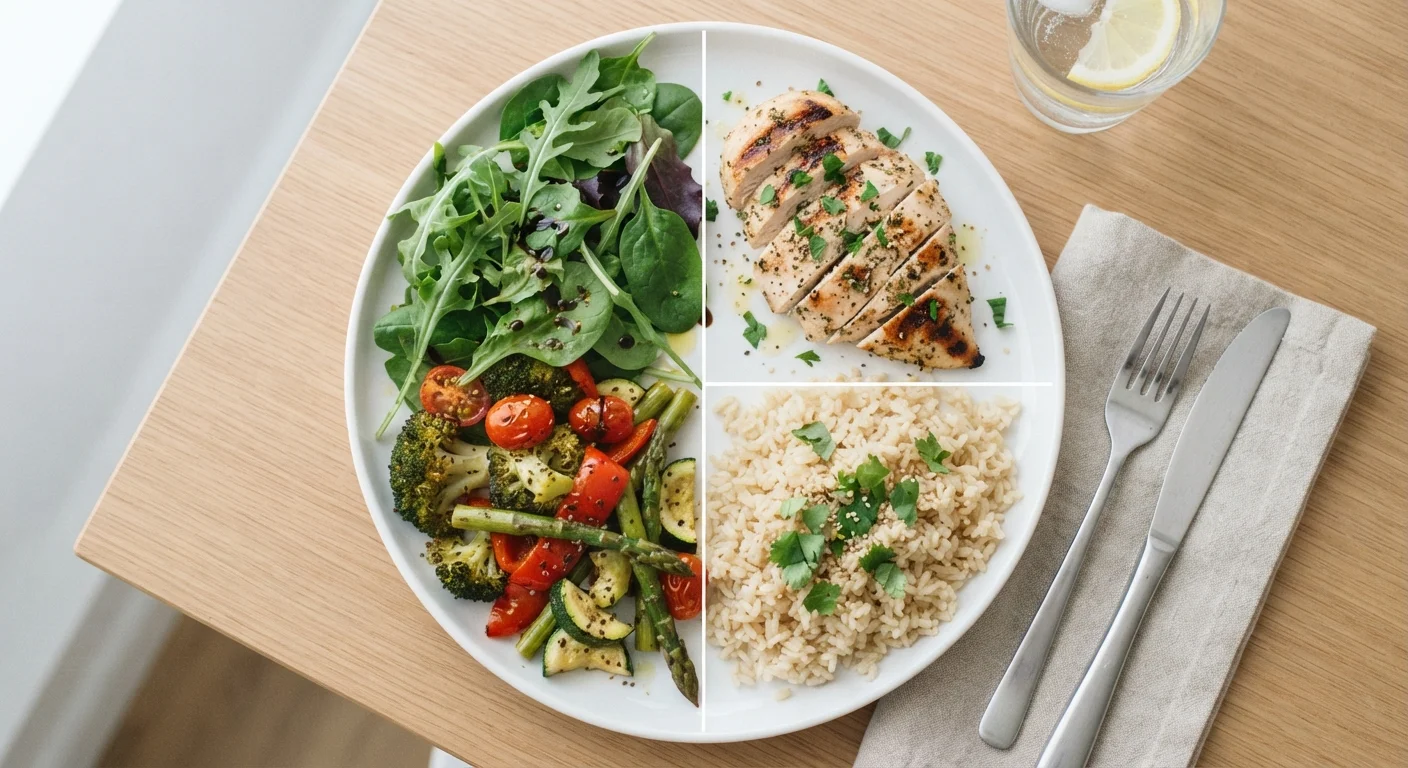
A balanced plate is a meal structured so that roughly half your plate contains vegetables and fruit, one quarter holds a quality protein source, and one quarter is made up of whole grains or starchy vegetables. This approach — popularized by nutrition researchers as a practical alternative to the traditional food pyramid — is designed to support steady energy, adequate nutrient intake, and long-term health without requiring calorie counting.
The Harvard T.H. Chan School of Public Health's Healthy Eating Plate model is one of the most widely referenced frameworks for this approach, emphasizing food quality alongside proportion.
Why Plate Proportions Matter More Than Calorie Math
Most people don't need to count calories to eat well — they need a clearer mental model of what a nutritious meal looks like. The balanced plate offers exactly that: a visual, intuitive framework grounded in nutrition science rather than rigid rules.
The traditional food pyramid, widely taught for decades, placed grains at the foundation and didn't clearly communicate how vegetables, protein, and fat should relate to one another at a single meal. Research published by groups including the Harvard T.H. Chan School of Public Health helped shift the conversation toward a plate-based model, one that emphasizes food quality alongside proportion. For a deeper dive into how this connects to structured meal planning, see the weekly nutritional audit guide.
90%
Americans not meeting vegetable intake recommendations
According to CDC dietary data, approximately nine in ten U.S. adults consume fewer vegetables than federal dietary guidelines recommend.
50%
Of the plate devoted to vegetables and fruit
The Harvard Healthy Eating Plate model recommends that half of every meal consist of vegetables (prioritized) and fruit.
25%
Of calories from refined grains in average U.S. diet
USDA dietary data indicates refined grains — white bread, white rice, processed snacks — remain a disproportionately large share of American caloric intake.
Breaking Down the Four Sections of a Balanced Plate
Half: Vegetables and Fruit
The largest portion of a balanced plate should be non-starchy vegetables — think leafy greens, broccoli, bell peppers, carrots, zucchini, and tomatoes. Fruit can round out this half, though vegetables should predominate. This section delivers fiber, vitamins, minerals, and phytonutrients with relatively low caloric density.
One Quarter: Quality Protein
Protein supports muscle maintenance, satiety, and metabolic function. This section works best with fish, poultry, eggs, legumes, tofu, or tempeh. Legumes — beans, lentils, chickpeas — serve double duty by also contributing fiber to the meal. See evidence-informed approaches to plate proportions for more on optimizing protein choices.
One Quarter: Whole Grains or Starchy Vegetables
Brown rice, quinoa, whole-wheat pasta, oats, sweet potatoes, and corn all qualify here. Whole grains retain their bran and germ, preserving fiber and key micronutrients that refined grains lose in processing. Limiting this section to one quarter — rather than making it the base of the meal — helps moderate glycemic load.
On the Side: Healthy Fats and Beverages
A drizzle of olive oil, a few slices of avocado, or a small handful of nuts provides heart-supportive unsaturated fat. Water, plain sparkling water, or unsweetened tea are the preferred drink pairings. Sugary beverages add significant calories with no nutritional benefit.
Use Your Plate as a Visual Guide
You don't need measuring cups or a food scale to apply balanced plate principles. Simply glance at your plate before eating: if half isn't vegetables, see if you can add a handful of greens or swap a side. Small visual adjustments over time tend to be more sustainable than strict tracking.
Adapting the Balanced Plate to Real-Life Eating
The plate model isn't rigid, and it doesn't demand a literal plate at every meal. A grain bowl, a stir-fry, a burrito bowl, or a hearty salad can all follow the same proportional logic — half the volume in vegetables, a quarter protein, a quarter whole grain or starch.
Mixed dishes like soups and stews can work too. A vegetable-heavy lentil soup with a small whole-grain roll, for example, maps fairly well to balanced plate principles even if the sections aren't visually distinct. What matters is the overall composition.
Those exploring specific dietary approaches — such as the Mediterranean diet — will find that its meal structure aligns closely with balanced plate principles. Comparing these frameworks can be helpful; see what the Mediterranean diet actually looks like day to day for context.
Understanding ingredient-level nutrition can also sharpen your plate-building instincts. Learning how to read a nutrition label helps you identify whole-grain products, spot hidden sugars, and choose protein sources wisely at the grocery store.
This article is for general informational and educational purposes only and does not constitute medical or dietary advice. Consult a registered dietitian or qualified healthcare professional for personalized guidance.