

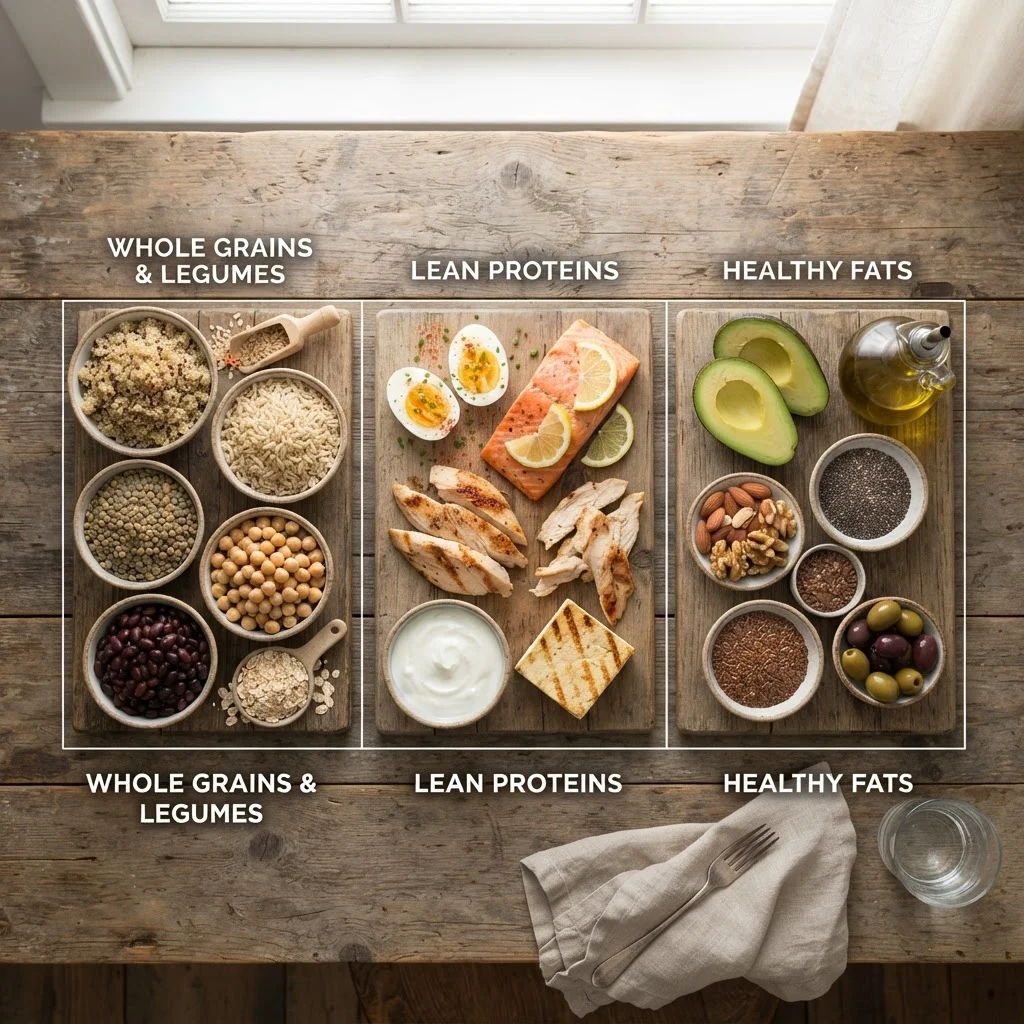
What Are Macronutrients?
Macronutrients — often called macros — are the three nutrients your body needs in relatively large amounts to function: carbohydrates, protein, and fat. Unlike vitamins and minerals (micronutrients), macros supply the calories your body burns for energy and the raw materials it uses to build and repair tissue.
Understanding how each macro works is a foundational nutrition skill. Once you can identify what a food is primarily providing, reading an eating pattern becomes much more intuitive. For a complementary look at the smaller but equally essential nutrients, see our micronutrients plain-English reference.
This article is for general informational purposes only and is not medical or dietary advice. Consult a qualified healthcare professional or registered dietitian before making significant changes to your diet.
Carbohydrates: Your Body's Preferred Fuel
Carbohydrates are the body's first choice for quick, efficient energy. When you eat carbs, your digestive system breaks them down into glucose — a simple sugar that cells use directly for fuel. Your brain, in particular, relies heavily on a steady glucose supply.
Not all carbs behave the same way:
- Simple carbohydrates (sugars) digest quickly, producing a rapid rise in blood glucose. They're found naturally in fruit and dairy, and added to many processed foods.
- Complex carbohydrates (starches and fiber) digest more slowly, providing sustained energy. Whole grains, legumes, and vegetables are primary sources.
- Dietary fiber — a type of complex carb humans can't fully digest — supports digestive health, promotes satiety, and is associated with reduced risk of several chronic conditions.
The quality of carbohydrate sources matters more than eliminating the category. Minimally processed, fiber-rich carbs are nutritionally very different from refined flour or added sugars, even though both count as carbohydrates on a label. Learn how these distinctions appear when you read a nutrition label.
Protein: Builder, Repairer, Regulator
Protein is made of chains of amino acids — the structural units your body uses to build muscle, repair tissue, produce enzymes and hormones, and support immune function. Of the 20 amino acids the body uses, nine are essential, meaning you must obtain them from food because the body can't synthesize them.
Animal-based proteins (meat, poultry, fish, eggs, dairy) typically contain all nine essential amino acids in adequate proportions and are called complete proteins. Plant-based proteins (beans, lentils, tofu, nuts, seeds, grains) are often lower in one or more essential amino acids, but eating a variety of plant protein sources across the day generally meets needs.
Macronutrient
A nutrient required by the body in large quantities that provides energy (calories). The three macronutrients are carbohydrates, protein, and fat.
Glucose
A simple sugar that is the body's primary energy currency. Carbohydrates are broken down into glucose during digestion and transported through the bloodstream to fuel cells.
Essential amino acids
The nine amino acids the human body cannot synthesize on its own and must obtain through food. They are critical for building proteins used in muscles, enzymes, and hormones.
Complete protein
A protein source that contains all nine essential amino acids in amounts sufficient to meet the body's needs. Most animal-based foods qualify as complete proteins.
Dietary fiber
A type of carbohydrate that the body cannot fully digest. It supports digestive health, promotes feelings of fullness, and is associated with reduced risk of certain chronic diseases.
Unsaturated fat
A type of dietary fat found in foods like olive oil, nuts, avocados, and fatty fish. It is liquid at room temperature and is broadly associated with cardiovascular health benefits in research.
Protein also plays a practical role in appetite management. It tends to be the most satiating macronutrient, partly because it slows gastric emptying and influences hormones that signal fullness. This makes adequate protein intake a useful lever for anyone trying to manage hunger without drastic calorie restriction.
Fat: Energy Reserve and Essential Functions
Dietary fat has a higher calorie density than carbs or protein — roughly twice as many calories per gram — but that doesn't make it something to avoid. Fat performs critical roles that no other macronutrient can substitute:
- Absorbing fat-soluble vitamins (A, D, E, and K), which require fat to enter the bloodstream
- Providing essential fatty acids (linoleic and alpha-linolenic acid) that the body cannot produce on its own
- Supporting cell membrane integrity, brain function, and hormone production
- Serving as a long-term energy reserve
Dietary fat comes in several forms. Unsaturated fats — found in olive oil, avocados, nuts, and fatty fish — are broadly associated with cardiovascular health in population research. Saturated fats (found in meat and full-fat dairy) are consumed in moderation by most dietary guidelines. Trans fats, largely eliminated from the US food supply through regulatory action, are considered harmful and were removed from the FDA's Generally Recognized As Safe list.
For a broader framework that ties macros, micros, and eating patterns together, the complete guide to nutrition fundamentals is a useful next step.
Putting Macros Into Practice
No single macro ratio is universally optimal — individual needs vary based on activity level, health status, age, and personal goals. The Dietary Guidelines for Americans provide general reference ranges (known as Acceptable Macronutrient Distribution Ranges, or AMDRs) as a starting framework, but these are population-level estimates, not personal prescriptions.
A few practical habits tend to serve most people well regardless of specific macro targets:
- Build meals around a variety of whole foods to naturally hit a reasonable macro balance.
- Prioritize fiber-rich carbohydrate sources over refined ones.
- Include a protein source at each meal to support satiety and muscle maintenance.
- Don't fear fat — focus on source quality rather than elimination.
If you're curious how different popular eating patterns distribute macros, our overview of popular diet plans breaks down widely followed approaches and their trade-offs. For questions about your personal macro needs, a registered dietitian is your best resource.