

Key Takeaways
Dietary Fluid Balance
Dietary fluid balance refers to how the food and beverages you consume contribute to — or work against — your body's overall hydration. Your body needs a steady supply of water to function, and a meaningful portion of that water can come directly from solid foods. The balance between fluid intake and fluid loss determines whether you're adequately hydrated.
Physiologically, fluid balance is regulated by mechanisms involving the kidneys, hormones such as antidiuretic hormone (ADH), and electrolytes like sodium and potassium that govern how water moves in and out of cells.
Why Food Is a Meaningful Source of Fluids
Most people think of hydration as a drinking problem — solved by reaching for a glass of water. But a significant share of daily fluid intake comes from what you eat, not what you drink. According to established nutrition science, food can account for roughly 20% of total fluid intake for adults who eat a varied diet rich in whole foods.
This matters because it reframes hydration as a dietary habit, not just a drinking habit. The foods you choose throughout the day either support or undermine your fluid balance — sometimes in ways that aren't immediately obvious.
~20%
Daily fluid intake from food
Nutrition research consistently estimates that food provides around one-fifth of total daily fluid intake for adults eating a balanced diet.
90–96%
Water content in cucumbers by weight
Cucumbers are among the most water-dense whole foods available, making them a simple addition for boosting dietary hydration.
2–3 liters
Total daily water intake recommended for adults
General guidance from health authorities suggests total water intake — from all food and drink combined — of roughly 2–3 liters per day for most adults, though individual needs vary.
Understanding which foods contribute fluids — and which draw them away — is one of the more practical nutrition basics you can build into everyday eating.
High-Water Foods That Help You Stay Hydrated
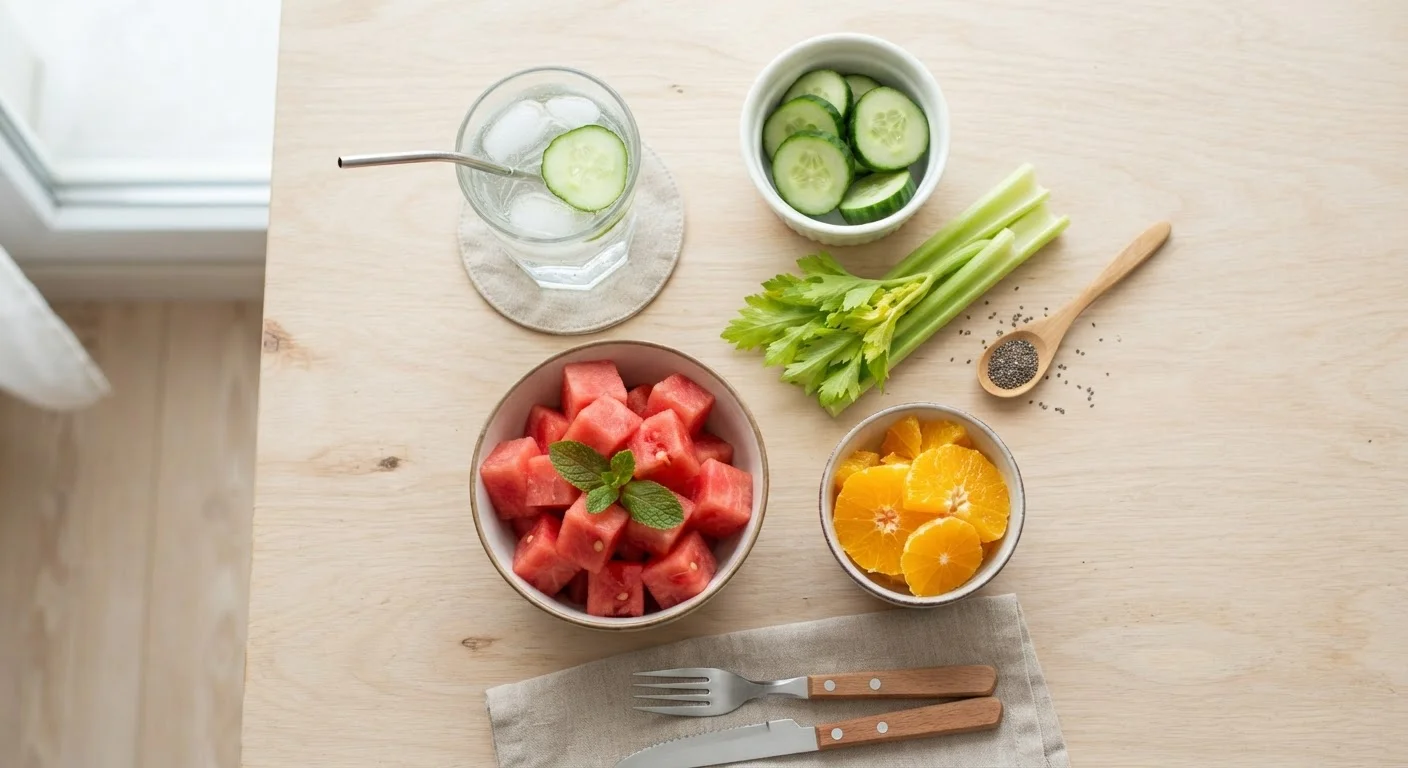
Whole foods with naturally high water content are your best dietary allies for hydration. These include:
- Cucumbers and celery — both over 95% water by weight
- Lettuce and leafy greens — light in calories but rich in water
- Watermelon and strawberries — approximately 91–92% water
- Oranges and grapefruit — also deliver electrolytes like potassium
- Tomatoes — versatile and over 94% water
- Yogurt and milk — significant fluid content alongside protein and calcium
- Soups and broths — one of the most direct food-based hydration sources
Incorporating these into meals and snacks means your body receives a steady, gradual supply of fluids alongside the nutrients that help it absorb and use water effectively. This is distinct from — and complementary to — drinking water directly.
Foods and Habits That Work Against Hydration
Just as some foods support fluid balance, others can increase fluid losses or make it harder for the body to retain water. The most significant contributors include:
High-Sodium Foods
Sodium is an essential electrolyte, but excess dietary sodium pulls water out of cells and signals the kidneys to increase fluid excretion. Diets heavy in processed foods, canned soups, fast food, or deli meats often deliver far more sodium than the body needs — increasing thirst and the risk of mild dehydration if fluid intake doesn't keep pace.
Alcohol
Alcohol suppresses antidiuretic hormone (ADH), the hormone that tells your kidneys to conserve water. The result is increased urination and accelerated fluid loss — which is why drinking alcohol without adequate water commonly leads to dehydration symptoms.
Very High-Sugar Foods
Large amounts of simple sugars can draw water into the digestive tract through osmosis, temporarily reducing the water available to the rest of the body.
If you're looking at common dietary mistakes, overlooking hydration-disruptive foods is near the top of the list.
The Role of Electrolytes in Food-Based Hydration
Water alone doesn't fully explain hydration. Electrolytes — minerals like sodium, potassium, magnesium, and chloride — govern how water moves into and out of cells. Without them in the right balance, the body can struggle to retain and distribute the fluids it receives.
Whole foods are excellent sources of dietary electrolytes:
- Potassium
- Found in bananas, sweet potatoes, beans, and leafy greens. Helps counterbalance sodium and supports cellular fluid balance.
- Magnesium
- Present in nuts, seeds, legumes, and whole grains. Involved in hundreds of enzymatic reactions, including those affecting hydration.
- Sodium
- Essential in small amounts; naturally present in most foods at levels the body can manage without excess supplementation.
Interestingly, hydration status also affects other body systems. For example, chronic low-level dehydration has been linked to changes in skin and hair health, illustrating how fluid balance touches nearly every aspect of physical wellness.
This article is for general informational purposes only and does not constitute medical or dietary advice. Consult a qualified healthcare professional for personalized guidance on nutrition and hydration.