

Key Takeaways
Road Rage & Aggressive Driving
Aggressive driving refers to a pattern of dangerous behaviors behind the wheel — such as speeding, tailgating, unsafe lane changes, and running red lights — that deliberately disregard the safety of others. Road rage is the more extreme end of this spectrum: it involves intentional, anger-driven acts meant to intimidate, threaten, or harm another road user. While every instance of road rage involves aggression, not all aggressive driving rises to the level of road rage.
The National Highway Traffic Safety Administration (NHTSA) distinguishes aggressive driving as a traffic offense and road rage as a criminal offense, depending on the severity and intent of the behavior.
The Psychology Behind the Anger
Drivers rarely think of themselves as aggressive. Yet surveys consistently show that the same behaviors people condemn in others — tailgating, horn-blasting, cutting across lanes — are ones many admit to doing when frustrated. This gap between self-perception and behavior is central to understanding road rage.
Psychologists point to several interlocking factors. First, the car creates a sense of anonymity and territorial ownership: the lane you're in feels like your lane, and another driver encroaching on it can register as a personal violation rather than a navigation error. Second, driving is one of the few daily activities where strangers are in immediate physical proximity without any social contract governing interaction. The result is a setting uniquely primed for misread intentions.
Stress imported from outside the vehicle also plays a measurable role. A driver already running late, sleep-deprived, or carrying work anxiety arrives at the road with a depleted capacity for patience. Driving while fatigued reduces emotional regulation in ways that make reactive anger more likely — compounding what is already a significant safety risk.
“Aggressive driving is fundamentally a social problem, not just a traffic enforcement problem. The anonymity of the vehicle and the perception of unfairness on the road interact to lower the threshold for conflict in ways that don't occur in most other social settings.”
— Leon James, Professor of Psychology, University of Hawaii, researcher in driving psychology
What the Data Actually Shows
Road rage is not a fringe phenomenon. Research from the AAA Foundation for Traffic Safety has documented that the majority of U.S. drivers report engaging in at least one aggressive driving behavior in a given year. More concerning, a significant proportion report being on the receiving end of extreme aggression — being followed, deliberately cut off, or confronted outside their vehicle.
The NHTSA has linked aggressive driving to a substantial share of fatal crashes. Behaviors such as speeding, failure to yield, and improper lane changes — all components of aggressive driving — appear repeatedly in crash causation data. Road rage specifically, while harder to isolate statistically, is implicated in hundreds of fatalities annually according to law enforcement reporting.
80%
U.S. drivers reporting aggressive driving in past year
According to the AAA Foundation for Traffic Safety, approximately 8 in 10 drivers admitted to at least one aggressive driving behavior in a recent survey year.
Half
Fatal crashes with aggressive driving as a factor
The NHTSA has attributed aggressive driving behaviors — speeding, failure to yield, unsafe lane changes — to roughly half of all traffic fatalities in its crash causation studies.
51%
Drivers who have been purposely tailgated
AAA Foundation research found more than half of surveyed drivers reported being deliberately tailgated by an angry driver in the preceding year.
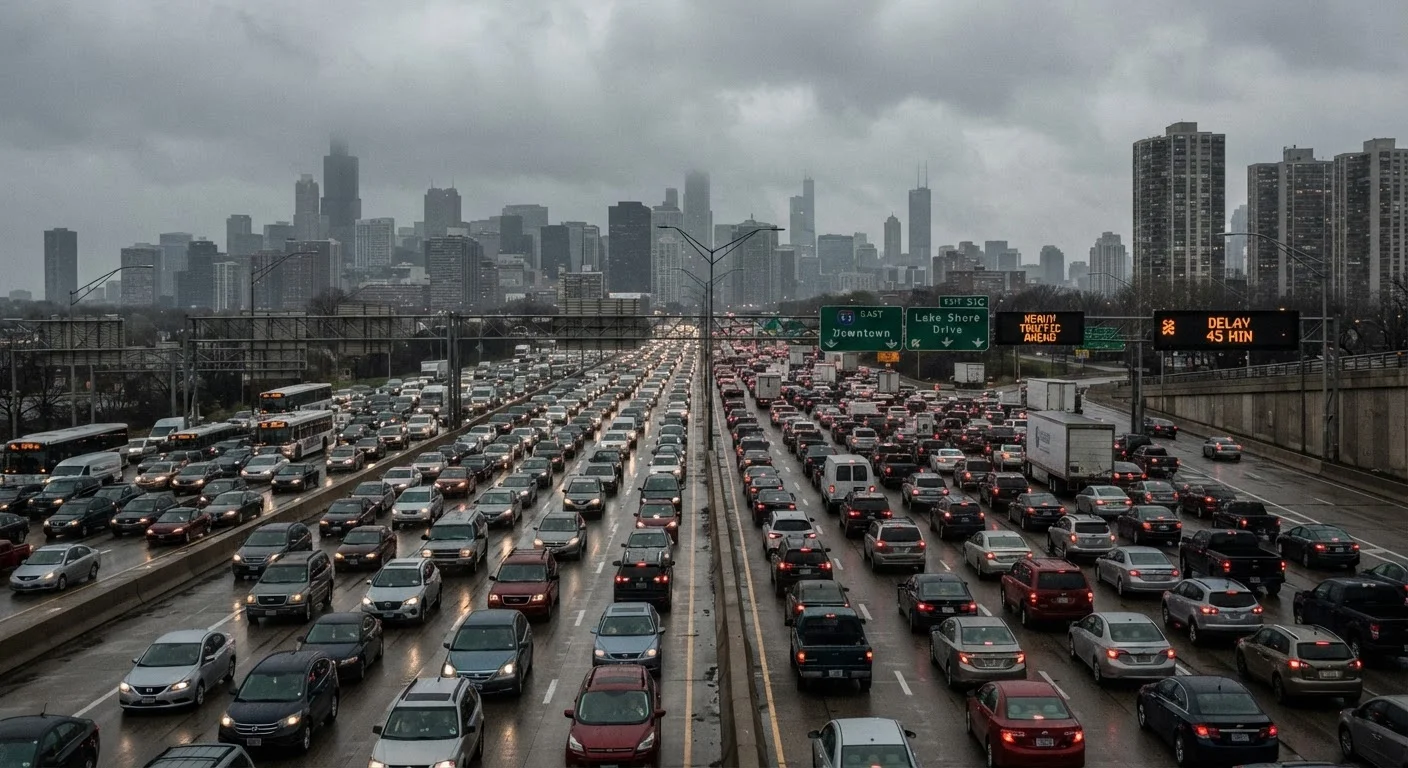
Environmental factors matter too. Research shows that heat, heavy congestion, and stop-and-go conditions elevate aggressive behavior. Urban highways and high-density interchanges — particularly during peak commute hours — create the conditions most associated with incidents. This is worth keeping in mind alongside other situational hazards: just as wet roads change the physics of driving, congested roads change the emotional landscape of it.
How Aggressive Driving Differs From a Bad Habit
It's worth distinguishing road rage and aggressive driving from the quieter erosion of safe habits over time. Complacency, distraction, and over-reliance on driver assistance technology can make someone a worse driver without any anger involved. Habits that quietly degrade driving quality tend to develop gradually and unconsciously — road rage, by contrast, is acute and emotionally charged.
The distinction matters because the solutions differ. Bad habits respond to awareness and deliberate practice. Aggressive driving often requires emotional regulation strategies, not just skill correction. Drivers who notice they routinely feel hostile behind the wheel may benefit from examining what they're carrying into the car before they ever turn the key.
Practical Strategies for Staying Calm and Safe
The most effective individual response to road rage — whether managing your own or responding to someone else's — is disengagement. Retaliating to a perceived slight, even with something as minor as a horn tap or a gesture, escalates conflict rather than resolving it. Research on de-escalation consistently finds that removing the stimulus (your visible reaction) is more effective than matching it.
For managing your own state, practical steps include building buffer time into journeys to remove time pressure, avoiding driving immediately after a stressful event where possible, and using deliberate breathing techniques during congestion. Thinking of other drivers' errors as mistakes rather than malicious acts — what psychologists call attributional reframing — is consistently supported by research as a way to reduce anger responses.
When another driver becomes aggressive toward you, the guidance from safety organizations is consistent: avoid eye contact, do not respond with gestures, increase your following distance, and if the situation escalates, drive to a populated public location rather than your home. Contacting law enforcement is appropriate if you feel genuinely threatened.
Adopting a defensive driving mindset — anticipating hazards rather than reacting to them — naturally reduces the triggers for aggression by keeping you less caught off guard by the actions of others.
Before You Drive: Check Your Emotional State
If you've just had an argument, received stressful news, or are running significantly late, take a brief pause before starting the car. A few slow breaths and a realistic assessment of journey time can reduce the emotional reactivity you carry into traffic. It's a small habit with a meaningful effect on how you respond to the inevitable frustrations of sharing the road.