

Key Takeaways
Why Fatigue Is a Genuine Road Safety Crisis
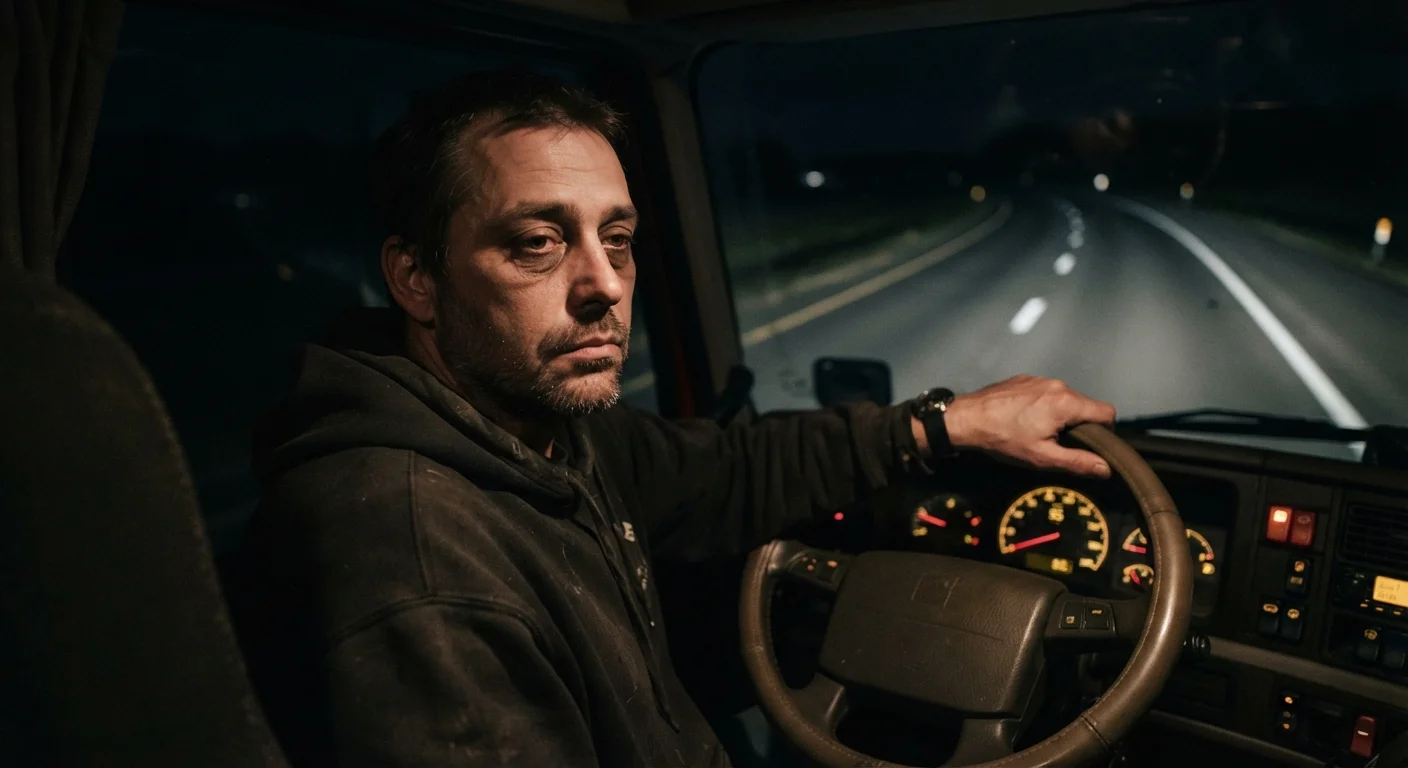
Most drivers freely acknowledge the dangers of drunk driving, yet far fewer give the same weight to getting behind the wheel when exhausted. Research from the National Highway Traffic Safety Administration (NHTSA) consistently identifies drowsy driving as a significant contributor to serious crashes — yet it remains chronically underreported because, unlike alcohol, there is no roadside test for fatigue.
Fatigue degrades nearly every cognitive function required for safe driving: sustained attention, reaction speed, hazard recognition, and sound judgment. These aren't minor inconveniences — they are the core skills that keep every road user safe. Understanding how fatigue actually impairs your ability to drive is the first step toward making better decisions before you ever start the engine. For a broader look at how habits erode driving ability over time, see how everyday habits quietly degrade your driving.
Myth
I can tell when I'm too tired to drive safely.
Fact
Fatigue impairs the very self-awareness you'd need to judge your own impairment accurately.
One of the most well-documented effects of sleep deprivation is a reduced ability to assess one's own performance. Studies in sleep research consistently show that fatigued individuals rate their alertness significantly higher than objective measures indicate. Drivers who feel 'fine' may already be operating with reaction times and attention spans well below a safe threshold — and they genuinely don't know it.
Myth
Caffeine and fresh air are enough to keep a tired driver safe.
Fact
Stimulants can temporarily mask the feeling of sleepiness but do not restore the cognitive function that sleep deprivation removes.
Caffeine works by blocking adenosine receptors — the chemical signal that builds up in the brain to induce sleep — but it doesn't eliminate the sleep debt itself. Once caffeine's effect wanes, sleepiness typically returns with greater intensity. Opening windows or turning up the radio has even less measurable effect on alertness. These measures might keep your eyes open for another few minutes, but they don't restore reaction time, decision-making, or hazard perception to safe levels.
Myth
Drowsy driving is only a risk on long overnight trips.
Fact
Fatigue impairs driving ability after even moderate sleep loss, including on short, familiar routes.
Familiarity with a route can actually increase risk: a driver who 'knows the road' may pay less conscious attention, making the effects of fatigue more dangerous, not less. Research also points to a secondary peak in drowsy driving incidents during mid-afternoon — around 2 to 4 p.m. — linked to a natural circadian dip in alertness. Short commutes are not exempt from this risk, particularly after nights of poor or insufficient sleep.
Myth
Driving tired is uncomfortable but nowhere near as dangerous as drunk driving.
Fact
Sleep research has shown that 18 hours of wakefulness produces impairment comparable to a blood-alcohol content of approximately 0.05%, and 24 hours to around 0.10% — above the US legal limit of 0.08%.
These comparisons come from laboratory studies measuring reaction time, lane-keeping, and hazard response. The mechanisms differ — alcohol is a depressant affecting multiple systems, while sleep deprivation primarily degrades prefrontal cortex function — but the practical outcome on driving performance is strikingly similar. Both slow reaction time, reduce peripheral attention, and distort risk perception. Unlike alcohol, fatigue carries no legal threshold, which may explain why social awareness of the danger has lagged.
Myth
If you feel drowsy, just push through — you'll wake up once you're moving.
Fact
Drowsiness that arrives while driving is a sign the brain is already close to forcing sleep; pushing through significantly increases crash risk.
The sensation of fighting to stay awake while driving is a late-stage warning, not an early one. By the time a driver is struggling to keep their eyes open, microsleeps may already be occurring. The feeling of 'waking up' after a jolt or a noise is often the driver recovering from a brief involuntary sleep episode. Continuing to drive in this state — even for a short distance — is genuinely dangerous. The only reliable response is to stop driving.
What the Evidence Shows — and What You Should Do
Fatigue-related crashes share a recognisable profile: they typically occur during low-traffic hours, involve a single vehicle, and show no evidence of braking before impact. That last point is telling — the driver didn't react because they were, at least briefly, asleep. These are called microsleeps: involuntary episodes of sleep lasting two to thirty seconds that the driver rarely remembers.
~100,000
Annual police-reported drowsy driving crashes (US)
NHTSA estimates around 100,000 police-reported crashes annually are directly attributable to driver drowsiness — a figure widely considered an undercount.
0.10%
Equivalent BAC after 24 hours awake
Sleep research comparing cognitive performance measures has found that 24 hours without sleep produces impairment equivalent to a blood-alcohol content of approximately 0.10%.
71%
Drowsy driving crashes occurring on rural roads
The AAA Foundation for Traffic Safety has reported that a substantial majority of drowsy driving fatal crashes occur on rural roads, where monotony and distance from services increase risk.
The interaction between fatigue and other driving conditions compounds risk further. Night driving already reduces visibility and increases glare; add sleep deprivation and the impairment multiplies. The challenges of night driving and drowsiness form a particularly dangerous combination that many drivers underestimate.
Practically speaking, if you notice yourself drifting between lanes, missing exits, struggling to keep your eyes focused, or experiencing memory gaps about the last few miles, treat these as serious warnings. Pull off the road at the next safe opportunity — a rest stop, a well-lit parking area, or a fuel station — and sleep for at least 20 minutes before continuing. Plan long trips to avoid driving between midnight and 6 a.m. when circadian pressure peaks, and share driving duties where possible.
There Is No Safe Workaround for Sleep
No in-car stimulant, technique, or technology reliably substitutes for adequate sleep when fatigue has set in. Lane-departure warning systems and automatic emergency braking can provide a brief safety buffer, but they are not designed to compensate for a drowsy driver over extended distances. If you are too tired to drive safely, the only appropriate action is to stop and rest — or arrange alternative transport.
Developing the habit of defensive driving awareness helps, but no amount of technique compensates for a brain that is physiologically unable to stay alert. Fatigue is not a mindset problem — it is a biological one, and it demands a biological solution.
This article provides general road safety information for educational purposes. Always comply with applicable traffic laws and consult relevant authorities or safety organisations for guidance specific to your situation.