

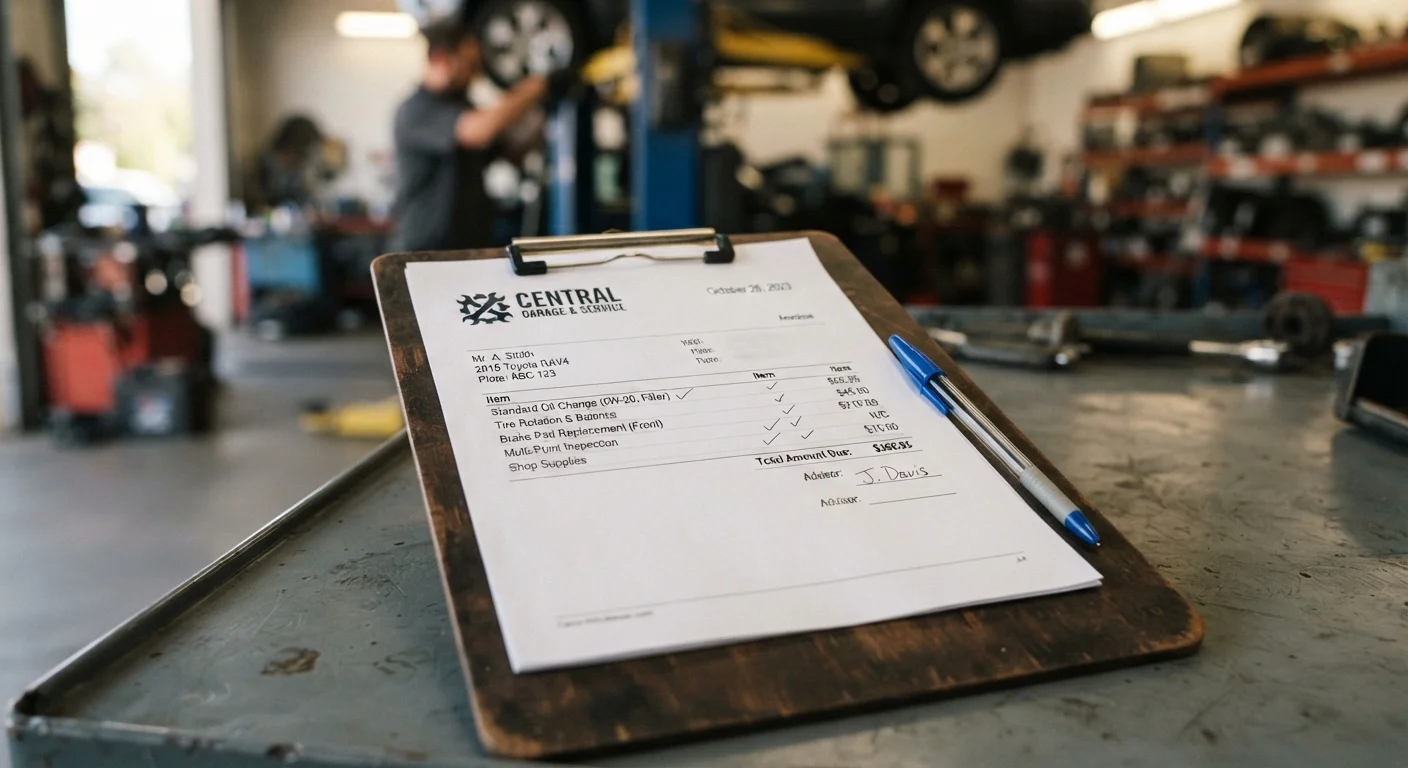
The Three Core Sections of Any Invoice
A mechanic's invoice, however intimidating it looks, almost always breaks down into three pillars: labour, parts, and fees. Once you can identify each, the rest is detail.
Labour lists each job performed and the hours charged. Shops bill using a flat rate (see below), meaning a brake pad replacement might be billed at 1.5 hours whether the technician finished in 90 minutes or 45. That's standard practice, not deception — but knowing it helps you assess whether the hours feel proportionate.
Parts details every component installed, usually with a part number and unit price. This is where markups live. If you were quoted an OEM air filter but the invoice shows an unfamiliar brand, it's reasonable to ask. You're entitled to see the parts used, and in most states you can request that replaced parts be returned to you.
Fees cover miscellaneous charges: shop supplies (rags, solvent, waste disposal), diagnostic time, and sometimes sublet work passed on from a specialist. These should be itemised, not bundled into a single vague line. If you see "misc. shop fees" without a breakdown, ask the service advisor to explain each one.
For a broader context on what routine service typically includes, see our Car Maintenance From the Ground Up.
Decoding Labour Charges
Labour is often the largest line item and the one drivers find hardest to evaluate. The key number to locate is the shop's hourly labour rate, which should appear on the invoice or the original estimate.
Multiply the rate by the hours charged for each job — that should match what's shown. Discrepancies happen; occasionally a billing error slips through. If the math doesn't add up, flag it calmly before paying.
You may also see "R&I" (remove and install) charges separate from the actual repair. Accessing a component buried deep in the engine bay can legitimately take more labour than the repair itself. This is normal, but each step should be listed individually so you can follow the logic.
If you're weighing whether to handle simpler tasks yourself, our comparison of DIY maintenance vs. going to a garage can help you identify where your effort is worthwhile.
Understanding Parts Pricing and Markups
Parts pricing on an invoice reflects two factors: the garage's trade cost and its markup. Shops source parts at a discount and resell at retail — that margin is part of how they stay viable. A 20–50% markup above trade cost is typical across the industry.
What you're looking for is whether the part type matches what was agreed: OEM, OEM-equivalent, or aftermarket. Each tier carries different cost and quality implications, and you should have been offered a choice (or at least informed) before the work began.
For any repair involving multiple parts, scan for duplicate entries — a billing error sometimes lists the same part twice. Also check whether any part carries a warranty line: reputable shops typically warrant parts and labour for at least 12 months or 12,000 miles, though terms vary.
Understanding what a full versus interim service actually covers can also help you assess whether the parts listed make sense — see Full Service vs. Interim Service for a clear breakdown.
Questions Worth Asking Before You Sign
An invoice isn't a verdict — it's a document you're entitled to review. These questions are straightforward and professional to raise with any service advisor:
- Can you walk me through each labour line? A competent advisor should be able to explain, in plain terms, what was done and why.
- What part brand was used, and is it covered under warranty? Know what you paid for and whether it's backed.
- Is the diagnostic fee credited if I proceed with the repair? Many shops apply it as a credit; others don't — this should be stated upfront.
- What does the "shop supplies" charge cover? A nominal fee for consumables is reasonable; an unexplained $50 charge is worth querying.
Asking questions isn't adversarial — it's standard consumer practice. Most service advisors expect it and will answer straightforwardly. If a shop resists basic transparency on invoice items, that's useful information for future decisions.
For a wider look at habits that lead to inflated bills, our article on common assumptions about car servicing that can cost you is worth a read before your next visit.