

Key Takeaways
Addresses multiple skin concerns simultaneously
Purpose-built products — a vitamin C serum for brightness, a peptide moisturizer for firmness — can target distinct issues in a single routine that one product cannot replicate.
Allows precise ingredient concentration control
Separate products let you use actives at clinically studied concentrations rather than the diluted levels common in multipurpose formulas.
Builds deeper skin literacy over time
Tracking multiple products encourages closer attention to ingredient lists and skin responses, helping you make more informed choices.
Can significantly improve hydration layering
Applying a humectant essence before a richer moisturizer helps trap water at different skin depths, a benefit harder to achieve with a single product.
Higher risk of irritation from incompatible actives
Layering strong acids, retinoids, and antioxidants without understanding interactions can compromise the skin barrier and cause redness or peeling.
Harder to identify the source of reactions
When eight products are in rotation, pinpointing which ingredient caused a breakout or sensitivity response is genuinely difficult and time-consuming.
Complexity reduces long-term consistency
Behavioral research consistently finds that multi-step habits are harder to sustain; a routine too demanding for daily life tends to be abandoned rather than maintained.
Significantly higher cost over time
Maintaining five or more distinct products — many with active ingredients that degrade with exposure to air or light — adds up quickly and creates waste.
Risk of over-exfoliation and barrier damage
Routines heavy in exfoliating acids and active serums can disrupt the skin's protective lipid barrier, paradoxically worsening sensitivity and dehydration.
Our Verdict
Multi-step skincare routines offer real benefits when each product serves a distinct, well-understood purpose and products are selected with skin type in mind. However, complexity for its own sake can undermine skin health, increase costs, and make consistency harder to maintain. The most effective routine is one you'll follow faithfully, built around ingredients that address your skin's actual concerns.
Best suited to those with specific, multiple skin concerns — such as hyperpigmentation alongside dehydration — who have the time, budget, and product knowledge to layer thoughtfully without over-stressing their skin barrier.
What Counts as a Multi-Step Routine?
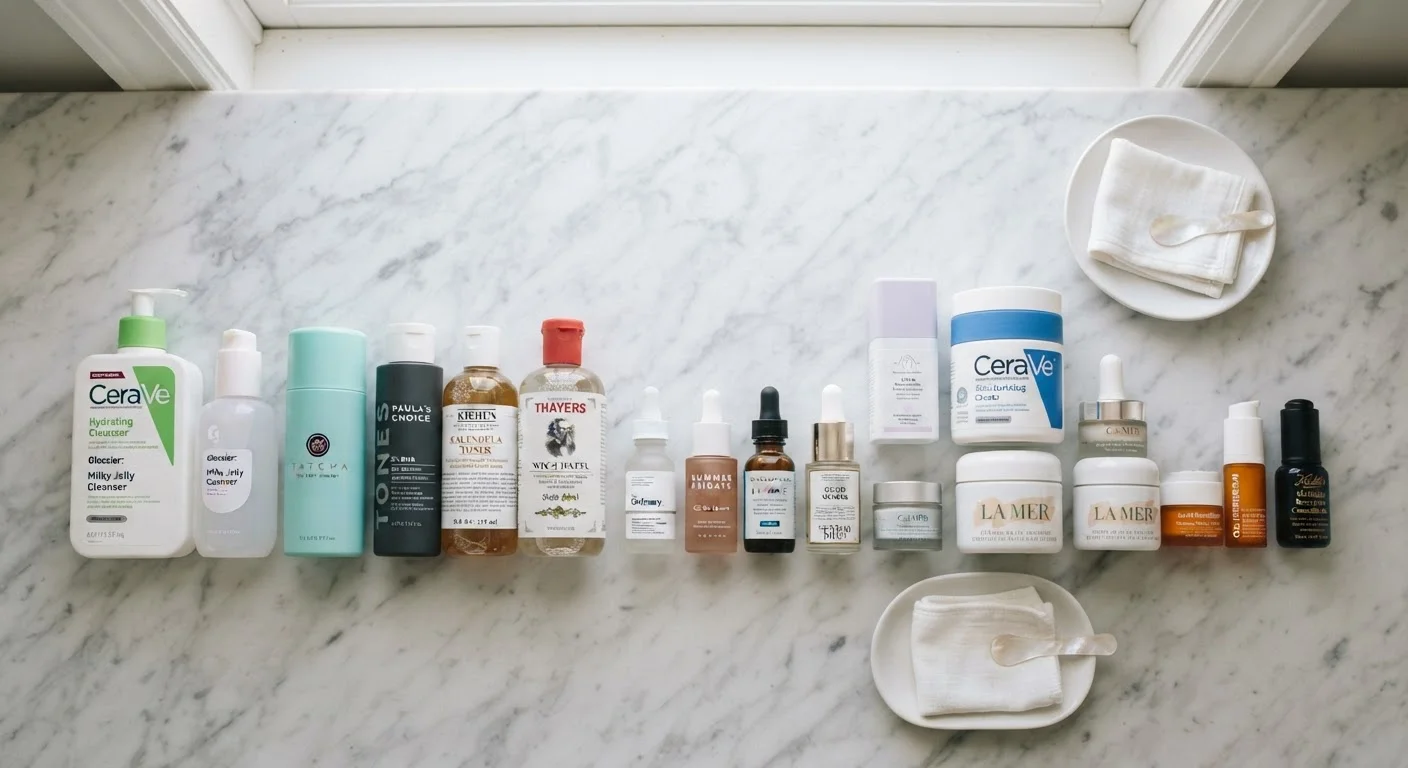
A multi-step skincare routine typically involves four or more distinct products applied in a defined sequence — commonly a cleanser, toner or essence, one or more serums, moisturizer, and SPF in the morning. More elaborate versions add exfoliants, facial oils, eye creams, and targeted treatments like retinoids or peptide boosters.
The concept gained wide cultural visibility through Korean beauty (K-beauty) trends, which popularized layering philosophies built on skin hydration and barrier reinforcement. But the core principle — addressing multiple skin concerns with purpose-specific products — exists across most professional skincare frameworks. If you're starting from zero, our guide to building a skincare routine from scratch covers what steps actually matter and how to sequence them.
The Case For a Multi-Step Approach
Layering strategically chosen products can address several skin concerns simultaneously in ways a single product cannot.
Addresses multiple skin concerns simultaneously
Purpose-built products — a vitamin C serum for brightness, a peptide moisturizer for firmness — can target distinct issues in a single routine that one product cannot replicate.
Allows precise ingredient concentration control
Separate products let you use actives at clinically studied concentrations rather than the diluted levels common in multipurpose formulas.
Builds deeper skin literacy over time
Tracking multiple products encourages closer attention to ingredient lists and skin responses, helping you make more informed choices.
Can significantly improve hydration layering
Applying a humectant essence before a richer moisturizer helps trap water at different skin depths, a benefit harder to achieve with a single product.
4–6 weeks
Minimum time to assess a new product's effect
Dermatologists generally recommend allowing at least one full skin cell turnover cycle before judging a new product's efficacy.
~28 days
Average skin cell turnover cycle in adults
This cycle slows with age, which is one reason active ingredients like retinoids are typically evaluated over months, not days.
For people managing hyperpigmentation, fine lines, and dehydration at the same time, a single moisturizer simply cannot do all of that work effectively. Vitamin C serums, humectant essences, and retinoids each operate through distinct mechanisms, and using them in sequence allows their benefits to complement rather than compete with each other — provided they're applied correctly.
Multi-step routines also tend to encourage skin literacy. Paying close attention to what you're applying often leads people to become more attuned to how their skin responds to specific ingredients and environmental changes.
The Case Against: Where Complexity Creates Problems
More steps introduce more variables — and more opportunities for things to go wrong.
Higher risk of irritation from incompatible actives
Layering strong acids, retinoids, and antioxidants without understanding interactions can compromise the skin barrier and cause redness or peeling.
Harder to identify the source of reactions
When eight products are in rotation, pinpointing which ingredient caused a breakout or sensitivity response is genuinely difficult and time-consuming.
Complexity reduces long-term consistency
Behavioral research consistently finds that multi-step habits are harder to sustain; a routine too demanding for daily life tends to be abandoned rather than maintained.
Significantly higher cost over time
Maintaining five or more distinct products — many with active ingredients that degrade with exposure to air or light — adds up quickly and creates waste.
Risk of over-exfoliation and barrier damage
Routines heavy in exfoliating acids and active serums can disrupt the skin's protective lipid barrier, paradoxically worsening sensitivity and dehydration.
One of the most common pitfalls is layering incompatible actives. Combining strong exfoliating acids with retinoids, or vitamin C with niacinamide in concentrations that cause flushing, can inflame skin rather than improve it. Diagnosing which product is responsible for a reaction is also significantly harder when you're using eight products at once.
Skin Barrier Health Comes First
Before adding active ingredients to a routine, it's worth confirming your skin barrier is healthy — signs of compromise include persistent tightness, flaking, and reactive redness. A damaged barrier absorbs actives unpredictably, increasing irritation risk. In these cases, simplifying temporarily to a gentle cleanser and a barrier-supportive moisturizer is generally advisable before reintroducing treatments. Consult a dermatologist if barrier symptoms are ongoing.
There's also the practical reality of time and cost. A ten-step nightly routine demands consistent commitment — and research into habit formation consistently shows that the more complex a behavior, the harder it is to maintain long-term. A routine that works three times a week is generally more valuable than a perfect routine abandoned after two weeks. This mirrors what we know about building daily routines that actually hold together — sustainability beats complexity.
Finding the Right Level of Complexity for Your Skin
Dermatologists generally agree that a well-executed minimal routine outperforms an inconsistent elaborate one. For most skin types, a core three-product approach — a gentle cleanser, a targeted treatment (such as a retinoid or antioxidant serum), and a broad-spectrum SPF moisturizer — covers the essential bases.
Where multi-step routines genuinely add value is in cases with clearly layered concerns: someone managing both post-acne marks and early signs of photoaging, for example, may benefit from distinct brightening and renewal steps that a single product can't deliver. The guiding principle should always be intentionality: every product in your routine should have a defined purpose and a demonstrable place in your skin's response.
Before expanding your routine, it's worth auditing what you currently use and asking whether each step is producing a noticeable benefit. Gradually introducing one new product at a time — and allowing two to four weeks before assessing results — is the most reliable way to understand how your skin responds.
This article provides general skincare education and is not a substitute for personalized advice from a board-certified dermatologist. If you're experiencing persistent skin concerns, consult a qualified healthcare professional.