

Key Takeaways
Why Body Skin Gets Dry
Dry skin — clinically called xerosis — occurs when the outermost layer of skin, the stratum corneum, loses more moisture than it retains. This layer functions as a physical and chemical barrier, and when it's disrupted, water evaporates more readily, leaving skin feeling tight, rough, or flaky. Understanding this mechanism is the foundation of every effective approach. For a deeper look at how the barrier works, see our guide to the skin barrier.
Several everyday factors accelerate moisture loss:
- Hot water: Prolonged exposure strips natural lipids from the skin surface.
- Harsh cleansers: Soaps with sulfates or high fragrance loads disrupt the skin's slightly acidic pH, weakening barrier function.
- Low humidity: Cold outdoor air and heated indoor environments both draw moisture from the skin.
- Over-cleansing or over-exfoliating: Removing dead cells too aggressively before the barrier has recovered can worsen dryness.
- Age: Oil gland activity and natural moisturizing factor (NMF) production decrease with age, making dryness more prevalent.
- Underlying conditions: Eczema, psoriasis, hypothyroidism, and certain medications can all contribute to chronic dryness.
If you have sensitive skin that reacts strongly to changes in routine or environment, habits designed for sensitive skin may also be relevant to your situation.
Protect Skin After Shaving
Shaving removes a thin layer of skin along with hair, temporarily increasing vulnerability to moisture loss and irritation. Applying a fragrance-free moisturizer immediately after shaving — and always shaving with an appropriate lubricant — helps reduce this effect. For more on managing irritation, see our guide to razor irritation.
Understanding the Right Ingredients
Moisturizing ingredients fall into three functional categories, and effective products often combine all three:
- Humectants
- Draw water into the skin from the environment or deeper layers. Common examples include glycerin, hyaluronic acid, and urea (at lower concentrations). Urea also has mild keratolytic properties, meaning it can help soften thickened or rough patches.
- Emollients
- Fill gaps between skin cells, smoothing texture and restoring suppleness. Ingredients like shea butter, squalane, and fatty acids (such as linoleic acid) fall into this category.
- Occlusives
- Form a physical film over the skin surface to slow water evaporation. Petrolatum is among the most effective occlusives studied; dimethicone and certain plant waxes perform a similar function.
Fragrance — whether synthetic or natural — is among the most common skin irritants and is worth avoiding if dryness is accompanied by redness or itching. Choosing products matched to your skin type can help you narrow down which formulations are worth trying.
When Dryness Signals Something More
Widespread, persistent, or intensely itchy dry skin — particularly when accompanied by redness, cracking, oozing, or scaling — can indicate conditions such as eczema (atopic dermatitis), psoriasis, or contact dermatitis. These require evaluation by a dermatologist for accurate diagnosis and appropriate management. Do not attempt to self-treat with prescription-strength products without professional guidance.
Step-by-Step: Building a Routine That Works
The steps below address body dryness systematically — from cleansing habits to daily moisturizing practice. Following them consistently over two to four weeks gives skin time to recover barrier function.
Adjust Your Shower Temperature and Duration
Switch from hot to lukewarm water and aim to keep showers under ten minutes. Hot water rapidly dissolves the lipid layer that keeps moisture locked in, and longer exposure compounds the effect. This single change can reduce baseline dryness noticeably within a week.
Swap to a Gentle, Fragrance-Free Cleanser
Look for body washes labeled pH-balanced or soap-free. Formulas that list glycerin or ceramides among the first several ingredients actively support the barrier while cleansing. Reserve cleansing to areas that genuinely need it — the torso and limbs generally require less soap than the underarms or groin.
Pat — Don't Rub — Skin Dry
After stepping out of the shower, use a soft towel to gently pat skin rather than rubbing. Vigorous toweling creates friction that irritates an already-compromised barrier and removes the residual surface moisture you want to trap in the next step.
Apply Moisturizer Within Two to Three Minutes
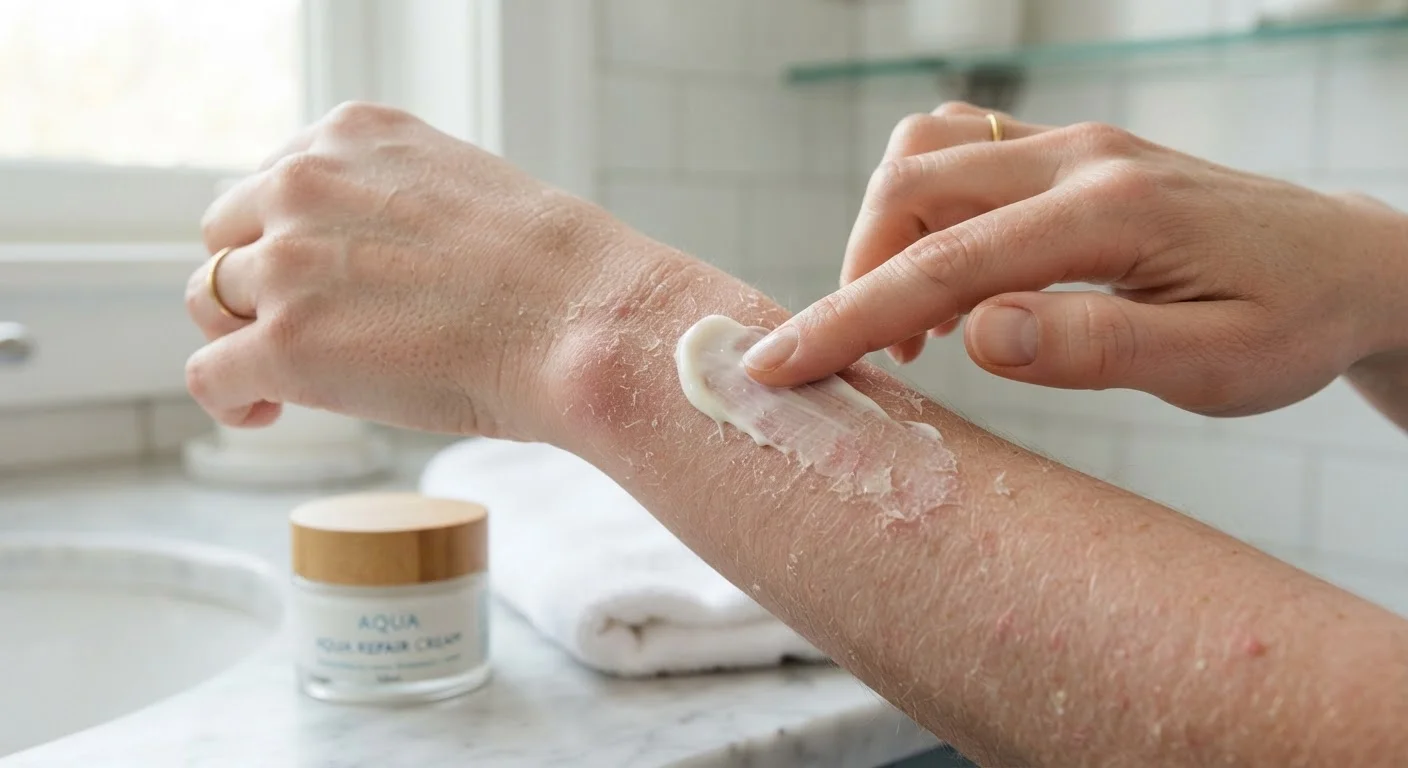
This is often called the soak-and-seal method: apply moisturizer while the skin is still slightly damp to trap surface water beneath an emollient or occlusive layer. Focus on areas prone to dryness — shins, elbows, knees, and hands — but cover all body skin for best results.
Consider a Humidifier in Dry Environments
Indoor heating in winter and air conditioning in summer both lower ambient humidity, accelerating transepidermal water loss (TEWL) — the passive movement of moisture through the skin to the air. A room humidifier maintaining 40–60% relative humidity can reduce this effect, complementing your topical routine.
Introduce Exfoliation Thoughtfully
When dead skin cells accumulate, moisturizers penetrate less effectively. Gentle chemical exfoliation — using lactic acid or low-concentration urea — once or twice a week can improve texture without the micro-tears that physical scrubs sometimes cause. Pause exfoliation if skin is visibly cracked or inflamed. For a full breakdown of technique and frequency, see our guide to exfoliation.
Monitor and Reassess After Four Weeks
Skin barrier repair takes time. Track changes in tightness, flaking, and itch over a four-week period. If dryness is improving, maintain the routine. If it is unchanged or worsening — especially if accompanied by redness, cracking, or widespread involvement — consult a dermatologist to rule out an underlying condition such as eczema or ichthyosis.
This article is for general informational purposes only and is not a substitute for professional medical or dermatological advice. If you experience persistent, severe, or worsening skin dryness, consult a qualified healthcare provider.