

Key Takeaways
Before You Even Board: The Pre-Flight Setup
Most long-haul mistakes are made on the ground. If you board dehydrated, sleep-deprived, and wearing stiff jeans, no in-flight strategy will fully save you. Start hydrating 24 hours before departure — cabin air humidity typically hovers below 20%, far drier than most desert environments, accelerating dehydration faster than you might expect.
Adjust your sleep timing two to three nights before a major eastward trip by going to bed and waking an hour earlier than usual. This gentle nudge aligns your body clock closer to your destination's time zone before you leave. For the science behind why eastward travel is tougher to recover from, read our breakdown of jet lag direction effects — it changes how you'll plan your sleep window on the plane.
Pack your comfort essentials in your personal item, not your overhead bag. Once you're at cruising altitude, you want everything within arm's reach without disturbing your row neighbors.
In the Air: Sleep, Hydration, and Movement
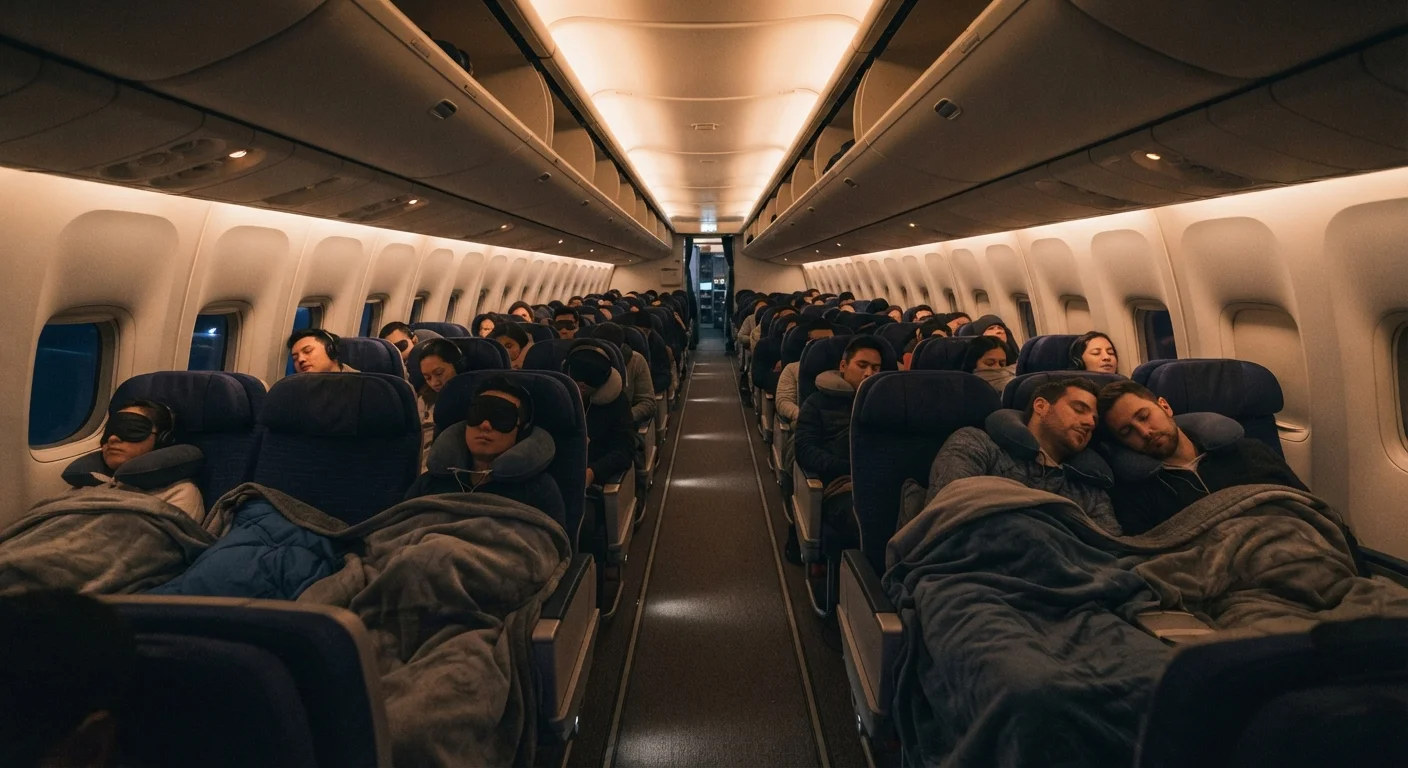
Treat sleep on a long-haul flight as a scheduled activity, not a happy accident. Decide before takeoff which hours you'll attempt to sleep based on your destination's local time — then commit. Use an eye mask, earplugs or noise-canceling headphones, and set your seat to recline before you settle in rather than fumbling with it mid-sleep.
Set a sleep window before takeoff and stick to it.
Winging in-flight sleep leads to fragmented, low-quality rest that leaves you groggy rather than refreshed. Committing to a defined window — ideally aligned with nighttime at your destination — trains your body to wind down on schedule and makes the most of whatever hours are available.
Wear compression socks for any flight over six hours.
Prolonged sitting reduces blood flow in the legs, increasing the risk of swelling and discomfort. Graduated compression socks — the kind designed for travel — help maintain healthy circulation without any effort on your part.
Switch your devices and mindset to destination time at boarding.
Mentally anchoring to your origin time zone throughout the flight keeps your body clock locked to a place you're leaving behind. Changing your phone's clock and thinking in terms of destination time primes your brain to adapt faster.
Eat lightly and prioritize protein and vegetables over heavy carbohydrates.
Heavy, starchy inflight meals can intensify feelings of sluggishness and make quality sleep harder to achieve. A lighter meal supports more restful sleep and leaves you feeling less bloated on arrival.
Build a carry-on comfort kit tailored to your specific needs.
Generic comfort advice doesn't account for individual differences — some travelers run hot, others cold; some need complete darkness, others just quiet. A personalized kit assembled from experience means you're not improvising at 35,000 feet.
On hydration: aim for roughly 8 ounces of water per hour of flight. Skip alcohol and excess caffeine mid-flight — both accelerate dehydration and disrupt sleep quality. If you're prone to dry eyes, consider lubricating drops; contact lens wearers often find switching to glasses mid-flight significantly more comfortable.
Movement matters more than most travelers realize. Standing up and walking the aisle every 60–90 minutes promotes circulation and helps prevent the stiffness that compounds into genuine discomfort by hour ten. Simple ankle circles and calf raises from your seat work well during quieter periods of the flight.
Arrival Strategy: Resetting Your Clock Fast
How you handle your first 12 hours on the ground often determines how quickly you recover. The general consensus among travel medicine professionals is to anchor yourself to local time immediately upon arrival — eat meals at local meal times, get outdoor daylight exposure in the morning if arriving after an overnight flight, and resist the pull of a long nap.
Check In With a Doctor if You Have Circulation Concerns
Travelers with a history of deep vein thrombosis (DVT), cardiovascular conditions, or recent surgery should speak with their physician before booking a long-haul flight. General strategies like walking and compression socks are broadly helpful, but individual medical circumstances vary. This article provides general travel information, not personal medical advice.
If you must nap, cap it at 20–30 minutes and do so in the early afternoon of your destination's time zone. A longer nap risks locking you into a misaligned sleep cycle for days. Our guide on sleep fundamentals for beginners covers the core habits that help your body recalibrate faster — many apply directly to post-flight recovery.
Light exercise on arrival day — a walk, gentle stretching, or a swim if your accommodation has a pool — helps signal to your body that this is an active, waking period. Pair that with staying well-hydrated and eating a normal local dinner, and you've given yourself the best possible foundation for a productive first full day.
For everything that could go sideways — delayed connections, lost bags, unexpected itinerary changes — build a contingency plan before you fly so disruptions don't compound your fatigue on arrival.
<20%
Typical humidity level in an airplane cabin
Cabin air humidity is generally far lower than most indoor environments, making consistent hydration essential on any flight over two hours.
60–90 min
Recommended movement interval during long flights
Travel health professionals commonly suggest standing and walking at least once every 60–90 minutes to support circulation on extended flights.